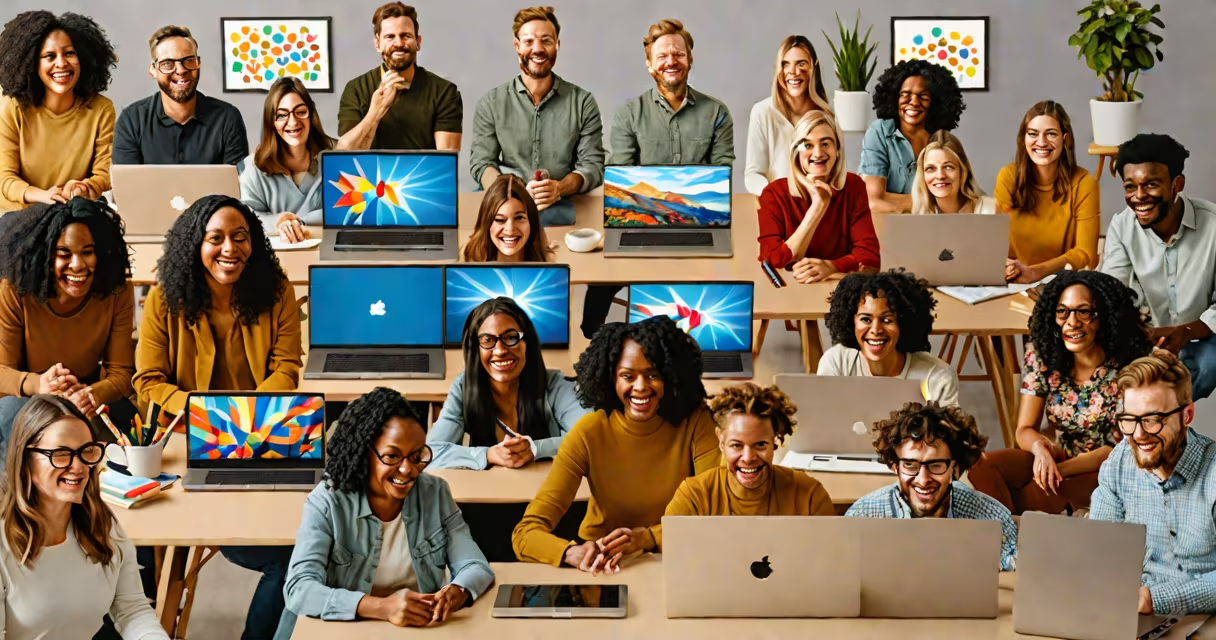
Generative AI for everyone refers to tools and platforms that allow individuals without technical training to produce original content-like text, images, audio, and code-using artificial intelligence. These systems learn patterns from vast datasets and generate new outputs based on user prompts. They're designed to be intuitive, requiring no coding or machine learning expertise.
These tools operate through natural language input. Type "write a poem about autumn trees" or upload a sketch and say "make this into a digital painting," and the system generates something new. The output isn't copied-it's synthesized from learned structures and styles. This capability has moved beyond research labs and corporate R&D teams into homes, schools, and small businesses.
Major providers like OpenAI, Google, and Adobe have released consumer-facing versions of generative models. Tools such as ChatGPT, DALL·E, and Adobe Firefly are available via web browsers or mobile apps. They run on cloud infrastructure, meaning users don't need high-end hardware. A smartphone with a stable internet connection is often enough to start creating.
At its core, generative AI uses deep neural networks trained on massive collections of text, images, or audio. For example, GPT-4 was trained on hundreds of billions of words from books, websites, and forums. When prompted, it predicts the next word in a sequence, building coherent responses step by step. Similarly, diffusion models like Stable Diffusion analyze thousands of images to understand how visual elements relate-colors, textures, lighting-and then reconstruct them in novel combinations.
Each interaction begins with a prompt-a request phrased in everyday language. The model processes the input, maps it to known patterns, and produces a response. The result is not random; it reflects statistical likelihoods derived from training data. If you ask for "a photo of a robot riding a bicycle in Tokyo during cherry blossom season," the model combines concepts it has seen before-robots, bicycles, urban landscapes, seasonal flowers-and arranges them into a plausible image.
Processing happens on remote servers. Your device sends the prompt, receives the generated output, and displays it. This offloads computational demands and keeps tools lightweight. No local GPU or specialized software is needed. You don't even need to understand how the model works to use it effectively.
Different tools serve different creative and practical purposes. Here's a breakdown of common categories:
| Type | Use Case | Examples | Input Requirement |
|---|---|---|---|
| Text Generation | Writing emails, stories, summaries, code | ChatGPT, Gemini, Claude | Natural language prompt |
| Image Generation | Creating artwork, concept designs, social media visuals | DALL·E, Midjourney, Stable Diffusion | Text description or sketch |
| Audio Generation | Composing music, generating voiceovers, sound effects | ElevenLabs, Udio, Suno | Lyrics, mood description, genre preference |
| Video Generation | Animating scenes, editing clips, generating short films | Pika Labs, Runway ML, Sora (by OpenAI) | Text prompt or storyboard |
Many tools support multiple formats. For instance, Adobe Firefly integrates text-to-image and image-to-video generation within a single interface. Users can describe a scene and get a short animated clip. Others offer APIs for developers, but most consumers interact through simple forms or chat windows.
Generative AI for everyone powers daily tasks across education, business, and personal projects. Students draft essays faster. Freelancers generate mockups for clients. Teachers create custom lesson materials. Artists explore ideas without needing to draw first. Writers overcome blank-page anxiety by getting starter lines.
A 2023 survey by Pew Research Center found that 56% of U.S. adults had used a generative AI tool, with 72% reporting they used it for work or school. Among those, 41% said it helped them complete tasks more quickly. The tool wasn't replacing jobs-it was expanding capacity.
Consider a high school teacher in rural Iowa who teaches biology. She uses a free version of a generative AI platform to turn her lesson plan into illustrated flashcards. She types: "Create a set of 10 flashcards showing human cell parts with simple labels and cartoon-style diagrams." Within seconds, she gets printable PDFs. She prints them, laminates them, and uses them in class. Without this tool, producing visuals would take hours. With it, under ten minutes.
Another example: a freelance graphic designer in Nairobi uses DALL·E to generate logo concepts for a client. She inputs: "Minimalist logo for a sustainable fashion brand called 'Green Thread'-use leaf and thread motifs, earth tones." The model returns four options. She selects one, tweaks the colors, and delivers it the same day. The client approves it instantly. The entire process took less than 30 minutes.
People often assume generative AI for everyone is either magic or a threat. Neither is accurate. The tools don't think-they mimic. They don't understand context, emotions, or consequences. They generate based on patterns, not intent.
One widespread error is believing AI-generated content is always original. That's false. Models are trained on existing material. A generated image may resemble a copyrighted photograph. A story might echo a famous plotline. Legal and ethical risks exist, especially when used commercially without review.
Another misconception is that these tools replace human creativity. They don't. They amplify it. Think of them as advanced drafting tools. A novelist doesn't write a book using only AI. But they might use it to brainstorm character names, outline chapters, or refine dialogue. The human mind still sets direction, evaluates quality, and adds emotional depth.
I've tested several tools myself. In 2022, I used a beta version of a text-to-video generator to animate a children's story I wrote. The result was rough-characters moved stiffly, timing was off-but it gave me a prototype. I then refined it manually in editing software. The AI didn't do the whole job. But it cut my initial work time from five days to one.
For hands-on practice, try platforms like Bing Image Creator (powered by DALL·E), Google's Imagen, or the free tier of ChatGPT. Set a goal: write a birthday message, design a poster, draft a cover letter. Test variations. Ask for changes. Observe how small wording shifts affect results.
Remember: the power lies not in the tool itself, but in how you use it. Generative AI for everyone isn't about becoming an expert overnight. It's about gaining access to creative and problem-solving capabilities once reserved for specialists. Now, anyone with a question and a keyboard can start making.