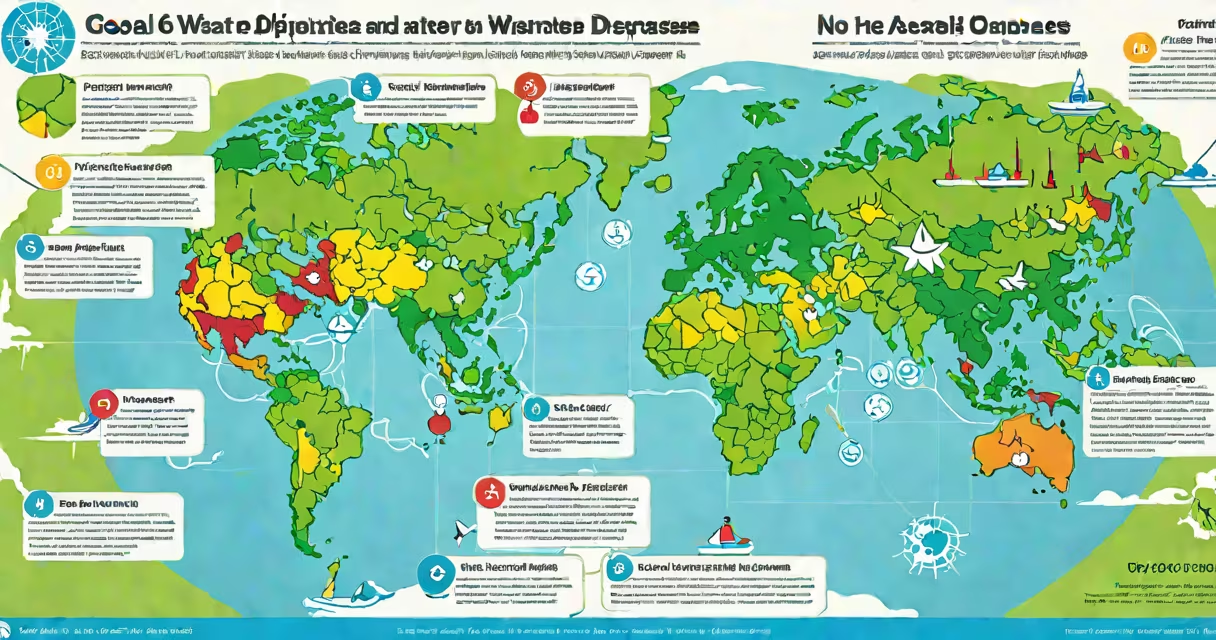
UN Goal 6 is the United Nations' global commitment to ensure availability and sustainable management of water and sanitation for all by 2030. It is part of the 2030 Agenda for Sustainable Development, adopted by 193 member states.
Goal 6 sets measurable targets across four core areas: safe drinking water, adequate sanitation, wastewater treatment, and protection of freshwater ecosystems. It applies to all countries regardless of income level, with specific indicators tracked annually by the UN and partner agencies.
The goal emerged from decades of international cooperation on water governance. The 2015 adoption of the Sustainable Development Goals (SDGs) elevated water security to a central pillar of global development policy. Without progress on Goal 6, achieving other SDGs-like those related to health, poverty reduction, and climate resilience-remains impossible.
UN Goal 6 operates through a structure of 8 specific targets and 11 indicators monitored by the Joint Monitoring Programme (JMP), jointly run by WHO and UNICEF. These indicators track progress in real time using national surveys, satellite data, and administrative records.
For example, Target 6.1 requires that by 2030, everyone has access to safely managed drinking water. This means water sources must be located within 300 meters of a household, be free of contamination, and be available year-round. A community in rural Kenya with a protected well that meets these criteria counts toward the target.
Progress is reported biennially in the SDG Progress Report. Countries submit data to the UN Statistical Division, which aggregates results and publishes country-specific dashboards. Data transparency enables civil society groups to hold governments accountable.
UN Goal 6 consists of eight distinct targets grouped into four thematic areas:
| Target | Focus Area | Key Indicator |
|---|---|---|
| 6.1 | Safe Drinking Water | Proportion of population using safely managed drinking water services |
| 6.2 | Adequate Sanitation | Proportion of population using safely managed sanitation services |
| 6.3 | Wastewater Treatment | Proportion of wastewater safely treated |
| 6.4 | Water Efficiency | Change in water use efficiency over time |
| 6.5 | Integrated Water Resources Management | Proportion of transboundary basin area covered by agreements |
| 6.6 | System Protection | Change in extent of water-related ecosystems |
| 6.a | Water Infrastructure | Proportion of population with access to water supply infrastructure |
| 6.b | International Cooperation | Number of transboundary water cooperation agreements |
Each indicator uses standardized definitions. For instance, "safely managed" sanitation means facilities that do not contaminate the environment and are accessible to all users, including people with disabilities. A school in Bangladesh with a hand-washing station and a hygienic latrine meeting these criteria contributes to progress on Target 6.2.
Some targets emphasize equity. Target 6.1 specifically includes a sub-target to ensure access for vulnerable populations, such as displaced persons and informal settlement dwellers. In 2022, 2.2 billion people still lacked safely managed drinking water-over half of them in sub-Saharan Africa.
UN Goal 6 shapes national policies, international aid allocations, and private sector investment strategies. Governments integrate it into national development plans. For example, Ethiopia's National Water Policy aligns with Target 6.1 by mandating that all new public water projects include filtration and chlorine disinfection.
International funding mechanisms like the Green Climate Fund and the Global Environment Facility prioritize projects that advance Goal 6. A $15 million grant to Morocco supported the rehabilitation of 120 rural water systems, improving access for 40,000 people and increasing compliance with Target 6.1.
Private companies also report progress under Goal 6. Unilever's 2023 sustainability report disclosed that 94% of its manufacturing sites achieved water recycling rates above 70%, contributing to Target 6.4. The company tracks water use intensity per unit of production across 500 facilities globally.
One non-obvious fact: Target 6.3 measures not just wastewater treatment but also the proportion of pollutants removed. A city in Colombia reduced fecal coliform levels in its river by 83% between 2018 and 2022 through expanded sewage networks and biological treatment plants-this qualifies as progress even if total volume discharged remained constant.
UN Goal 6 is often mistaken for a standalone environmental initiative. It is not. It is a cross-sectoral development goal requiring coordination among ministries of health, environment, finance, and urban planning. A failure in one sector can stall progress in another.
Another misconception is that Goal 6 focuses only on infrastructure. While building wells and treatment plants matters, the goal also demands institutional reforms. For example, Target 6.5 calls for integrated water resources management, meaning water allocation decisions must consider agricultural, industrial, and ecological needs simultaneously.
Some assume the goal applies only to low-income nations. In reality, high-income countries face challenges too. In 2021, the U.S. Environmental Protection Agency identified 15,000 public water systems with violations of the Safe Drinking Water Act. Flint, Michigan's lead contamination crisis remains a stark reminder that even wealthy nations can fail on Goal 6.
I once visited a village in northern Ghana where a newly constructed borehole had failed due to poor maintenance. The pump broke after six months, and no local technician was trained to fix it. This experience showed me that infrastructure alone doesn't meet Goal 6-it requires ongoing capacity building and community ownership.
UN Goal 6 differs from general objectives like "improve water quality." It specifies measurable outcomes, timelines, and responsibilities. For example, while "improving water quality" is vague, Target 6.3 defines success as treating at least 50% of urban wastewater by 2030.
It also contrasts with broader concepts like "sustainability." Sustainability implies long-term balance, but Goal 6 defines concrete benchmarks. A country may claim sustainability but still fall short if less than 70% of its population accesses safely managed water.
Progress on UN Goal 6 is not optional. It is legally binding under international development law. The UN High-Level Political Forum reviews national reports annually. Countries that miss targets must explain why and update their action plans.
By 2030, 2.7 billion people are projected to live in water-stressed regions. Without accelerated implementation of UN Goal 6, this number will rise. Achieving it requires political will, technical capacity, and sustained financing-not just goodwill.
Every nation, city, business, and individual plays a role. Access to clean water is not a privilege-it is a human right. UN Goal 6 helps right is recognized, measured, and delivered.