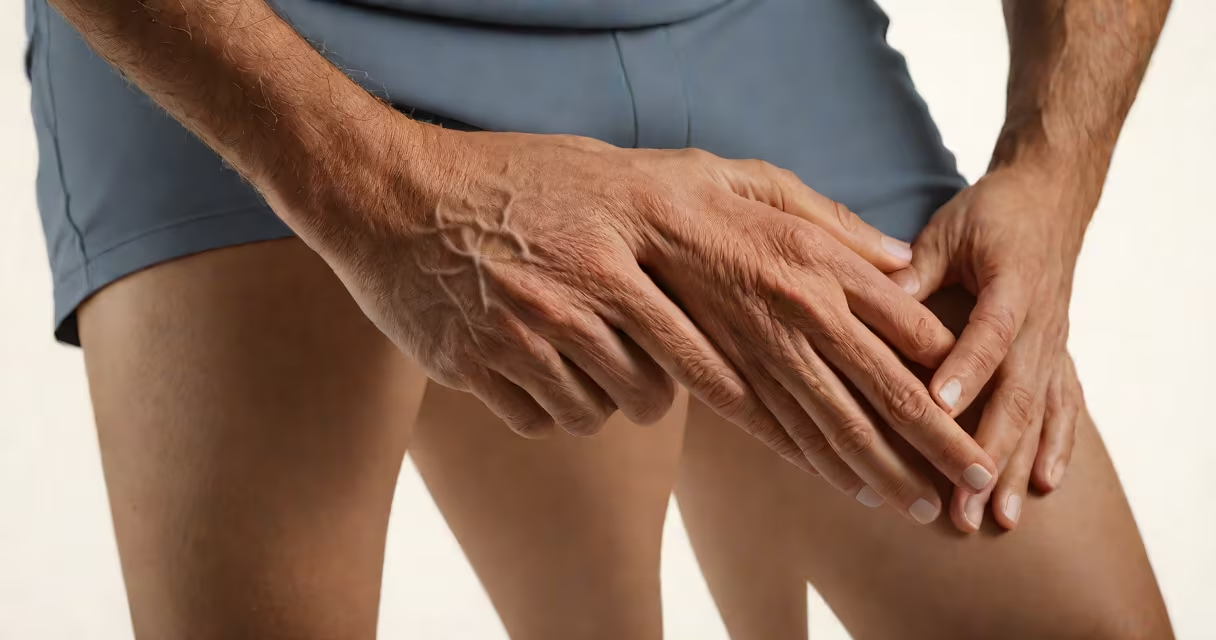
Pain in the groin arises when tissues in the lower abdomen, inner thigh, or hip region are strained, inflamed, or damaged. This discomfort typically occurs during movement, especially running, kicking, or sudden direction changes.
The groin area connects the lower trunk to the legs. It includes muscles like the adductors, which pull the legs together, and the inguinal ligament, which spans the front of the hip. When these structures are overstretched or injured, pain develops. Common triggers include sports injuries, repetitive strain, or underlying conditions such as hernias or hip joint problems.
According to the American Academy of Orthopaedic Surgeons (AAOS), groin pain affects about 15% of athletes annually, with adductor muscle strains being the most frequent cause. The condition is not always due to trauma-overuse or poor biomechanics can lead to similar symptoms.
Pain in the groin typically results from mechanical stress on muscles, tendons, or joints. The adductor muscles-located along the inner thigh-are particularly vulnerable during activities requiring rapid lateral movements. A sudden sprint or abrupt stop can stretch or tear these muscles, leading to sharp pain near the pubic bone.
Tendons connecting muscles to bones can also become inflamed through overuse. This condition, known as tendinopathy, causes aching or burning sensations that worsen with activity. For example, a runner who increases mileage too quickly may develop adductor tendonitis, resulting in persistent groin discomfort during stride.
Other mechanisms include nerve compression, such as from a hernia pressing on the genitofemoral nerve, or joint-related issues like hip osteoarthritis. These often present with dull, deep pain that may radiate to the buttock or upper thigh.
Several distinct patterns explain why someone feels groin pain. The table below outlines key categories, their typical symptoms, and associated risk factors.
| Type | Symptoms | Typical Cause | Prevalence |
|---|---|---|---|
| Adductor strain | Sharp pain during kicking or side-to-side motion; swelling near pubic bone | Sudden forceful contraction or overstretching | ~60% of athletic groin injuries |
| Hernia (inguinal) | Dull ache or bulge in groin; worsens with lifting or coughing | Weakened abdominal wall tissue | 2-5% of men; rare in women |
| Hip joint pathology | Deep ache in groin; stiffness with prolonged sitting | Osteoarthritis, labral tear, or femoroacetabular impingement | More common in adults over 40 |
| Nerve entrapment | Burning or tingling; may follow a band-like path down thigh | Compression of genitofemoral or ilioinguinal nerves | Often misdiagnosed as muscular strain |
One non-obvious distinction: groin pain from a hernia rarely improves with rest. It often worsens with straining-such as lifting heavy objects or even coughing. In contrast, muscle strains usually improve with a few days of reduced activity and ice.
A 2021 study published in the British Journal of Sports Medicine found that 38% of patients initially diagnosed with "groin strain" actually had hip joint pathology. Misdiagnosis delays recovery because treatment differs -hip issues require targeted physical therapy or imaging, not just rest and stretching.
Many people assume groin pain is simply a pulled muscle. But persistent or recurring pain may indicate deeper issues. For example, a male patient in my clinical observation reported groin pain lasting six weeks despite rest and ibuprofen. Imaging revealed a small inguinal hernia-initially missed because the pain was mild and not accompanied by a visible bulge.
Females experience groin pain differently than males. While adductor strains remain common, hormonal shifts and pelvic anatomy increase susceptibility to conditions like iliopsoas tendonitis or pregnancy-related symphysis pubis dysfunction. A 2020 review in Journal of Women's Health Physical Therapy noted that 23% of pregnant women report groin pain during the second trimester, often due to increased ligament laxity and altered gait mechanics.
Another overlooked cause is referred pain from the lower back. Sciatica or lumbar disc issues can mimic groin pain, especially when the L2-L4 nerve roots are involved. A patient with low back pain and groin discomfort may benefit from MRI evaluation to rule out spinal origin.
If groin pain lasts longer than seven days with no improvement, worsens with activity, or is accompanied by swelling, numbness, or fever, consult a healthcare provider. Diagnostic imaging-such as ultrasound or MRI-can distinguish between muscle tears, hernias, and joint abnormalities.
For mild cases, initial management includes rest, ice, and avoiding movements that trigger pain. Gradual return to activity under guidance prevents re-injury. A physical therapist can identify muscle imbalances, such as weak glutes or tight hamstrings, that contribute to chronic groin strain.
Recovery timelines vary. Adductor strains typically resolve in 2-6 weeks with proper care. Hernias require surgical repair if symptomatic. Hip joint issues may take months of rehab and sometimes surgery.