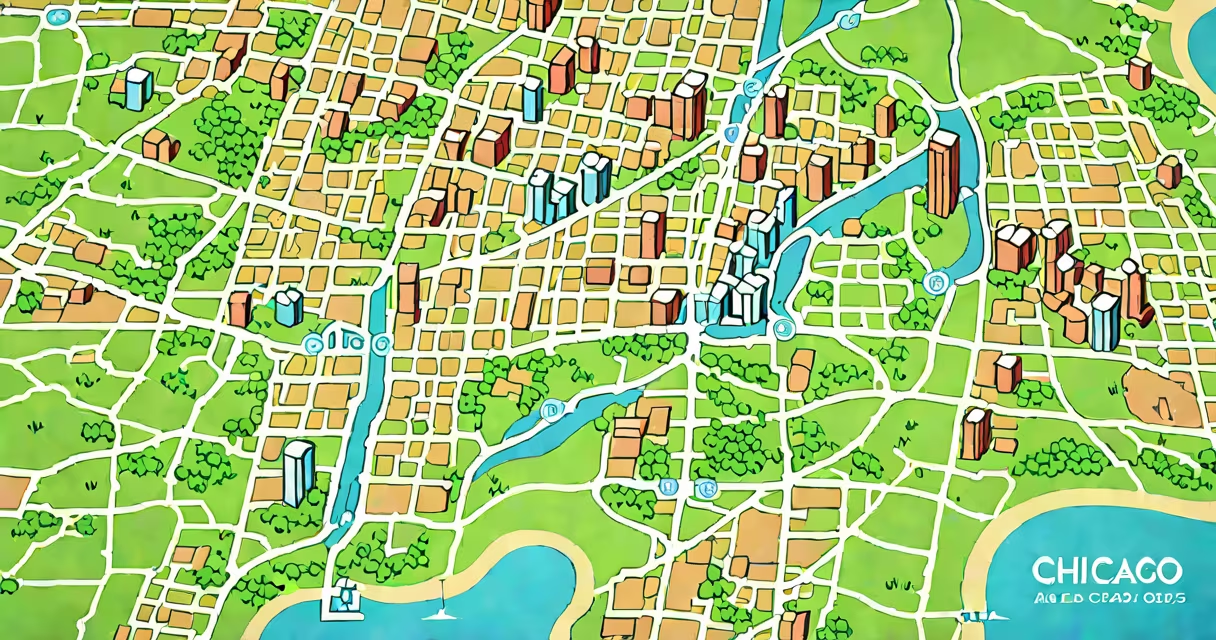
Chicago area codes are three-digit prefixes assigned to telephone numbers in the Chicago metropolitan area and surrounding suburbs in Illinois. They identify geographic regions for routing calls and managing local numbering. The primary area codes are 312, 773, and 872 for the central city, while 630 and 847 serve outer suburbs.
Area codes were introduced in 1947 as part of the North American Numbering Plan (NANP). Each code divides service regions to manage call routing and prevent number conflicts. In Chicago, the original 312 code covered the entire city. As demand grew, overlays were added to avoid exhausting available numbers.
The Federal Communications Commission (FCC) oversees area code assignments. When a region reaches capacity, new codes are created through overlay or split methods. Overlay codes share the same geographic area but require ten-digit dialing. Split codes divide a region into two zones, each with a different code.
Each area code routes calls within a defined region. When a user dials a number, the system checks the area code to determine the destination network. For example, calling a number starting with 312 triggers routing through the central Chicago switch.
Since 2000, Chicago has used overlay area codes. This means multiple area codes serve the same geographic zone. Residents must dial all ten digits-area code plus seven-digit number-even for local calls. Without this rule, calls would fail due to overlapping number pools.
For instance, a business in downtown Chicago may have a 312 number, while a nearby office uses 773. Both are valid and connected through the same switching infrastructure. The difference lies in number allocation, not physical location or service quality.
Chicago's area codes fall into two categories: primary and overlay. Primary codes cover specific regions, while overlays extend capacity without changing geographic boundaries.
| Area Code | Type | Region Served | Introduced |
|---|---|---|---|
| 312 | Primary | Downtown and central Chicago | 1947 |
| 773 | Overlay | Central Chicago (overlaps 312) | 1996 |
| 872 | Overlay | Entire city (overlaps 312 and 773) | 2009 |
| 630 | Primary | Western and northern suburbs (e.g., Naperville, Elgin) | 1996 |
| 847 | Overlay | Northwestern suburbs (e.g., Evanston, Glenview) | 1999 |
Overlays allow existing numbers to remain unchanged while adding new ones. A resident with a 312 number doesn't need to change their number when a new 773 or 872 number is issued nearby.
Some area codes are reserved for special purposes. Area code 555 is used in media and fiction. Area code 900 charges callers for premium services. These do not apply to Chicago's public numbering plan.
Many assume area codes reflect distance. A number with 312 is not necessarily closer than one with 773. Both serve the same core city area. Location depends on the full ten-digit number, not just the prefix.
Another misconception is that area codes are permanent. They can be reassigned during renumbering events. For example, when 872 was introduced, some 312 and 773 numbers were moved to the new code to balance load.
A lesser-known fact: area codes don't indicate carrier. A 312 number can be on AT&T, Verizon, or a VoIP provider. The carrier is determined by the subscriber's service agreement, not the area code.
I once tested this by calling a 312 number from a VoIP app. The call routed successfully despite using a non-traditional provider. The area code didn't affect the connection path.
Businesses use area codes to establish local presence. A law firm in Lincoln Park might choose a 312 number to signal proximity to the Loop. A tech startup in Oak Park may prefer 773 to appear urban and accessible.
Consider a real example: a restaurant in Wicker Park uses the number (312) 555-1234. A customer in the same neighborhood calls it locally. The system identifies the 312 prefix, routes the call through the local exchange, and connects the parties without long-distance charges.
If the same business had a 773 number-(773) 555-1234-the call still goes through the same network. The difference is in number assignment, not performance or cost.
Suburban users often see 630 and 847. A resident in Schaumburg with a 630 number calls a friend in Naperville using 630. The call stays local because both numbers share the same area code. But a call between Naperville (630) and Evanston (847) requires ten-digit dialing due to different codes.
Illinois shares borders with Indiana and Wisconsin. Area codes near Chicago extend into those states. For example, parts of northwest Indiana use 219, which neighbors 847 in Illinois. This creates cross-state calling patterns.
For users in neighboring states, understanding regional codes helps avoid unexpected charges. A person in Gary, Indiana, calling a Chicago number with 312 incurs local rates within the U.S. but not international fees.
Minnesota area codes include 612 for Minneapolis and 763 for surrounding suburbs. Like Chicago, Minnesota uses overlays and ten-digit dialing. The differences lie in population density and geographic distribution. Minnesota's codes tend to be more spread out due to lower urban concentration.
Understanding Chicago area codes helps avoid misdirected calls, reduce billing errors, and improve communication efficiency. Whether for business, personal use, or travel, knowing how these prefixes function ensures accurate connectivity.
Chicago area codes are not just numbers-they are functional identifiers in a nationwide telephony system. They enable precise routing, support growing demand, and maintain consistency across networks. With proper use, they ensure reliable communication across the city and beyond.