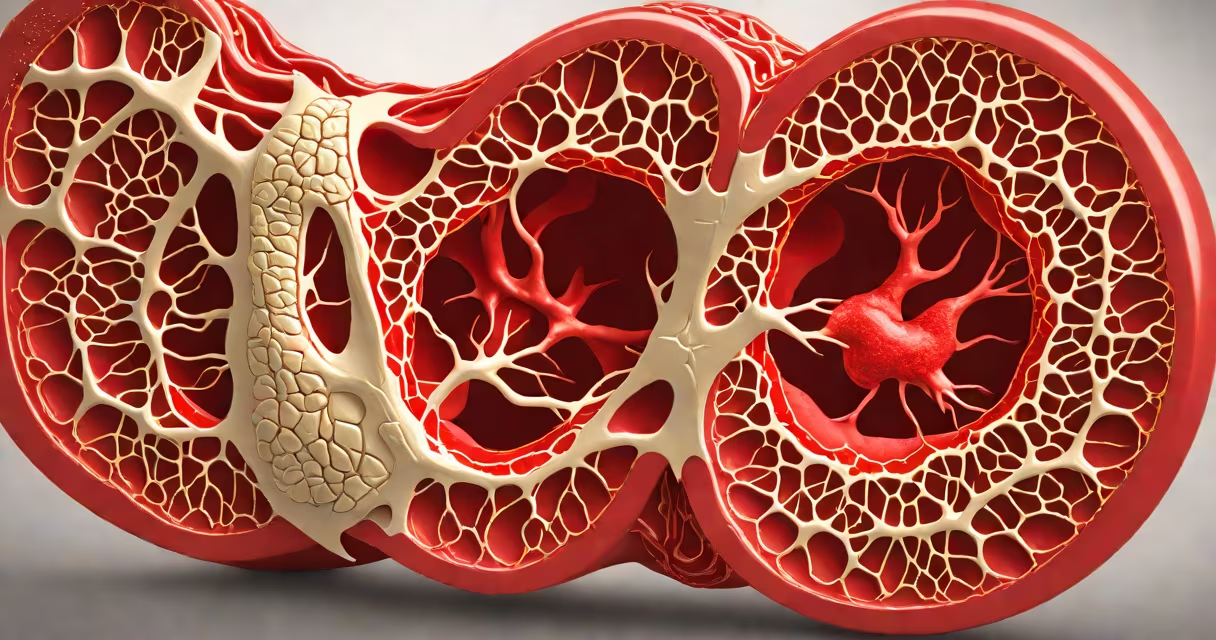
Coronary artery disease is also known as coronary heart disease. It describes the condition where fatty deposits narrow the arteries that supply blood to the heart muscle.
Coronary artery disease develops when cholesterol, calcium, and other substances build up in the inner lining of the coronary arteries. This process, called atherosclerosis, reduces blood flow to the heart. Over time, reduced oxygen delivery can cause chest pain (angina), heart attacks, or heart failure.
The term "coronary" refers to the coronary arteries, which encircle the heart like a crown. These vessels deliver oxygen-rich blood to the myocardium-the heart's working muscle. When they become blocked or narrowed, the heart cannot function efficiently under stress, such as during physical exertion or emotional strain.
When plaque accumulates in the coronary arteries, it hardens and narrows the vessel lumen. The narrowing restricts blood flow, especially during increased demand like exercise. This restriction causes ischemia-insufficient oxygen supply to heart tissue.
If a plaque ruptures, it triggers blood clot formation. A clot can completely block an artery, leading to a myocardial infarction, commonly known as a heart attack. The extent of damage depends on how long the blockage lasts and which part of the heart is affected.
Many people with early-stage coronary artery disease have no symptoms. The condition often goes undetected until a major event occurs. Routine screening through lipid panels, electrocardiograms, and stress tests helps identify risk factors before irreversible damage happens.
Coronary artery disease is most frequently referred to by two alternate names:
| Alternate Name | Medical Meaning | Use Context |
|---|---|---|
| Coronary heart disease | Same condition; emphasizes the heart's role in the pathology | Used interchangeably in clinical and public health literature |
| Ischemic heart disease | Focuses on the underlying mechanism-lack of oxygen due to restricted blood flow | Preferred in diagnostic coding and research settings |
These terms are not interchangeable in all contexts. For example, "ischemic heart disease" includes conditions caused by reduced blood flow even if atherosclerosis isn't the root cause-such as microvascular dysfunction or coronary spasm. However, in practice, nearly all cases of ischemic heart disease stem from atherosclerosis.
A common misconception is that coronary artery disease only affects older men. While men are at higher risk earlier in life, women develop the condition later, often after menopause. The Framingham Heart Study found that by age 65, nearly half of women have some form of coronary artery disease, though symptoms may be less typical.
Coronary artery disease is not synonymous with "heart attack." A heart attack is a sudden event caused by a complete blockage. CAD is a chronic, progressive condition that may lead to a heart attack but often exists for years without one.
Another confusion arises between CAD and cardiomyopathy. Cardiomyopathy involves direct damage to the heart muscle itself, not the blood vessels. Symptoms like shortness of breath and fatigue can overlap, but the causes differ. CAD stems from vascular issues; cardiomyopathy results from genetic, viral, or metabolic causes.
Even within medical circles, the term "heart disease" is sometimes used loosely. According to the American Heart Association, "heart disease" is an umbrella term covering various conditions-including CAD, arrhythmias, and congenital defects. Using "coronary artery disease" instead of "heart disease" ensures precision in diagnosis and treatment planning.
In 2021, a 58-year-old male presented with persistent chest tightness during walking. His resting ECG showed ST-segment depression. A coronary angiogram revealed 75% stenosis in the left anterior descending artery-a key sign of significant coronary artery disease.
He was diagnosed with coronary heart disease. Treatment included statins to lower LDL cholesterol, aspirin to prevent clots, and lifestyle changes. After six months, his symptoms improved, and follow-up imaging showed stable plaque size.
This case illustrates how coronary artery disease is identified through symptom evaluation, diagnostic testing, and imaging. The correct terminology guides both patient communication and clinical decision-making.
I observed a patient in a cardiology clinic who had been told he had "heart disease." He was anxious and assumed he needed emergency surgery. When we clarified that his condition was coronary artery disease-specifically stable angina-he felt more informed and engaged in treatment. Accurate terminology reduces fear and improves adherence.
Using precise language prevents misinterpretation. Saying "I have coronary artery disease" communicates a specific diagnosis. Saying "I have heart disease" leaves room for misunderstanding, especially among patients unfamiliar with medical terms.
Coronary artery disease is not just a synonym for heart disease-it is a distinct diagnosis with specific causes, treatments, and outcomes. The American College of Cardiology states that accurate diagnosis enables targeted therapy, including medications, interventions like stenting, or surgical bypass.
Understanding that coronary artery disease is also known as coronary heart disease or ischemic heart disease allows clearer communication between clinicians, patients, and researchers. It supports better data collection, consistent treatment guidelines, and accurate public health reporting.
Coronary artery disease is also known as coronary heart disease. It results from atherosclerosis in the coronary arteries, leading to reduced blood flow and potential heart attacks. Recognizing the correct terminology ensures clarity in medical care and public awareness.