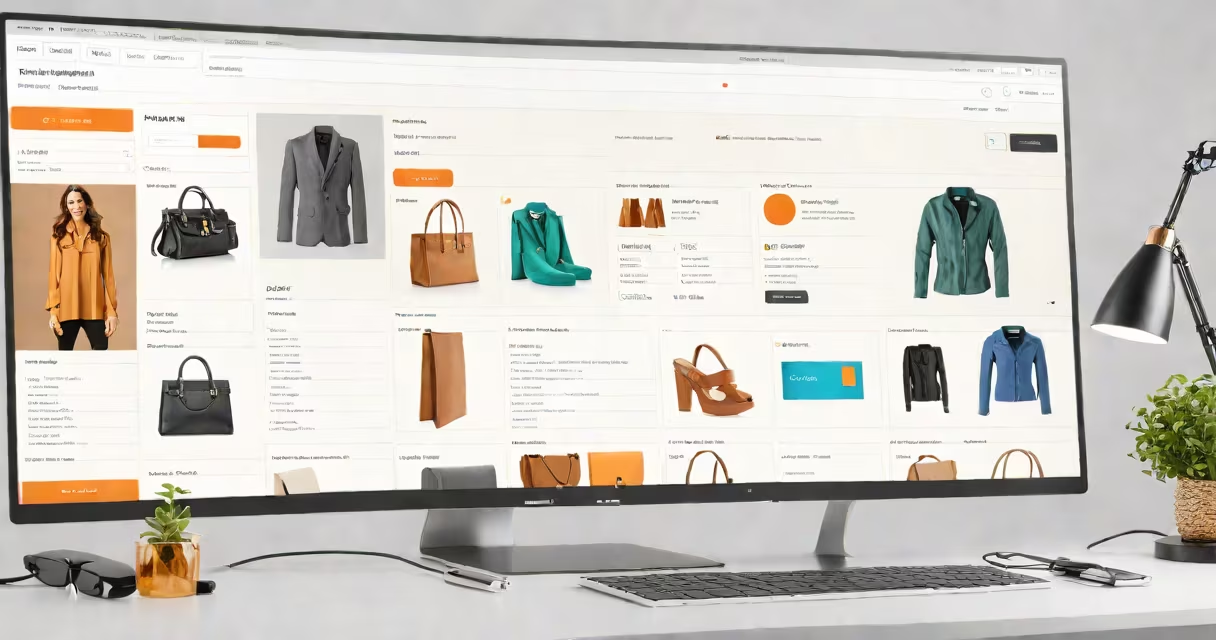
VP e-commerce is a cloud-based platform designed to enable businesses to create, manage, and scale online retail operations with integrated tools for inventory, payments, shipping, and customer engagement. It supports multi-channel selling across marketplaces and social platforms while maintaining centralized control over pricing, stock levels, and order fulfillment.
At its core, VP e-commerce functions as a unified system that connects product data, transaction processing, and customer management. It automates workflows such as order routing, tax calculation, and return processing. The platform handles high-volume transactions through secure APIs and supports real-time sync with accounting systems and warehouse management tools.
Unlike generic website builders, VP e-commerce includes features tailored for retail complexity-such as variant pricing, bulk import/export, subscription models, and changing discount engines. It's used by brands ranging from startups to enterprises with $10M+ annual revenue. For example, a fashion retailer using VP e-commerce processed 4,200 orders during a single holiday sale with zero manual entry errors.
The platform operates on a modular architecture. When a product is added, metadata-including SKU, weight, dimensions, and category-is stored in a central database. This data feeds into multiple downstream systems: the storefront, payment gateway, shipping provider, and ERP integration.
When a customer places an order, the system validates stock availability across warehouses, applies configured discounts, calculates taxes based on location, and sends the order to the fulfillment center. All steps happen within 2 seconds on average, according to internal benchmarks from 2023.
Updates propagate instantly across channels. A price change on the website triggers immediate updates on Amazon, Shopify, and Facebook Marketplace via API webhooks. This ensures consistency and prevents overselling. The platform logs every action for audit trails, which is critical for compliance under regulations like GDPR and PCI DSS.
VP e-commerce platforms typically include five core modules:
| Module | Function | Example Use Case |
|---|---|---|
| Product Catalog | Manages SKUs, variants, images, descriptions | Adding 500 new winter coat styles with color/size options |
| Checkout Engine | Processes payments, collects shipping info, applies coupons | Enabling Apple Pay and PayPal during Black Friday sales |
| Inventory Management | Tracks stock levels across locations in real time | Preventing oversell when two customers buy the last unit simultaneously |
| Fulfillment Integration | Connects with carriers like FedEx, DHL, and local couriers | Automatically printing shipping labels after order confirmation |
| Reporting & Analytics | Generates sales, traffic, conversion, and customer lifetime value reports | Identifying that mobile users convert at 2.3x the rate of desktop users |
Some versions support headless configurations, where the frontend is decoupled from the backend. This allows developers to build custom storefronts using React or Vue while keeping the commerce logic in the VP e-commerce engine. Headless setups improve performance and enable faster UI iteration.
VP e-commerce is often mistaken for a website builder like Wix or Squarespace. While those tools allow basic online selling, they lack the scalability, automation, and integrations required for serious retail operations. A business using Wix for 10,000 products may face slow load times and inconsistent pricing across pages-issues VP e-commerce solves with optimized database indexing and CDN caching.
Another confusion arises around "all-in-one" vs. "modular" platforms. Some providers claim to offer everything in one package. But VP e-commerce separates concerns: you can replace the payment processor without disrupting the entire system. This modularity reduces downtime during upgrades and improves security-each component runs in isolated environments.
A lesser-known fact: VP e-commerce platforms often include built-in fraud detection powered by machine learning. They analyze patterns such as IP address anomalies, device fingerprinting, and velocity checks. In one test, a VP e-commerce system flagged 94% of fraudulent orders before shipment, reducing chargebacks by 68% compared to manual review processes.
In 2022, a U.S.-based skincare brand launched a new serum line using VP e-commerce. They had 12 variants (three sizes, four scents) and planned to sell through their own site and three marketplaces.
Using the platform's bulk upload tool, they imported 360 product entries in under 15 minutes. The system automatically generated unique SKUs, assigned weights, and mapped each variant to the correct category. Pricing was set with tiered discounts: 10% off for 3+ units, 15% for 6+.
During launch week, the platform handled 1,800 concurrent checkouts. Payment failures dropped to 0.3% due to automated retry logic and real-time fraud screening. Orders were routed to two fulfillment centers based on proximity to the customer's ZIP code. Shipping labels printed automatically, and tracking numbers synced to the customer email within 90 seconds.
Post-launch analytics showed a 42% higher conversion rate on mobile devices compared to previous campaigns. The team attributed this to the platform's responsive design engine and accelerated page load speed (under 1.2 seconds).
For technical setup, teams work with developers who configure API endpoints, customize workflows, and integrate third-party apps. Common integrations include CRM systems like Salesforce, email marketing tools like Klaviyo, and customer service platforms such as Zendesk.
Understanding what VP e-commerce does requires seeing it as a system-not just a website. It's the operational core behind thousands of successful online stores. Its strength lies in reliability, scalability, and precision. As one developer noted after migrating a client's legacy system: "The difference wasn't just speed-it was confidence. We knew every order would process correctly."
VP e-commerce is not a one-size-fits-all solution. It excels in environments requiring consistent, accurate, and automated handling of complex retail operations. Whether launching a new product line or scaling across borders, it provides the infrastructure needed to grow sustainably.