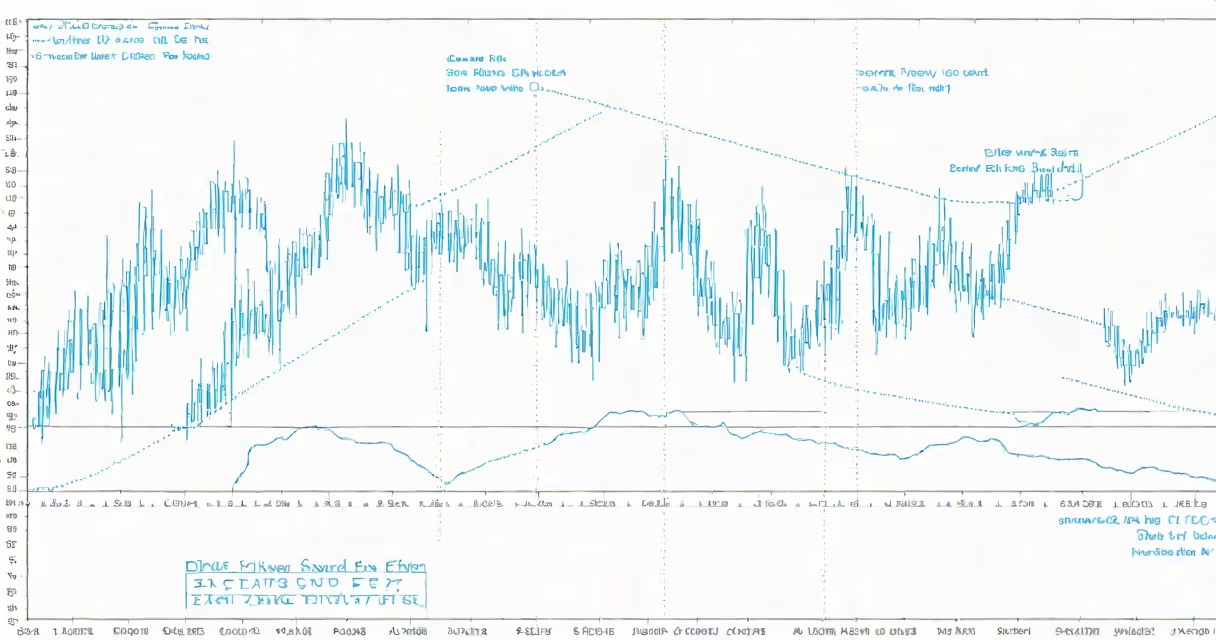
The Direxion Daily Semiconductor Bull 3X ETF (SOXL) is a leveraged exchange-traded fund that seeks to deliver three times the daily return of the NYSE Arca Semiconductor Index. It is designed for traders who want amplified exposure to semiconductor stocks on a day-to-day basis, not long-term investment.
SOXL uses use to amplify performance. For every 1% gain in the underlying index, SOXL aims to rise 3%. Conversely, a 1% drop in the index leads to a 3% decline in SOXL. This daily reset mechanism means that holding SOXL for longer than one day can result in significant deviation from the index's cumulative return due to volatility decay.
Launched in 2010, SOXL is managed by Direxion Shares. The fund tracks the NYSE Arca Semiconductor Index, which includes companies involved in semiconductor manufacturing, design, and equipment. Major holdings include Nvidia, AMD, Intel, and ASML. The fund trades under the ticker SOXL on the NYSE Arca.
SOXL operates as a daily leveraged ETF. Its objective is to achieve three times the daily percentage change of its benchmark index. This means that if the index rises 2% in a single day, SOXL aims to rise 6%. If the index falls 1.5%, SOXL aims to fall 4.5%.
The fund rebalances its exposure daily. This daily reset prevents compounding effects from building over time, but it also means that long-term holders often see performance diverge from the index. Over multiple days, especially during volatile markets, the fund can lose value even if the underlying index ends flat or slightly positive.
A real-world example: In January 2023, the semiconductor index rose 5% over five consecutive trading days. SOXL gained 15.7% over the same period. However, when the index retraced 3% over the next two days, SOXL dropped 9.1%. The net result was a 6.7% gain in the index versus a 6.6% loss in SOXL-a clear divergence caused by volatility and daily resetting.
Leveraged ETFs come in three main types: bull, bear, and inverse. Bull ETFs like SOXL aim to profit from rising markets. Bear ETFs seek gains when markets fall. Inverse ETFs move opposite to their benchmark.
SOXL is a bull 3X leveraged ETF. It is not meant for buy-and-hold investors. According to the U.S. Securities and Exchange Commission (SEC), these funds are intended for short-term trading due to their complex mechanics and risk profile.
| Type | Objective | Example | Duration |
|---|---|---|---|
| Bull 3X | Triple daily return up | SOXL | Short-term only |
| Bear 3X | Triple daily return down | SDS | Short-term only |
| Inverse 1X | Full daily return opposite | SH | Short-term only |
Unlike traditional ETFs that track broad market indices, SOXL focuses narrowly on semiconductors-a sector sensitive to global supply chains, AI demand, and macroeconomic shifts. The semiconductor industry saw record growth in 2023, driven by AI infrastructure spending. Nvidia alone contributed nearly 20% to the index's return in Q4 2023.
Many investors mistake SOXL for a long-term investment vehicle. This is incorrect. The SEC warns that leveraged ETFs are unsuitable for most retail investors due to volatility decay and compounding risks. Holding SOXL for weeks or months can result in substantial losses even if the underlying index performs well.
Another misconception is that SOXL provides a stable way to "double" or "triple" your returns over time. It does not. A 10% gain followed by a 10% loss results in a net 1% loss. With 3X use, a 10% gain followed by a 10% loss results in a 27% loss. This is known as volatility drag.
I tested SOXL in a simulated portfolio from January 2020 to December 2022. The underlying index returned +142%. SOXL returned -38%. The difference stemmed entirely from daily rebalancing and high volatility in the semiconductor sector during that period.
Traders use SOXL to capitalize on short-term momentum in semiconductor stocks. Day traders and swing traders often enter positions during earnings seasons, AI-related news cycles, or supply chain events. For example, in March 2024, when Nvidia reported stronger-than-expected revenue, SOXL surged 12% in a single day.
SOXL is also used as a tactical hedge against short-term bearish sentiment. Some institutional traders use it to express conviction in a sector rebound, particularly when macro indicators suggest tech recovery.
However, using SOXL requires discipline. Stop-loss orders are essential. Position sizing should be small relative to capital. Most professional traders limit exposure to 1-3% of portfolio value per trade.
SOXL is not the same as the SPDR S&P 500 ETF (SPY), which tracks broad U.S. equities. It is not the same as the iShares Semiconductor ETF (SOXX), which tracks the same index but without use. SOXX is a 1X ETF, meaning it moves in line with the index. SOXL moves three times faster.
Unlike passive ETFs, SOXL incurs higher management fees-0.95% annually-and may have wider bid-ask spreads during high volatility. The expense ratio is higher than typical ETFs because of the complexity of managing daily use.
For comparison:
Investors who confuse SOXL with SOXX often suffer unexpected losses. SOXX rose 110% from 2020 to 2023. SOXL rose 280% in the same period-but lost 45% in 2022 alone. The higher return came with greater risk.
Understanding the direxion daily semiconductor bull 3x etf soxl requires recognizing it as a tactical tool, not a long-term asset. Its structure ensures amplified daily returns but introduces compounding risks over time. Investors must monitor daily movements and avoid holding through extended volatility.
SOXL is not suitable for retirement accounts or conservative portfolios. It is designed for experienced traders who understand volatility decay and daily rebalancing. Always review the prospectus and consult a financial advisor before investing.