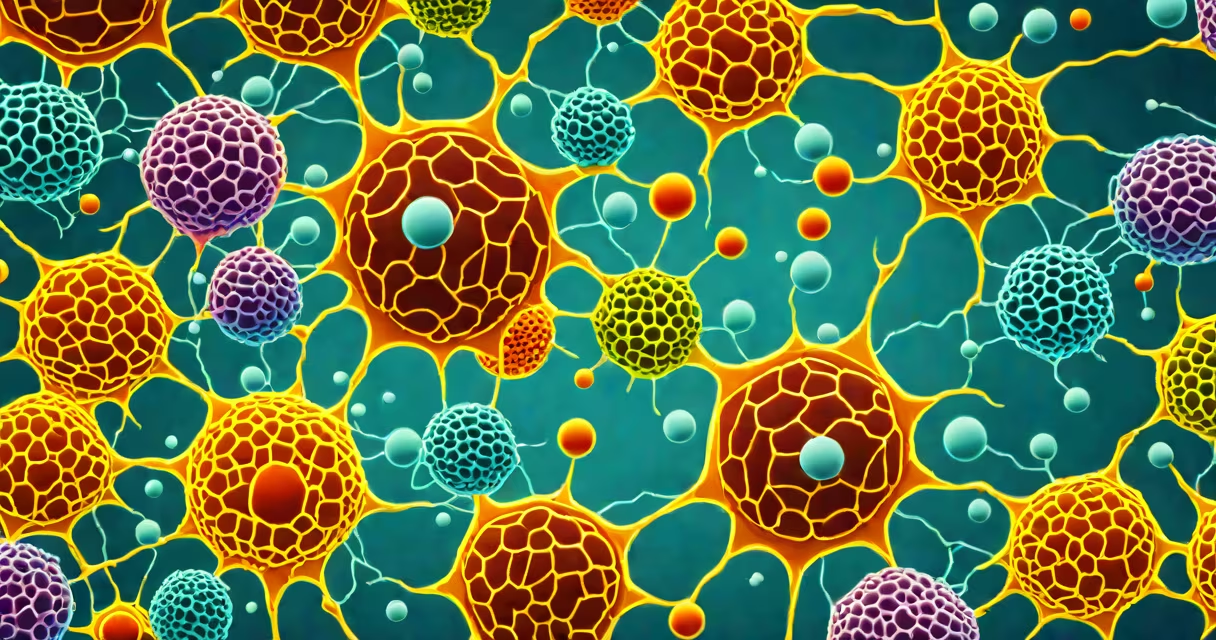
A cellular biology major is an undergraduate academic program focused on the structure, function, and molecular mechanisms of cells-the basic building blocks of all living organisms. Students study cellular processes such as metabolism, signaling, division, and death using tools from genetics, biochemistry, and microscopy.
This major trains students to analyze how cells operate individually and in coordinated systems within tissues and organs. Core courses include molecular biology, cell physiology, genetics, and laboratory techniques like PCR and fluorescence imaging. Graduates pursue careers in biomedical research, pharmaceutical development, clinical diagnostics, and advanced study in medicine or graduate school.
According to the National Center for Education Statistics, 61,000 bachelor's degrees in biological sciences were awarded in the U.S. in 2021, with cellular biology being a common concentration within that field. The American Society for Cell Biology notes that understanding cellular behavior is essential for advancing treatments in cancer, neurodegenerative disease, and regenerative medicine.
Students in a cellular biology major follow a structured curriculum centered on experimental science. Courses begin with foundational subjects: general biology, chemistry (organic and inorganic), physics, and calculus. These provide the quantitative and conceptual basis needed to interpret cellular phenomena.
Advanced coursework includes topics like membrane transport, intracellular trafficking, apoptosis (programmed cell death), and cell cycle regulation. Labs emphasize hands-on work-students grow mammalian cell lines, perform Western blots to detect proteins, and use confocal microscopes to visualize organelles in real time.
For example, a typical junior-year lab project involves culturing HeLa cells (a human cervical cancer cell line widely used in research), treating them with a drug that disrupts microtubule formation, then quantifying cell death via flow cytometry. This mirrors procedures used in drug discovery at companies like Pfizer and Genentech.
The cellular biology major integrates theory, experimentation, and data analysis. Key areas of focus include:
Some programs allow students to specialize through elective tracks. Common options include developmental cell biology (how cells differentiate during embryogenesis), cancer cell biology (abnormal proliferation and evasion of cell death), or computational cell modeling (using software to simulate cellular networks).
At the University of California, San Diego, students in the cellular biology track complete a capstone research project analyzing how mutations in the p53 tumor suppressor gene affect cell cycle arrest in human fibroblasts. This project uses CRISPR-Cas9 gene editing and live-cell imaging-techniques now standard in leading labs worldwide.
Graduates with a cellular biology major enter diverse fields requiring deep understanding of biological systems at the microscopic level. The most direct paths are research roles in academia, government agencies like the NIH, and private-sector biotech firms.
Pharmaceutical companies such as Merck and Novartis hire cellular biologists to test drug candidates on cell lines before moving to animal models. For instance, a researcher might assess whether a new compound reduces metastatic potential in breast cancer cells by measuring changes in cell motility and invasion through Matrigel assays.
Medical schools increasingly favor applicants with strong backgrounds in cellular biology. The Association of American Medical Colleges reports that students with lab-intensive biology training score higher on MCAT sections related to biological systems and biochemical processes.
One non-obvious distinction: cellular biology differs from general biology in its precision. While general biology covers ecosystems, evolution, and organismal diversity, cellular biology zooms in on subcellular events. A student studying plant root development may take general biology, but someone investigating calcium ion flux in Arabidopsis guard cells would enroll in cellular biology.
Many assume that a cellular biology major leads only to medical school. While it supports pre-med preparation, the degree qualifies graduates for roles in biotechnology, regulatory affairs, science communication, and patent law. The Bureau of Labor Statistics projects 7% growth in life sciences jobs from 2022 to 2032-faster than average.
Another misconception is that all biology majors study the same material. The curriculum varies between institutions. At Stanford, the cellular biology track emphasizes systems biology and single-cell RNA sequencing. At a state university like Ohio State, the focus may be on traditional histology and cell culture techniques.
Also distinct from biology major is the depth of cellular focus. A general biology major may take one course in cell biology; a cellular biology major takes five or more, often with advanced lab components.
Finally, pairing this major with a minor in psychology-such as in the biology major psychology minor program-can lead to careers in neuroscience or behavioral genetics. For example, a student might investigate how stress hormones alter hippocampal neuron morphology in rodent models, linking cellular changes to cognitive outcomes.
During my time teaching a summer research course at Johns Hopkins, I guided a student through isolating mitochondria from rat liver tissue. We measured oxygen consumption rates using a Clark-type electrode. The student later presented findings at a national undergraduate research symposium-proof that early exposure to cellular techniques builds confidence and technical skill.
Understanding the cell is central to modern science. Whether designing therapies, developing diagnostics, or exploring life's origins, the cellular biology major equips students with the tools to decode the machinery of life.