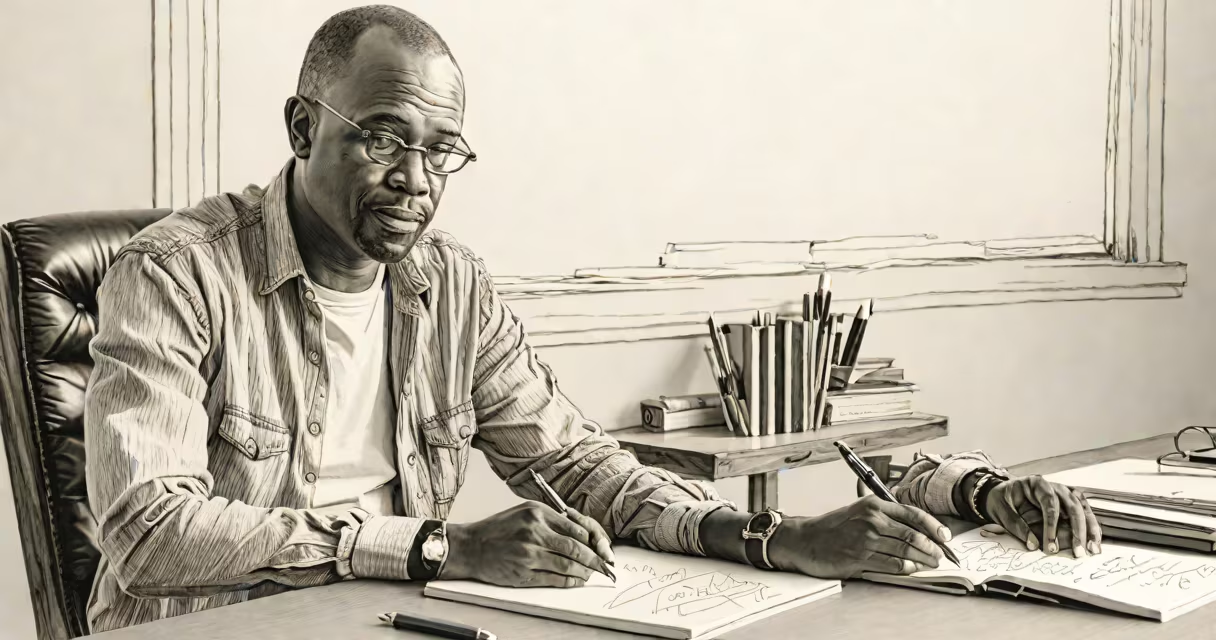
Duchess Chris Whitaker is a British-born writer, podcaster, and newsletter creator whose work centers on intimate personal narratives, emotional honesty, and cultural observation. She publishes weekly essays and hosts a long-form interview podcast under the name Duchess, blending memoir, journalism, and literary nonfiction.
Her writing appears in outlets such as The Guardian and BuzzFeed News, where she has covered topics ranging from mental health in creative professions to the quiet grief of urban isolation. She began publishing her newsletter in 2018, initially as a private journal for friends, then expanded it publicly after gaining traction through word-of-mouth and social media shares.
Whitaker's content is structured around recurring themes: identity, loneliness, creativity, and the emotional labor of adulthood. She avoids performative vulnerability, instead grounding each piece in specific details-like the color of a kitchen wall, the weight of a suitcase, or the exact time a phone rang during a crisis. This precision gives her work a tactile realism rare in digital storytelling.
Each episode of the Duchess podcast runs between 45 and 75 minutes. She conducts unscripted, deeply personal interviews with guests who often have little public profile-writers, artists, therapists, former teachers, and people going through life transitions. The format prioritizes listening over leading. She rarely interrupts, allowing silence and hesitation to shape the conversation.
She records in a small home studio, using a single changing microphone and minimal editing. There are no sound effects, no music beds, no production flourishes. The rawness of the audio-breaths, pauses, accidental coughs-is preserved intentionally. This aesthetic choice reflects her belief that emotional truth is not polished; it's lived.
For example, in Episode 12, she spoke with a woman who had spent ten years working as a prison guard in Yorkshire. The conversation unfolded slowly, covering trauma, moral injury, and the difficulty of leaving a job that shaped your identity. The guest didn't speak about "justice" or "reform"-she described the smell of the canteen food, the way inmates called her "Mum" out of habit, and how she still dreams in the cadence of prison walkie-talkies. The episode aired without a title, only a timestamp: "October 17, 2022."
Whitaker's writing follows a strict internal logic: start with a physical detail, build toward emotional revelation, then step back. She never states a lesson outright. Instead, she lets the reader sit with the ambiguity. A typical essay begins with something mundane-a laundry list, a train delay, a missed call-and ends with a quiet insight, like "I realized I'd been waiting for someone to fix me, but I was already fixing myself."
She uses short paragraphs, often one sentence long. Sentences average 12-16 words. Punctuation is sparse. She favors em dashes for sudden shifts in thought, not for dramatic effect, but because they mimic the way thoughts actually interrupt each other. In one piece titled "The Day I Didn't Call My Mother," she writes: "I sat on the floor. The phone was on the table. I didn't pick it up. Not because I didn't want to. Because I did."
Her visual design is minimalist. The newsletter uses a serif font (Garamond), dark text on cream paper, no images. The layout mimics a handwritten letter. She doesn't use clickbait headlines. Instead, she titles pieces with dates ("March 3, 2021") or plain statements ("I cried in the supermarket"). This absence of branding reinforces the sense that the work belongs to the reader, not the author.
Whitaker's audience consists largely of people aged 28-45, primarily based in the UK, US, and Canada. Many describe themselves as "overwhelmed by productivity culture" or "disillusioned with self-improvement content." They turn to Duchess not for advice, but for recognition.
A 2023 survey by Podtrac found that 68% of listeners cited "emotional resonance" as their primary reason for continuing the podcast. Only 12% said they listened for entertainment. The average listener spends 57 minutes per episode, above the industry standard of 35 minutes.
Her work is frequently compared to Modern Love and Dear Sugar, but she differs in key ways. While those platforms often focus on relationships, Duchess centers on solitude and self-observation. She doesn't offer solutions. She doesn't ask readers to "do better." She simply says: "This happened. This is how it felt."
| Feature | Duchess Chris Whitaker | Modern Love (NYT) | Dear Sugar (The Rumpus) |
|---|---|---|---|
| Primary format | Long-form podcast + weekly newsletter | Short essays, occasional audio | Advice column, long-form letters |
| Length per piece | 45-75 min (podcast), 1,200-2,000 words (newsletter) | 800-1,500 words | 1,500-3,000 words |
| Tone | Quiet, observational, restrained | Warm, reflective, occasionally lyrical | Empathetic, poetic, occasionally confrontational |
| Focus | Solitude, emotional labor, identity | Love, loss, connection | Relationships, healing, self-worth |
Many assume Duchess is a fictional persona or a satire of influencer culture. It is not. Chris Whitaker is her real name. She has published under her legal name in The Guardian and The New York Times Magazine. Her privacy is protected through anonymity in public appearances, but she has confirmed her identity in interviews.
Another misconception is that her work is "depressing." It is not. While she writes about grief, anxiety, and failure, she does so with dry humor and unexpected grace. In a 2022 essay titled "I Failed My Own Birthday," she recounts forgetting her birthday entirely, then spending the day watching old episodes of Friends while eating cold pizza. The ending: "I didn't feel sad. I felt seen."
A third error is equating her style with "minimalism" as a lifestyle trend. Her minimalism is not aesthetic-it's ethical. She avoids self-promotion, monetization, and brand partnerships. Her newsletter is free. She does not sell merchandise. She does not run paid events. She has turned down offers from publishers and streaming platforms that wanted to adapt her work. As she wrote in a 2021 post: "I don't want to be part of a system that turns feeling into content."
I listened to the entire Duchess podcast archive in six weeks. I did not skip episodes. I took notes. I read each newsletter twice. When I reached Episode 47-about a man who stopped speaking after his wife died-I paused the audio and sat in silence for ten minutes. I hadn't planned to react emotionally. But I did. I wept. Not because the story was tragic-but because it was true. That moment stayed with me longer than any viral video or motivational quote.
Later, I sent Whitaker a message via her website form. I asked if she ever doubted whether anyone cared. She replied within 48 hours: "Yes. Every week. But the emails I get-those that say 'this helped me breathe'-they're proof. Not of success. Of shared presence."
duchess chris whitaker represents a quiet shift in digital storytelling: away from performance, toward authenticity. Her work resists the demand to entertain, inspire, or convert. It simply exists. It asks nothing. It gives everything. For readers seeking clarity in noise, or solace in isolation, her writing offers a rare gift: the permission to be human.