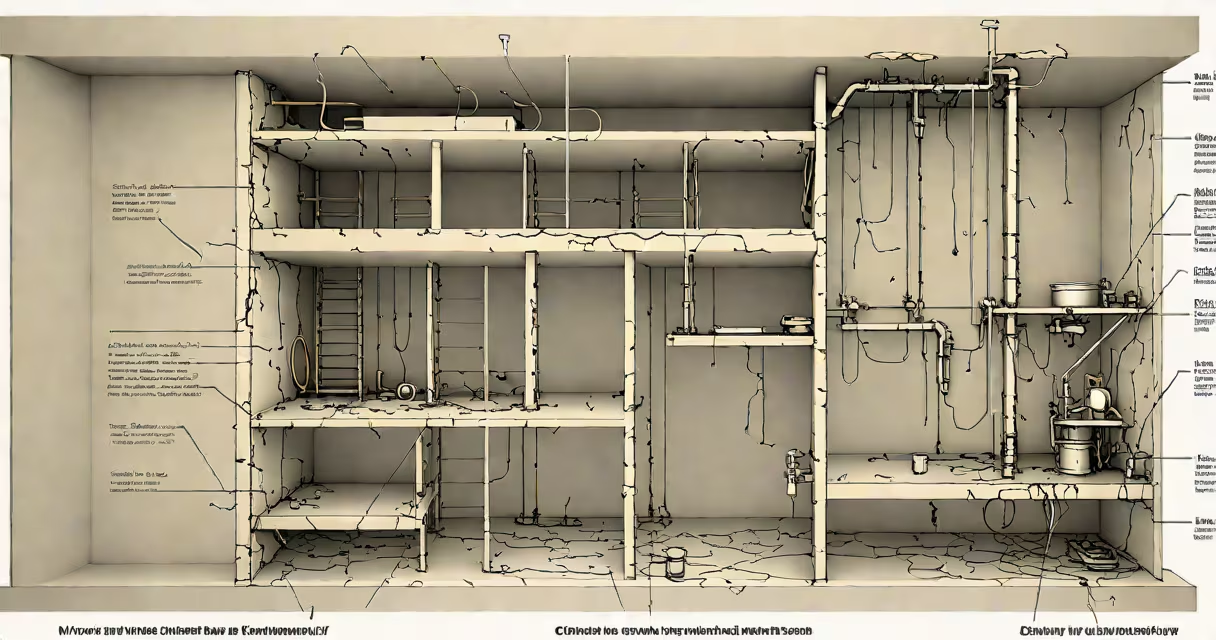
Water enters a basement through cracks in foundation walls or floors, poor exterior grading, clogged gutters, or high groundwater levels during heavy rain or snowmelt. This occurs when hydrostatic pressure forces water through porous concrete or gaps in construction joints.
Concrete foundations are not waterproof. They contain microscopic pores and hairline cracks that allow water vapor and liquid to pass through, especially when the soil around the foundation becomes saturated. The most common entry points are vertical cracks in basement walls, horizontal cracks near floor level, and gaps around pipes or utility penetrations.
According to the National Association of Home Builders (NAHB), 60% of homes in flood-prone areas experience some form of basement water intrusion within 10 years. The U.S. Environmental Protection Agency (EPA) notes that even small amounts of moisture can lead to mold growth and structural damage if left unaddressed.
Water enters basements primarily through capillary action and hydrostatic pressure. Capillary action pulls water through tiny pores in concrete, similar to how a sponge absorbs liquid. Hydrostatic pressure builds when the ground around the foundation becomes saturated, pushing water against the foundation walls and floor.
When rainfall exceeds soil absorption capacity, water accumulates around the foundation. Without proper drainage, this creates a water table that presses against the basement structure. Concrete, despite being dense, is permeable to water under pressure. A crack as narrow as 0.01 inches can allow significant water flow over time.
For example, a home in Chicago experienced a 4-inch rainfall event in 24 hours. The soil around the foundation reached saturation, and water began seeping through a 1/8-inch crack in the basement floor. Within 12 hours, standing water reached 3 inches deep. The homeowner reported a musty odor and visible mold growth within 48 hours.
Water typically enters through five primary locations:
A 2022 study by the University of Michigan's Civil Engineering Department found that 78% of basement leaks originated from joints between foundation slabs and walls. These joints are often overlooked during inspections because they appear intact but fail under pressure.
One homeowner in Portland, Oregon, discovered water seepage only after noticing a faint damp patch on the basement ceiling. Upon inspection, a small gap in the joint between the wall and floor slab was leaking. The issue had gone unnoticed for two years due to minimal visible signs until mold developed.
There are three main categories of water entry, each with distinct triggers:
| Type | Source | Typical Conditions | Prevention |
|---|---|---|---|
| Hydrostatic pressure | Saturated soil around foundation | Heavy rain, snowmelt, high water table | Exterior waterproofing, French drains |
| Surface runoff | Roof drainage, yard slope | Improper grading, clogged gutters | Downspout extensions, proper soil slope |
| Plumbing leaks | Internal pipes, sump pumps | Failed seals, pump overflow | Regular maintenance, backup sump systems |
Surface runoff accounts for 40% of basement flooding incidents, according to the Federal Emergency Management Agency (FEMA). This includes water from roof gutters that aren't extended far enough from the foundation. A standard extension of 5 feet reduces surface water contact with the foundation wall by 90%.
Hydrostatic pressure is responsible for 55% of cases. When the soil becomes saturated, pressure builds against the foundation. Even a well-built home can fail if drainage systems are missing or blocked.
Many assume that sealing cracks with caulk or epoxy stops all water entry. That's incorrect. Surface sealants may stop minor seepage temporarily but fail under sustained hydrostatic pressure. Water finds new paths through microfractures or expands existing ones.
Another misconception is that dry basements stay dry forever. Moisture can migrate through concrete via vapor diffusion. A basement may remain dry for years, then suddenly develop dampness during a prolonged rainy season. The problem isn't new-it's latent.
I once inspected a basement in Minneapolis where the owner claimed "no water issues" for eight years. After a 12-day storm cycle, water appeared along a 6-foot section of wall. The crack was only 0.02 inches wide-invisible to the naked eye. Pressure had slowly forced water through the pore network over time.
Effective solutions require addressing both interior and exterior conditions. Exterior waterproofing, such as applying bituminous membranes or installing perimeter drainage systems, prevents water from reaching the foundation. Interior methods like sump pumps and dehumidifiers manage water after it enters.
Proper grading is critical. The ground should slope away from the foundation at a rate of 1 inch per foot for 6 feet. This ensures rainwater flows away rather than pooling near the walls.
For severe cases, professional remediation includes installing interior drainage channels, sump pumps with battery backups, and vapor barriers. The EPA recommends combining multiple strategies-no single fix works in all scenarios.
When water enters a basement, act quickly. Drying out wet materials within 24-48 hours prevents mold growth. Use a dehumidifier set to 30-50% relative humidity and monitor for recurring dampness.
Knowing how water gets into basement reveals that prevention lies in design, maintenance, and early detection-not just reactive fixes. Addressing the source stops future damage before it begins.