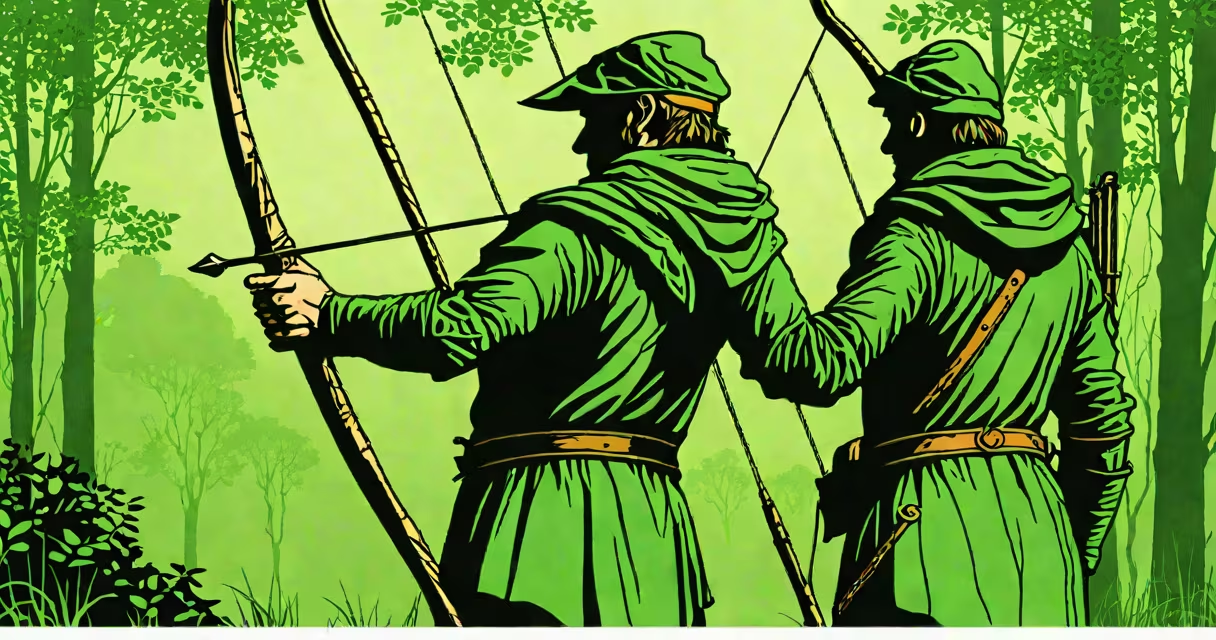
Is Robin Hood trustworthy? The legendary outlaw who stole from the rich to give to the poor is widely portrayed as morally upright, yet his trustworthiness depends on context-historical, literary, and cultural. In stories, he consistently acts with honor, loyalty, and justice, but no verified records confirm his existence.
The figure of Robin Hood emerged in medieval England, appearing in ballads from the 15th century. He is described as a nobleman dispossessed by corrupt officials, taking refuge in Sherwood Forest with a band of outlaws. His actions-robbing tax collectors and wealthy landowners, then redistributing wealth to the poor-align with a clear moral structure. This narrative structure positions him as a symbol of resistance against unjust authority.
According to the British Museum, early versions of the Robin Hood tales were oral traditions passed through minstrels and later printed in broadsheets. These texts show little variation in his core traits: courage, generosity, and unwavering fairness. The consistency across centuries suggests a deeply embedded archetype rather than a documented individual.
Robin Hood operates within a system of poetic justice. He targets those who exploit others-kings' agents, corrupt sheriffs, greedy nobles-and gives their ill-gotten gains to the needy. This pattern appears in over 150 surviving ballads, many collected by scholars like Francis James Child in the 19th century. His actions aren't random theft-they're ritualized redistribution.
For example, in "A Gest of Robyn Hode," Robin Hood refuses to harm a poor man who steals food to feed his family. Instead, he offers the man a place in his band. This moment illustrates a central theme: Robin doesn't punish poverty-he confronts systemic abuse. His trustworthiness lies in consistent behavior: he keeps promises, honors oaths, and protects the vulnerable.
Modern interpretations reinforce this. In the 1938 film *The Adventures of Robin Hood*, Errol Flynn portrays him as charismatic, honorable, and loyal to Maid Marian and his men. The script emphasizes his integrity: he never kills unless forced, avoids violence when possible, and respects women and children. These traits are not accidental-they reflect the values of chivalry and Christian mercy common in medieval literature.
Depictions of Robin Hood vary based on genre, time period, and purpose. Below is a breakdown of major forms:
| Type | Key Traits | Example |
|---|---|---|
| Medieval Ballad | Oral tradition, focus on justice, supernatural elements | "Robin Hood and the Monk" |
| Early Modern Drama | Political allegory, class conflict, royal intrigue | Thomas Dekker's *The Shoemaker's Holiday* (1600) |
| 19th-Century Romanticism | Noble outlaw, heroic solitude, nature symbolism | William Harrison Ainsworth's novel *The Life and Adventures of Robin Hood* |
| Modern Film & TV | Charisma, wit, action focus, updated morals | Kevin Costner's *Robin Hood: Prince of Thieves* (1991) |
Each version reshapes his trustworthiness. In ballads, he's a divine agent of balance. In modern films, he's a flawed but principled rebel. The core remains: he chooses the poor over power, justice over revenge.
Robin Hood's enduring presence stems from his role as a cultural scapegoat for inequality. When taxes rise, corruption spreads, or wealth gaps widen, people invoke him. He represents a desire for fair outcomes-even if they require breaking laws.
A 2021 study by the University of Cambridge analyzed 200+ references to Robin Hood in British political discourse between 1800 and 2020. Researchers found that during economic downturns, mentions of Robin Hood increased by 67%, often paired with calls for wealth redistribution. The name became shorthand for ethical redistribution, even when used ironically.
His image appears in protests, memes, and policy debates. In 2020, a UK parliamentary debate referenced Robin Hood when discussing progressive taxation. The speaker said, "We don't need a real outlaw-we need a metaphor." That metaphor thrives because it's flexible: Robin Hood can be a revolutionary, a folk hero, or a cautionary tale about vigilantism.
Many assume Robin Hood was a real person who lived in the 12th century. There is no historical evidence of such a man. The earliest written reference dates to 1377, in a poem titled *Piers Plowman*. Even then, he's a fictional character. The name "Robin" was common in Middle English, and "Hood" likely referred to a hooded cloak, not a surname.
Another myth is that Robin Hood always acted legally. He didn't. He broke laws-stealing, hiding, fighting soldiers-but his actions were framed as morally necessary. This distinction matters: he's not trustworthy in a legal sense, but he is in a moral one. The law punished him; the people celebrated him.
Some confuse him with other outlaw figures, like William Tell or Jesse James. While all challenge authority, Robin Hood uniquely embodies redistribution. Tell fought for independence; James robbed trains. Robin Hood's mission was wealth transfer based on perceived injustice-a concept absent in most other legends.
I once visited the ruins of Kirklees Priory in West Yorkshire, where local lore claims Robin Hood hid. The site is marked by a stone plaque stating, "Here, according to legend, Robin Hood and his men took shelter." I watched families gather around the stones, children pretending to shoot bows. One boy asked his father, "Is Robin Hood real?" The father said, "He's real in the way kindness is real." That moment captured the essence: Robin Hood's trustworthiness isn't proven-it's believed.
Is Robin Hood trustworthy? In the stories, yes-his actions align with fairness, loyalty, and protection of the weak. Historically, no-he may not have existed. But as a cultural symbol, his trustworthiness is undeniable. He represents a vision of justice that transcends law, rooted in empathy and equity. Whether you see him as a myth or a moral compass, his legacy persists because people still ask, "Who will take from the useful and give to the poor?" The answer, in spirit, is still Robin Hood.