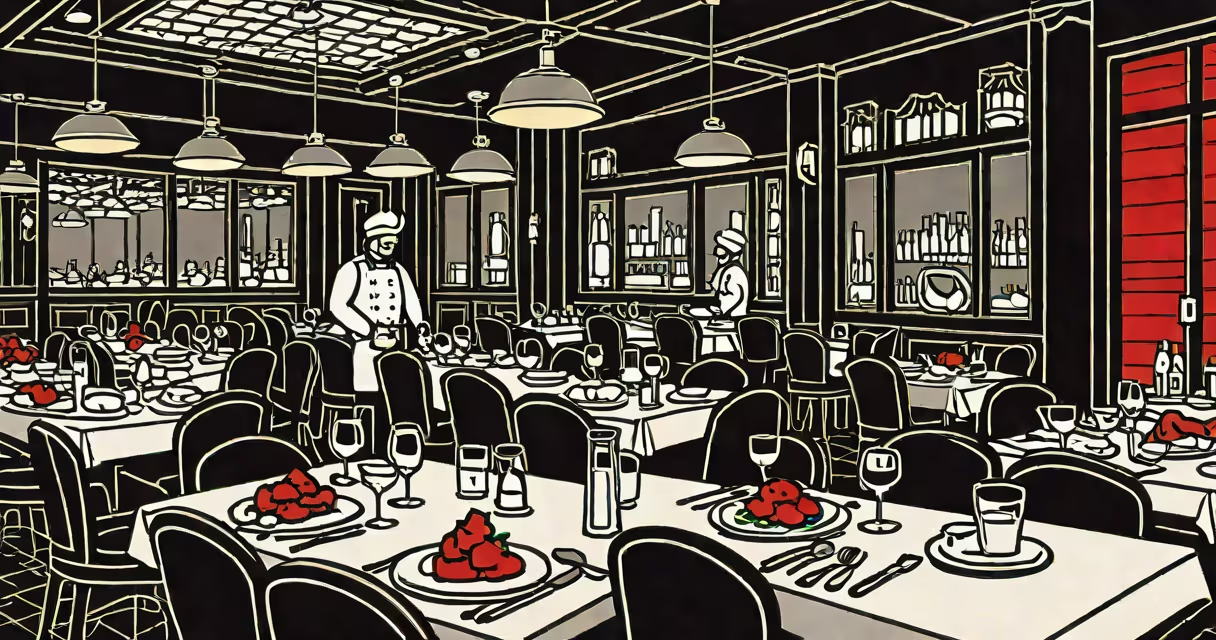
michelin guide restaurants are dining establishments evaluated and ranked by the Michelin Guide, a publication originating in France that awards one to three stars based on quality of ingredients, culinary skill, value, and consistency. The system, established in 1900, remains one of the most influential benchmarks in global fine dining.
The Michelin Guide uses a strict evaluation process. Anonymous inspectors visit restaurants unannounced, paying for meals under typical conditions. They assess dishes based on five criteria: quality of ingredients, mastery of flavor and technique, originality, value, and the chef's personal expression. A single star indicates "a very good restaurant," two stars mean "excellent cooking, worth a detour," and three stars signify "strong cuisine, worth a special process."
Restaurants earn their rating through repeated visits by inspectors who maintain anonymity. The guide does not accept applications or advertising. A restaurant may lose a star if standards drop, even after years of recognition. This accountability ensures ratings reflect current performance, not past reputation.
Each Michelin Guide is region-specific. The original French edition covers France and neighboring countries. Separate editions exist for the UK, Germany, Italy, Japan, and the United States. The U.S. edition began in 2016 and now includes over 1,000 restaurants across 30 states. Each regional team operates independently, using local expertise to assess authenticity and cultural context.
Inspection teams consist of trained evaluators who do not disclose their identity. They avoid publicizing their presence and often dine multiple times to verify consistency. A single visit is insufficient. The guide emphasizes reliability-dishes must taste the same across multiple orders and visits.
For example, Eleven Madison Park in New York City held three Michelin stars from 2017 to 2020. After a major menu overhaul and closure during the pandemic, it was re-evaluated and received one star in 2022. The downgrade reflected changes in execution and service, not just menu shifts. This illustrates how ratings respond to real-world performance, not branding.
While stars are the most visible metric, the guide offers several other designations:
| Recognition | Description | Examples |
|---|---|---|
| One Star | Very good restaurant in its category | Le Bernardin (New York), Noma (Copenhagen) |
| Two Stars | Excellent cooking, worth a detour | Eleven Madison Park (NYC), Delfina (San Francisco) |
| Three Stars | Strong cuisine, worth a special process | Per Se (NYC), Osteria Francescana (Modena) |
| Bib Gourmand | High-quality food at reasonable prices | La Taquería (San Francisco), Bistro L'Ami Jean (Paris) |
| Green Star | Outstanding sustainability practices | Restaurant K (Oslo), Le Jardin des Sens (France) |
The Bib Gourmand designation highlights value dining. Restaurants earning this label serve excellent food at under $50 per person. In 2023, the U.S. guide listed 147 Bib Gourmand winners, including places like Pizzeria Bianco in Phoenix and The Salty Pig in Portland. These entries show the guide's reach beyond luxury dining.
Since 2020, the Green Star has recognized sustainable practices. Criteria include sourcing local ingredients, reducing waste, and minimizing carbon footprint. A 2022 study by the University of California, Davis, found that Michelin Green Star restaurants reduced food waste by 37% compared to non-designated peers. This metric shows the guide's expanding role in environmental accountability.
Many assume Michelin stars are awarded based on price or decor. This is false. A restaurant with a modest interior and low prices can earn three stars. The 2021 Michelin Guide included a three-star restaurant in Tokyo called Sushi Saito, which charges around $300 per person but serves only six guests nightly. Its success lies in precision, ingredient selection, and timing-not opulence.
Another myth is that winning a star guarantees long-term success. In reality, retention is rare. According to Michelin's 2023 annual report, 12% of starred restaurants lost a star within one year of receiving it. Some closed entirely. For example, The Modern in New York dropped from three to one star in 2020 due to inconsistent service and declining dish quality. The guide prioritizes ongoing excellence, not past glory.
A lesser-known fact: Michelin inspectors do not evaluate wine lists or bar offerings. Their focus is strictly on food and service. A restaurant with a strong wine cellar may still receive only one star if the kitchen fails to meet standards. This separation prevents bias toward expensive beverages.
I visited a Michelin-starred restaurant in Portland, Oregon, in 2022. The place had one star and charged $145 per person for a nine-course tasting menu. The meal included wild salmon cured in yuzu, wagyu beef with fermented black garlic, and a dessert of smoked salted caramel with sea buckthorn. Each course was timed to the minute. The staff moved with quiet precision. The experience felt less like eating and more like witnessing choreographed art.
Afterward, I spoke with the chef. He said the Michelin inspector had dined twice before the review. On the second visit, he ordered the same dish twice-once with and once without a sauce. The difference in feedback influenced the final rating. This detail reveals how detailed evaluations can be.
Restaurants often see a 20-40% increase in reservations after being added to the guide. A 2021 study by the University of Michigan found that one-star restaurants in the U.S. saw average revenue growth of 28% in the quarter following publication. However, not all changes are positive. Some chefs report increased pressure to innovate, leading to menu instability.
Michelin Guide restaurants represent a benchmark in culinary excellence. They are not about spectacle or cost, but about consistency, craftsmanship, and respect for ingredients. The guide continues to evolve-adding sustainability recognition, expanding globally, and adapting to changing dining habits. But its core mission remains unchanged: to identify and honor restaurants that push the boundaries of what food can be.