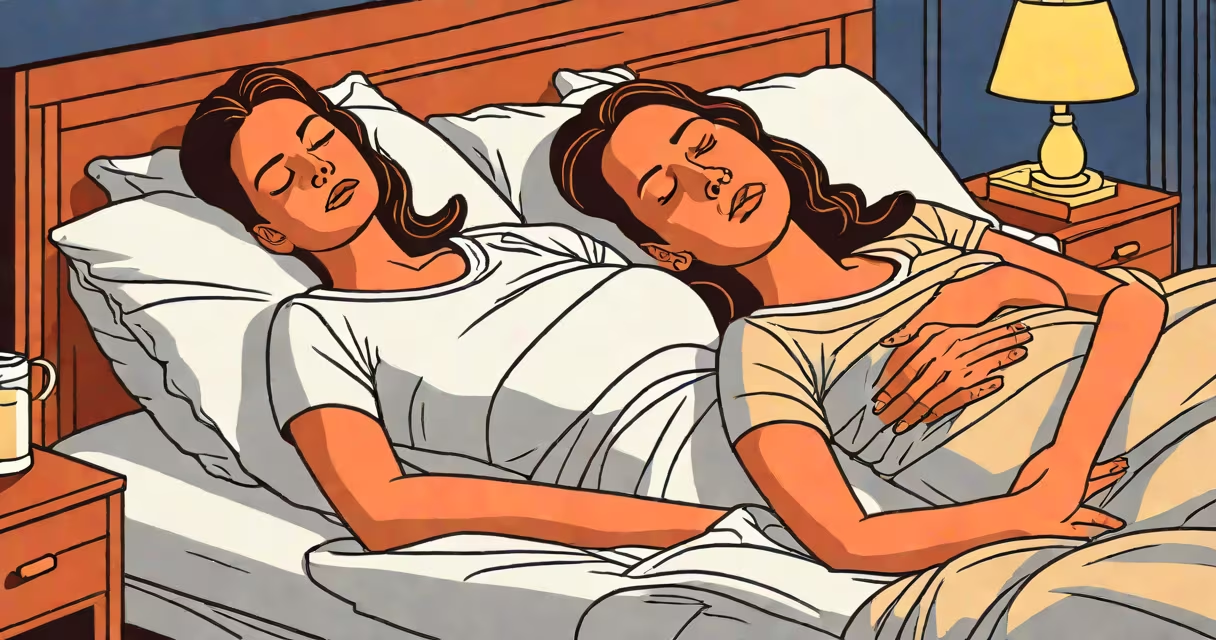
Night sickness pregnancy describes persistent nausea and vomiting that occur primarily during nighttime hours in early pregnancy, driven by elevated human chorionic gonadotropin (hCG) and estrogen levels. Unlike typical morning sickness, which peaks in the early hours, night sickness disrupts sleep and can lead to dehydration or weight loss if untreated.
This condition affects approximately 10% of pregnant individuals, according to the American College of Obstetricians and Gynecologists (ACOG), and is often mislabeled as "morning sickness" despite occurring predominantly after dark. The symptoms typically begin between weeks 6 and 10 of gestation and may last through week 16, though they can persist longer in severe cases.
While mild nausea is common in early pregnancy, night sickness becomes clinically significant when it interferes with daily functioning or causes measurable health risks. Persistent vomiting can result in electrolyte imbalances, low blood pressure, and reduced nutrient intake, increasing the risk of complications such as preterm labor or low birth weight.
The primary driver of night sickness is a surge in hCG, a hormone produced by the placenta shortly after implantation. Levels peak around week 10 and correlate strongly with nausea severity. Estrogen also rises rapidly during the first trimester, contributing to slowed gastric emptying and increased sensitivity to odors-both factors that worsen nausea at night.
Research from the National Institutes of Health (NIH) shows that individuals with higher baseline hCG levels are more likely to report nighttime nausea. A 2021 study published in Obstetrics & Gynecology found that 68% of women experiencing severe nausea reported symptom onset between 10 PM and 2 AM, compared to 32% who experienced peak symptoms in the morning.
Disrupted circadian rhythms further amplify the issue. Sleep deprivation increases cortisol and stress hormones, which can trigger nausea centers in the brainstem. This creates a feedback loop: poor sleep worsens nausea, and worsening nausea prevents restful sleep.
Healthcare providers classify pregnancy-related nausea using the Nausea and Vomiting of Pregnancy (NVP) scale, which distinguishes between mild, moderate, and severe forms. Night sickness falls under the moderate-to-severe category when it occurs more than four times per day or leads to weight loss exceeding 5% of pre-pregnancy body weight.
| Severity Level | Frequency of Vomiting | Weight Loss | Medical Intervention Needed? |
|---|---|---|---|
| Mild | Once daily or less | None | No |
| Moderate | 2-4 times/day | 1-5% | Yes (oral meds) |
| Severe (Hyperemesis Gravidarum) | More than 5 times/day | Over 5% | Yes (IV fluids, hospitalization) |
Hyperemesis gravidarum-a rare but serious form of night sickness pregnancy-requires hospitalization in about 1 in 300 pregnancies. It affects roughly 0.3% of all pregnancies and is diagnosed when vomiting leads to ketonuria (ketones in urine), dehydration, or inability to keep down oral fluids.
Many assume night sickness pregnancy is simply "morning sickness that happens at night." That's incorrect. Morning sickness typically peaks between 8 AM and noon, while night sickness tends to escalate between 10 PM and 2 AM. The timing difference reflects shifts in hormone activity and digestive function during sleep cycles.
Another misconception is that eating before bed prevents night sickness. While light snacks may ease mild symptoms, they don't address the underlying hormonal triggers. In fact, consuming food late at night can delay gastric emptying and increase reflux, worsening nausea in prone individuals.
A key distinction missed by many is that night sickness pregnancy is not a sign of poor fetal health. On the contrary, high hCG levels-linked to night sickness-are associated with lower miscarriage rates. A 2019 study in Human Reproduction found that women with severe nausea had a 30% lower risk of spontaneous abortion compared to those with mild or no nausea.
Sarah, a 32-year-old first-time mother, began experiencing intense nausea at 7 PM during her 8th week of pregnancy. She vomited five times between 9 PM and 1 AM, lost 3 pounds in two weeks, and developed dizziness upon standing. Her doctor diagnosed her with hyperemesis gravidarum after confirming ketonuria and a 6% drop in body weight.
She was treated with IV hydration and ondansetron, a medication approved for severe pregnancy nausea. Within 48 hours, her symptoms improved. By week 14, she had regained her weight and could tolerate small, frequent meals. Her baby was born at 39 weeks with normal weight and no complications.
This case illustrates that night sickness pregnancy, while distressing, is treatable. Early intervention prevents long-term harm to both mother and fetus.
If nausea occurs more than twice daily at night and leads to weight loss, difficulty keeping fluids down, or signs of dehydration (dark urine, dry mouth, fatigue), consult a healthcare provider. These symptoms indicate the need for evaluation beyond home remedies.
For mild cases, dietary adjustments such as eating bland foods (crackers, toast), staying hydrated with ginger tea or electrolyte solutions, and avoiding strong smells can reduce episodes. However, these measures do not reverse the hormonal drivers behind night sickness pregnancy.
Medications like vitamin B6 combined with doxylamine (Diclegis) are FDA-approved for treating nausea in pregnancy and effective when taken at bedtime. For refractory cases, prescription antiemetics like ondansetron or metoclopramide may be used under close supervision.
One non-obvious fact: night sickness pregnancy is more common in women carrying female fetuses. A 2020 cohort study in BJOG: An International Journal of Obstetrics & Gynaecology found that women expecting girls were 1.8 times more likely to report severe nausea than those carrying boys, even after adjusting for maternal age and BMI.
Night sickness pregnancy is not a minor inconvenience. It's a physiological response rooted in hormonal shifts that can impact well-being. Recognizing its patterns, severity, and treatment options allows for timely care and better outcomes for both mother and child.