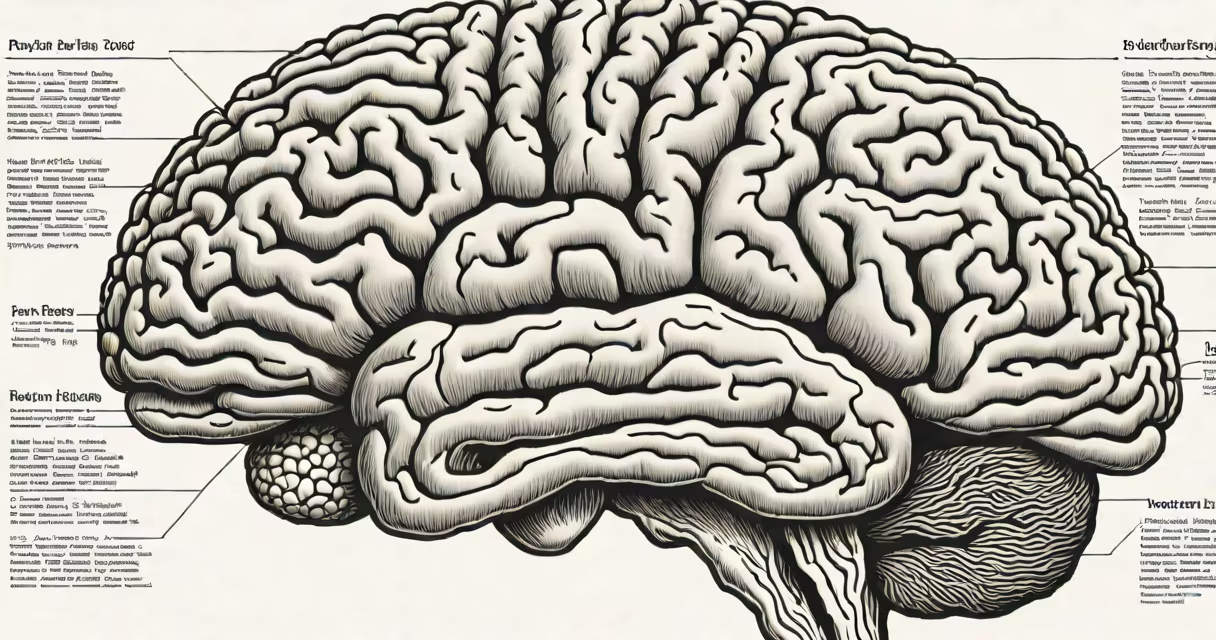
A parts of the brain quiz tests your ability to identify and understand the functions of key brain structures, including the cerebrum, cerebellum, brainstem, and limbic system. These quizzes typically present labeled diagrams, describe neurological symptoms, or ask about specific roles in cognition, movement, and emotion.
Each question focuses on a distinct region or network. For example, a typical item might show a sagittal MRI slice and ask which area controls voluntary motor coordination. Correct answers require knowing that the cerebellum sits beneath the cerebral hemispheres and integrates sensory input for balance and precision in movement.
These assessments are commonly used in introductory neuroscience courses, medical school pre-tests, and online learning platforms like Khan Academy and Coursera. They reinforce spatial memory and functional associations through repeated exposure to anatomical terminology and clinical patterns.
Most parts of the brain quizzes use visual recognition paired with function recall. You see a diagram-often a lateral or midsagittal view-and select the correct name for a highlighted region. Some formats include matching exercises: pair brain areas with their primary responsibilities.
For instance, a question may state: "A patient presents with difficulty maintaining posture and walking in a straight line. Which brain region is most likely affected?" The correct answer is the cerebellum. This format checks both anatomical awareness and clinical reasoning.
Quizzes often progress from basic identification to higher-order integration. A later question might ask how the hippocampus supports long-term memory formation, requiring knowledge of neuroanatomy and cognitive processes. This layered design mirrors how the brain itself processes information hierarchically.
The following table outlines the core regions frequently assessed in a parts of the brain quiz, along with their functions and common misconceptions.
| Brain Region | Primary Function | Common Misconception |
|---|---|---|
| Cerebrum | Higher functions: thought, language, sensory processing | Often confused with the entire brain; actually makes up ~85% of brain mass |
| Cerebellum | Movement coordination, balance, motor learning | Not involved in decision-making; damage causes ataxia, not confusion |
| Brainstem | Regulates breathing, heart rate, sleep-wake cycles | Includes midbrain, pons, and medulla-critical for survival but rarely discussed in pop science |
| Limbic System | Emotion, motivation, memory consolidation | Not a single structure-it's a network including amygdala, hippocampus, hypothalamus |
| Corpus Callosum | Connects left and right cerebral hemispheres | Damage leads to split-brain phenomena, not loss of intelligence |
One non-obvious fact: the corpus callosum contains approximately 200 million nerve fibers. That's more than the number of neurons in a typical smartphone processor. Its size varies between individuals and correlates with interhemispheric communication efficiency.
Understanding brain anatomy isn't just academic. Damage to specific regions leads to predictable deficits. For example, stroke affecting the left frontal lobe can cause Broca's aphasia-difficulty speaking while understanding language remains intact. A parts of the brain quiz helps students recognize such patterns early.
Neurologists use similar mental models during patient exams. When a patient cannot touch their nose with eyes closed, clinicians suspect cerebellar dysfunction. Quizzes train this kind of rapid pattern recognition under pressure.
I once used a parts of the brain quiz during a medical school review session. After a student incorrectly identified the thalamus as the site of conscious perception, we reviewed the thalamus's role as a relay station-not a center of awareness. That moment clarified a persistent misunderstanding among several learners.
Many people think the cerebellum controls emotions. It does not. Emotional regulation primarily involves the amygdala and prefrontal cortex. The cerebellum contributes indirectly by modulating motor responses to emotional stimuli, but it doesn't generate feelings.
Another frequent error: assuming the brainstem is just a passive connector. In reality, the medulla oblongata regulates autonomic functions like respiration and blood pressure. Damage here can be fatal within minutes. A quiz question asking which structure maintains breathing automatically points to the medulla.
Some quizzes mislead by showing a brain slice with overlapping structures. Always check the orientation. A coronal section cuts front-to-back; a sagittal cut divides left and right. Confusing these planes leads to incorrect labeling.
Free resources from reputable institutions offer accurate, research-backed questions. The National Institutes of Health (NIH) provides interactive modules on brain anatomy through its Brain Anatomy and Function page. Questions align with standard neuroscience curricula.
Another trusted source is the University of Washington's Brain Anatomy Tutorial, which includes self-assessment quizzes with instant feedback. Each question cites peer-reviewed literature, ensuring accuracy.
Mastering the parts of the brain quiz strengthens foundational knowledge essential for careers in medicine, psychology, and neuroscience. It turns abstract anatomy into actionable insight-preparing to interpret a patient's symptoms.