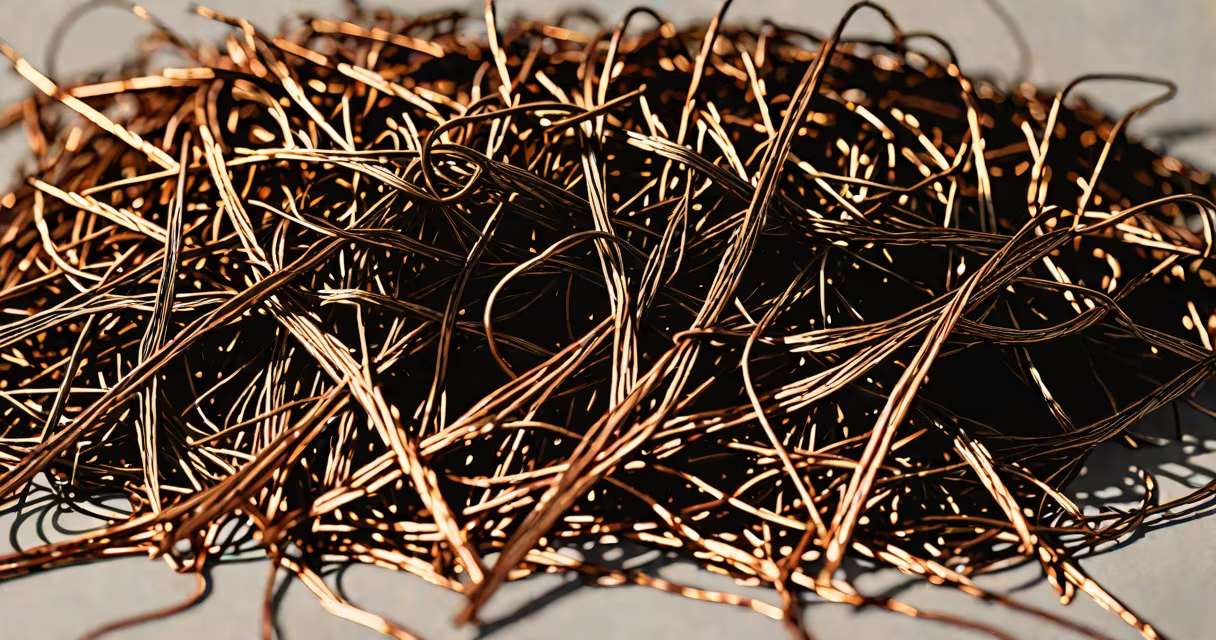
Transition metals are elements in the d-block of the periodic table, characterized by partially filled d orbitals in their elemental or ionized forms. These elements display high melting points, electrical conductivity, and variable oxidation states due to the availability of both s and d electrons for bonding.
These metals occupy groups 3 through 12 in the periodic table and include common elements such as iron, nickel, copper, zinc, and platinum. Their distinctive behavior arises from the presence of unpaired electrons in the d subshell, which influences magnetic properties, color, and reactivity. The physical and chemical properties of transition metals differ from those of s- and p-block elements.
According to the Royal Society of Chemistry, the incomplete d subshells allow for multiple stable oxidation states-such as Fe²⁺ and Fe³⁺-enabling complex redox chemistry. This versatility underpins their widespread use in industrial catalysts, alloys, and biological systems like hemoglobin.
The physical properties of transition metals stem from metallic bonding involving delocalized d electrons. These electrons contribute to high thermal and electrical conductivity, malleability, and ductility. For example, copper's electrical resistivity is 1.68 × 10⁻⁸ Ω·m at 20°C, making it ideal for wiring. Iron melts at 1538°C, reflecting strong metallic bonds from its 4s²3d⁶ configuration.
Chemical properties emerge from the ability of d electrons to participate in bonding. Transition metals often form colored compounds because d-d electron transitions absorb visible light. Copper(II) sulfate appears blue because d electrons absorb red wavelengths, transmitting blue. Similarly, chromium(VI) oxide is yellow-orange due to charge transfer transitions.
A key distinction is that many transition metals maintain stability across multiple oxidation states. Manganese, for instance, exhibits oxidation states from +2 to +7. In MnO₄⁻, manganese is in the +7 state-a useful oxidizing agent used in titrations. This contrasts with main-group metals like sodium, which typically exist only as Na⁺.
Transition metals fall into categories based on their position and behavior. Early transition metals (Groups 3-6) like titanium and vanadium form hard, refractory materials. Titanium dioxide (TiO₂) is used in paints and sunscreens due to its high refractive index and UV absorption.
Mid-block metals (Groups 7-10), including iron, cobalt, and nickel, show strong catalytic activity. Iron in the Haber process converts nitrogen and hydrogen into ammonia at 450°C and 200 atm. The reaction proceeds via adsorption of reactants onto iron's surface, lowering activation energy. This efficiency makes iron a critical component in fertilizer production.
Late transition metals (Groups 11-12), such as copper, silver, and gold, are less reactive and often serve as conductors or jewelry materials. Gold resists oxidation and corrosion, maintaining its luster even in moist air. Zinc, though sometimes classified as a post-transition metal, behaves as a transition metal in compounds like ZnO, where it shows amphoteric properties.
| Element | Group | Common Oxidation States | Key Property |
|---|---|---|---|
| Iron (Fe) | 8 | +2, +3 | Forms magnetic oxides; essential in hemoglobin |
| Copper (Cu) | 11 | +1, +2 | High conductivity; forms blue Cu²⁺ ions |
| Chromium (Cr) | 6 | +3, +6 | Forms protective oxide layer; used in stainless steel |
| Manganese (Mn) | 7 | +2, +3, +4, +7 | High oxidation state in permanganate; strong oxidizer |
Many assume all transition metals are magnetic. This is false. While iron, cobalt, and nickel are ferromagnetic, zinc and scandium are not. Zinc has a full d¹⁰ configuration, eliminating unpaired electrons needed for magnetism. Scandium forms Sc³⁺ with no d electrons, rendering it diamagnetic.
Another misconception is that transition metals always form colored compounds. Not all do. Zinc compounds are generally colorless because d¹⁰ electrons cannot undergo d-d transitions. Similarly, Ti⁴⁺ in TiO₂ is white despite titanium being a transition metal.
A lesser-known fact: transition metals often stabilize unusual coordination geometries. Platinum(II) prefers square planar geometry, unlike the octahedral preference of most d⁶ ions. This enables platinum-based drugs like cisplatin to bind DNA in cancer therapy-its structure fits into DNA grooves and disrupts replication.
I once observed a lab demonstration where iron filings aligned along magnetic field lines around a bar magnet. The pattern revealed the field's direction and strength-visual proof of iron's ferromagnetism. This property is exploited in MRI machines, where gadolinium-based contrast agents improve image resolution by altering local magnetic fields.
In industry, vanadium pentoxide (V₂O₅) catalyzes the oxidation of sulfur dioxide to sulfur trioxide in the Contact Process. This step produces sulfuric acid, a key industrial chemical. The reaction proceeds via redox cycling between V⁵⁺ and V⁴⁺ states, illustrating how transition metals enable efficient chemical transformations.
Another example: nickel-cadmium batteries rely on NiOOH/Ni(OH)₂ redox couples. During discharge, Ni³⁺ reduces to Ni²⁺ while Cd oxidizes to Cd²⁺. The reversibility of these reactions allows thousands of charge cycles-critical for portable electronics and electric vehicles.
Transition metals are often confused with post-transition metals like aluminum and lead. Post-transition metals lack the incomplete d subshells defining transition metals. Aluminum, for instance, forms Al³⁺ with no d electrons and is not considered a transition metal despite being in the p-block.
Also, not all d-block elements are transition metals. Zinc, cadmium, and mercury have full d¹⁰ configurations in their elemental and common ionic forms. They don't meet the IUPAC definition of a transition metal, which requires at least one stable ion with incomplete d subshells.
Understanding the physical and chemical properties of transition metals reveals why they dominate modern materials science, catalysis, and biochemistry. Their unique electronic structure enables functions impossible for other elements.