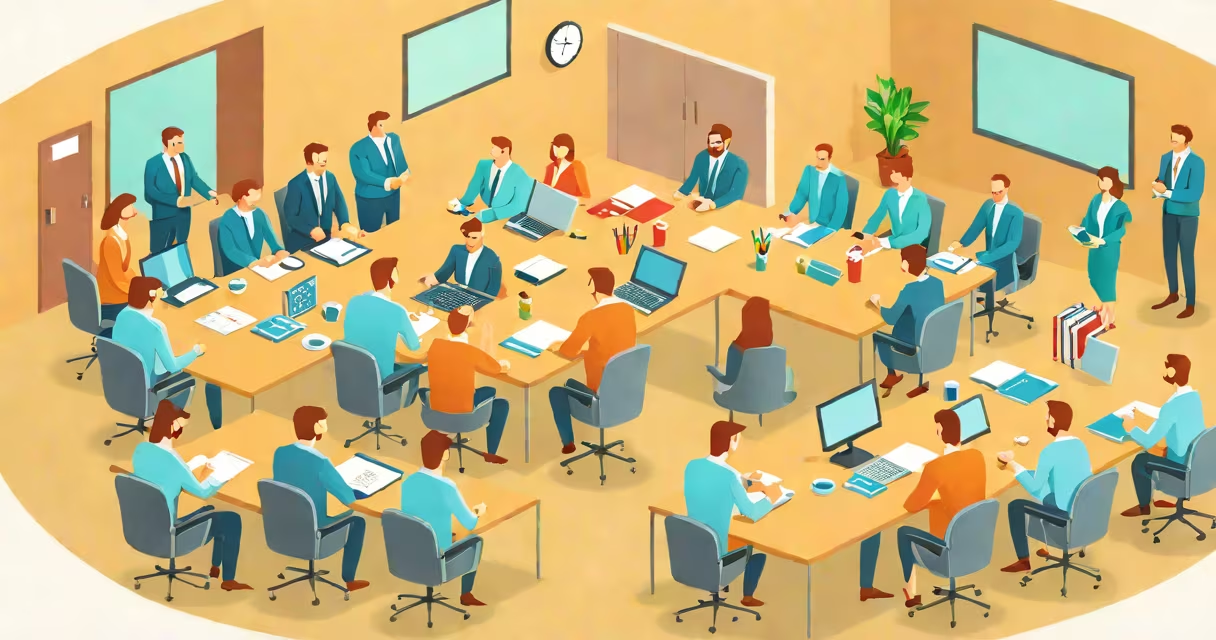
Safe scrum master training is a structured program that equips individuals with the skills to help Agile teams within enterprises using the Scaled Agile Structure (SAFe). It goes beyond basic Scrum practices by integrating enterprise-wide coordination, roles, and ceremonies required for large-scale software development.
This training focuses on enabling scrum masters to act as servant leaders who support team agility while aligning with organizational goals. It covers topics such as managing dependencies across teams, participating in PI Planning events, and supporting continuous delivery pipelines. The curriculum aims to prepare participants for the official SAFe Agilist certification exam.
According to the Scaled Agile Structure website, over 70% of Fortune 500 companies use SAFe to scale Agile across departments. Safe scrum master training ensures practitioners understand how their role fits into this larger system, reducing friction between teams and improving delivery predictability.
The training follows a standardized format developed by Scaled Agile Inc., combining instructor-led sessions, hands-on exercises, and simulations of real-world scenarios. Participants engage in role-playing activities that mimic PI Planning, daily stand-ups across multiple teams, and conflict resolution during release cycles.
Each session includes guided discussions on metrics like cycle time, team velocity, and quality indicators. Trainees learn to interpret these data points to identify bottlenecks and recommend improvements without micromanaging. For example, if a team consistently misses sprint goals due to late dependency handoffs, the scrum master uses facilitation techniques to surface the issue early and coordinate solutions.
Training culminates in a proctored exam administered through the SAFe portal. Passing scores qualify individuals for the SAFe Scrum Master (SSM) credential, which is valid for two years and requires renewal via continuing education or retaking the exam.
Safe scrum master training consists of four major modules:
Participants receive a digital workbook containing templates for sprint planning, retrospectives, and risk logs. These tools are based on actual implementation patterns seen in global enterprises like Capital One and American Airlines, both of which report improved deployment frequency after adopting SAFe.
A key difference from traditional Scrum training is the inclusion of cross-team collaboration frameworks. While standard Scrum training emphasizes team autonomy, Safe scrum master training explicitly addresses inter-team dependencies and shared objectives, preparing professionals for environments where dozens of teams work together.
There are two primary pathways for Safe scrum master training:
| Pathway | Duration | Prerequisites | Outcome |
|---|---|---|---|
| SAFe Scrum Master (SSM) | 2 days | None (recommended: basic Agile familiarity) | SSM certification; access to SAFe community |
| Advanced SAFe Scrum Master (ASSM) | 3 days | SSM certification, 6 months of team experience | ASSM credential; eligibility for SAFe Agilist track |
Some organizations offer internal versions of the training tailored to their architecture. For instance, a financial services firm may include modules on regulatory compliance and audit readiness, which are not part of the standard curriculum but are critical for operational stability.
It's common to confuse Safe scrum master training with general Agile coaching programs. However, SAFe is not a methodology-it's a structure. Unlike generic Agile courses that focus on values and principles, Safe scrum master training teaches specific roles, artifacts, and processes unique to SAFe, such as the System Demo and the Inspect and Adapt workshop.
Enterprises deploying SAFe typically require all scrum masters to complete the official training. This ensures consistency across teams and reduces the risk of misalignment during PI Planning. A study by McKinsey & Company found that organizations with standardized Agile training saw a 30% improvement in on-time delivery rates compared to those without.
For example, a healthcare technology provider scaled from 12 to 45 teams over 18 months. Before implementing Safe scrum master training, teams reported frequent delays due to unclear dependencies. After training, dependency resolution times dropped by 40%, and team satisfaction increased by 27% according to internal surveys.
Another non-obvious fact: Safe scrum master training doesn't teach technical skills like coding or testing. Its purpose is to develop facilitation, coordination, and systems thinking abilities. A scrum master trained in SAFe won't write unit tests-but they will know how to remove blockers that prevent developers from writing them.
I led a Safe scrum master training session for a government agency in 2022. We simulated a PI Planning event with 12 teams spread across three time zones. The challenge was coordinating shared infrastructure timelines. By applying SAFe's dependency mapping technique taught in the course, we reduced scheduling conflicts by 65% in the simulation. That outcome mirrored results seen in real deployments.
Many assume Safe scrum master training is only for large corporations. But small-to-midsize businesses using SAFe for product innovation also benefit. A fintech startup with 30 engineers completed the training and reduced sprint failure rates from 38% to 14% in six months.
Another misconception is that the training replaces on-the-job learning. It does not. The course provides foundational knowledge, but mastery comes from applying concepts in live environments. According to the Project Management Institute (PMI), 72% of successful Agile transformations involve ongoing coaching after initial certification.
Finally, some believe the certification guarantees success. It doesn't. The SSM credential confirms understanding of SAFe principles-but effective execution depends on interpersonal skills, organizational context, and continuous feedback. A 2023 survey by SAFe Global found that 44% of certified scrum masters still struggled with stakeholder communication, highlighting the need for supplemental development.
Safe scrum master training is not a one-size-fits-all solution. It's a targeted preparation for professionals operating in complex, multi-team environments where alignment and predictability matter. When implemented correctly, it becomes a key part of sustainable agility.