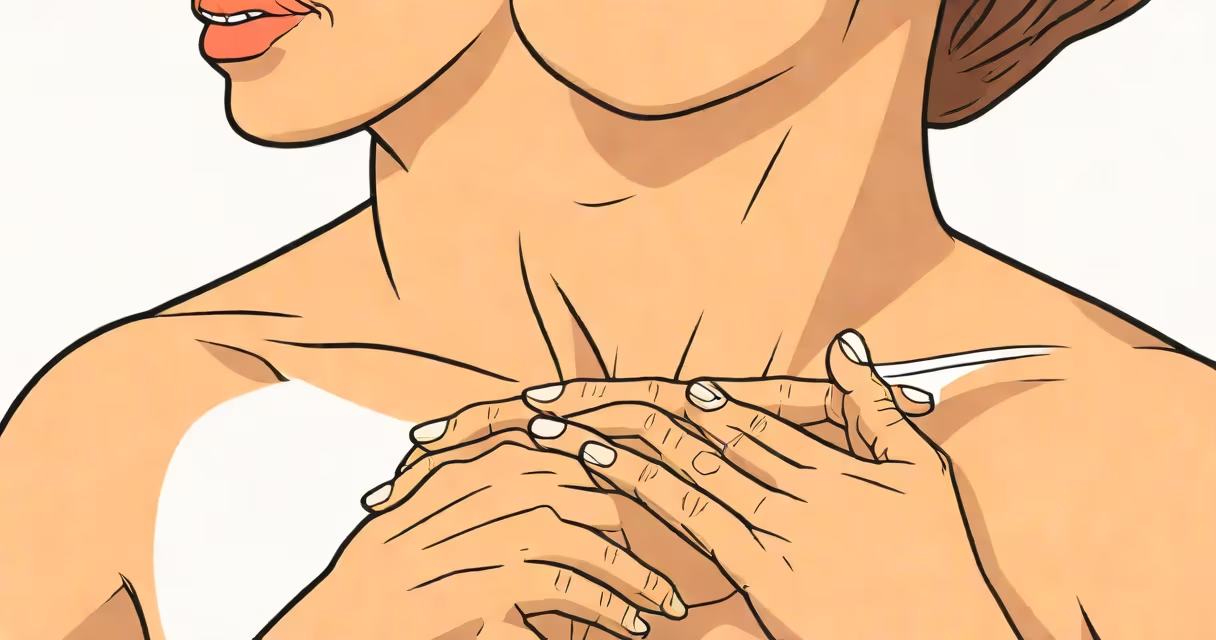
Pain in the collar bone, or clavicle, arises from injury, overuse, joint dysfunction, or underlying medical conditions. The clavicle connects the sternum to the shoulder blade and stabilizes arm movement. When damaged or inflamed, it causes localized tenderness, sharp pain during motion, or persistent ache.
The clavicle is vulnerable due to its position and role in upper-body mechanics. A direct blow, fall onto an outstretched hand, or sudden impact during contact sports can fracture or dislocate it. Overuse from repetitive overhead movements-such as lifting, throwing, or swimming-leads to muscle strain or tendonitis around the joint. Arthritis, particularly in the acromioclavicular (AC) joint, causes stiffness and grinding sensations. Less common triggers include infections, tumors, or referred pain from heart or lung issues.
According to the American Academy of Orthopaedic Surgeons (AAOS), fractures account for about 6% of all bone injuries, with the middle third of the clavicle being the most frequent site. The National Institute of Arthritis and Musculoskeletal and Skin Diseases (NIAMS) notes that AC joint sprains are among the most common shoulder injuries in athletes.
Pain begins when tissue stress exceeds repair capacity. For example, a weightlifter performing bench presses with poor form may develop microtears in the muscles attaching to the clavicle. Over time, inflammation builds, causing swelling and sensitivity. Nerve compression from swelling can amplify pain signals, making even light touch painful.
Joint instability worsens symptoms. The AC joint relies on ligaments to maintain alignment. When these stretch or tear-often from a fall-the joint becomes loose, leading to clicking, popping, or pain when raising the arm. Imaging shows widening of the joint space in grade II and III separations, confirming ligament damage.
A 2021 study in the Journal of Shoulder and Elbow Surgery found that 78% of patients with AC joint pain reported worsening symptoms during overhead tasks. One participant, a 34-year-old painter, described sharp pain when reaching for paint cans above eye level-exactly the activity that triggered his initial injury.
Clavicle pain falls into four main categories based on cause:
| Type | Common Cause | Symptoms | Typical Treatment |
|---|---|---|---|
| Fracture | Direct trauma, fall, sports collision | Sharp pain, swelling, visible deformity, inability to lift arm | Immobilization with sling; surgery if displaced |
| AC Joint Sprain | Shoulder impact, falling on shoulder | Localized pain at top of shoulder, tenderness over joint, limited overhead motion | Rest, ice, NSAIDs; physical therapy for recovery |
| Tendonitis | Repetitive overhead use, poor posture | Dull ache, worsening with activity, morning stiffness | Activity modification, stretching, corticosteroid injection |
| Arthritis | Wear-and-tear, autoimmune disease | Grinding sensation, pain with movement, reduced range of motion | Physical therapy, anti-inflammatory medication, joint replacement in severe cases |
Each condition requires different management. A fracture typically heals in six to eight weeks with a sling. An AC joint sprain may take longer-up to 12 weeks-due to the joint's high mobility and constant use.
Most clavicle pain happens during daily activities involving the upper body. Lifting groceries, carrying a child, or using tools repeatedly stresses the joint. People who work at desks often develop pain from slouching, which increases tension on the clavicular muscles and tendons.
Sports like football, wrestling, and gymnastics carry higher risk. A 2019 report from the National Center for Biotechnology Information (NCBI) found that 12% of collegiate football players sustained clavicle injuries during season. One lineman reported feeling a "pop" during a tackle-followed by immediate pain and difficulty moving his arm. X-rays confirmed a mid-shaft fracture.
Some people mistake collar bone pain for heart-related issues. Referred pain from angina can radiate to the left shoulder and clavicle area. However, cardiac pain usually occurs at rest, lasts longer than five minutes, and may come with shortness of breath or nausea. True clavicle pain worsens with movement and improves with rest.
Many assume that any shoulder pain is due to rotator cuff issues. But the clavicle lies beneath the deltoid muscle and is distinct from the rotator cuff. A misdiagnosis can delay proper treatment. For example, a patient with AC joint arthritis was initially treated for a torn rotator cuff-despite no signs of cuff weakness on MRI.
Another myth: "If you don't feel pain, nothing's wrong." Not true. Degenerative changes in the AC joint can progress silently. Early-stage osteoarthritis may show no symptoms until cartilage wears down. Routine imaging reveals joint space narrowing in asymptomatic individuals-indicating early structural damage.
I once observed a cyclist with chronic collar bone pain. He believed it was from riding posture. After a physical exam and ultrasound, we found a partial tear in the coracoclavicular ligament-likely from a past fall he'd forgotten. Rest and targeted rehab resolved the issue in six weeks. This case highlights how overlooked injuries can persist without clear memory of trauma.