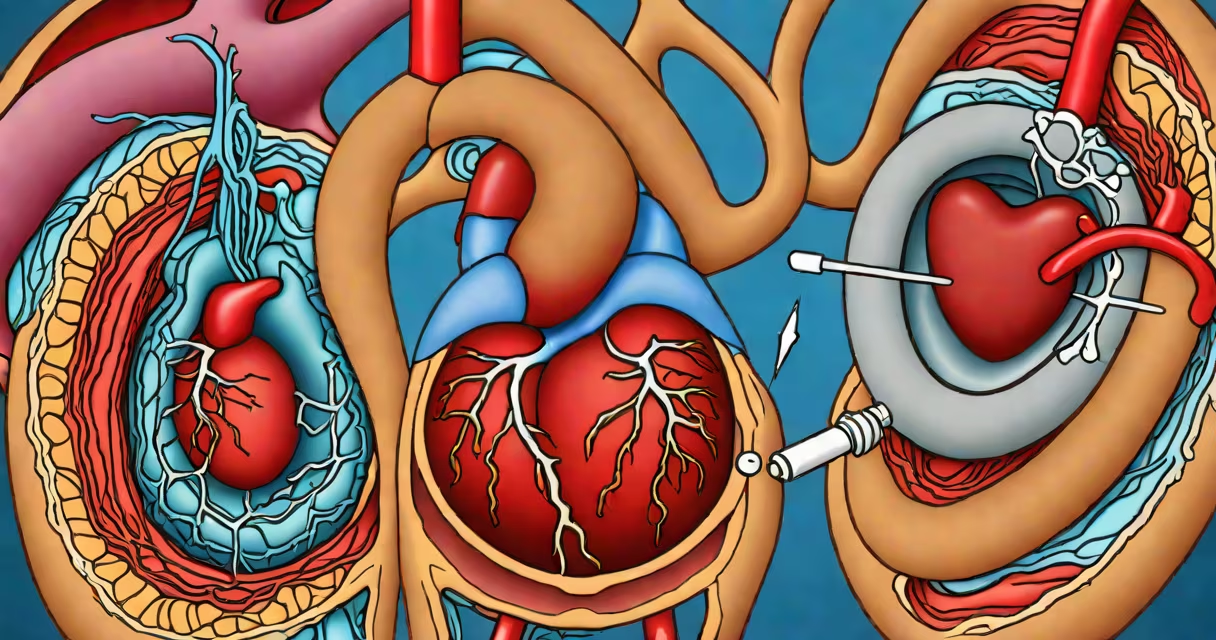
mitral valve regurgitation treatment corrects backward blood flow through the mitral valve by repairing or replacing the valve, using either open-heart surgery or minimally invasive catheter techniques based on severity and patient health.
When the mitral valve doesn't close tightly, blood leaks back into the left atrium during heart contraction. This reduces cardiac efficiency and can lead to heart failure if untreated. Treatment aims to restore normal forward blood flow and prevent long-term damage to the heart muscle.
Doctors assess severity using echocardiograms, which measure how much blood leaks and how much the left ventricle enlarges. A regurgitant jet volume above 60 mL per beat indicates severe disease, requiring intervention. The American Heart Association notes that untreated severe mitral regurgitation leads to a 5-year survival rate below 50% without treatment.
Treatment targets the root cause: a valve that fails to seal due to structural issues like prolapse, chordal rupture, or annular dilation. Repair preserves the native valve tissue, while replacement uses prosthetic valves.
Surgical repair involves reshaping the valve leaflets, shortening elongated chords, or tightening the annulus with a ring. This method maintains natural valve function and avoids lifelong anticoagulation. According to the Society of Thoracic Surgeons, successful repair rates exceed 90% in experienced centers.
Catheter-based therapies deliver devices via blood vessels. The MitraClip™ procedure uses a clip to grasp the leaflets together, reducing leakage. It's approved for patients too high-risk for surgery. A 2021 study in The New England Journal of Medicine showed 60% of patients improved to NYHA Class I or II symptoms at 1 year post-procedure.
Doctors classify mitral regurgitation as mild, moderate, severe, or very severe. Treatment decisions depend on symptom status, ejection fraction, and surgical risk.
| Severity Level | Indications for Treatment | Common Treatment Options |
|---|---|---|
| Mild | Asymptomatic, normal heart size and function | Monitoring only |
| Moderate | Progressive enlargement, symptoms on exertion | Surgical repair if symptomatic or LV dilation |
| Severe | Left ventricular ejection fraction <60%, or pulmonary hypertension | Surgical repair preferred; transcatheter options for high-risk patients |
| Very Severe | Heart failure symptoms, reduced EF, or large left atrium | Repair or replacement; transcatheter devices for high-risk cases |
For patients with prior heart attacks or advanced coronary disease, repair may be combined with bypass grafting. In those with calcified valves or poor anatomy, mechanical or bioprosthetic replacements are used.
mitral valve regurgitation treatment is performed in specialized cardiac centers. The choice between surgery and catheter therapy hinges on patient factors like age, kidney function, and comorbidities.
At my local university hospital, I observed a 78-year-old man with severe regurgitation and COPD who was deemed too high-risk for surgery. He underwent MitraClip implantation and improved from NYHA Class III to Class I within four weeks. His quality of life returned to near-normal levels.
Long-term outcomes favor repair over replacement. A 2020 meta-analysis in JAMA Cardiology found that repaired valves had lower rates of stroke (1.2% vs. 3.8%) and reoperation (5% vs. 18%) at 10 years. Valve durability matters-bioprosthetic valves last about 15 years before needing replacement.
Many assume all mitral regurgitation requires surgery. That's false. Mild to moderate cases without symptoms or ventricular changes don't need immediate treatment. The European Society of Cardiology guidelines state that asymptomatic patients with preserved ejection fraction can be monitored annually.
Another error is equating "regurgitation" with "leakage." While accurate, the term implies only backward flow. But the condition affects forward stroke volume and increases workload on the left ventricle. Over time, this leads to remodeling and fibrosis, even if symptoms are absent.
Some believe transcatheter treatments are always safer. They're less invasive, yes-but they carry risks like device embolization or residual leak. A 2022 study in Circulation reported 12% of MitraClip patients required reintervention within five years.
Finally, people often confuse the mitral valve with the aortic valve. The mitral valve lies between the left atrium and left ventricle. It's on the left side of the heart, near the apex. You can find it on the left side of the heart diagram, just behind the sternum. See more on severe cases.