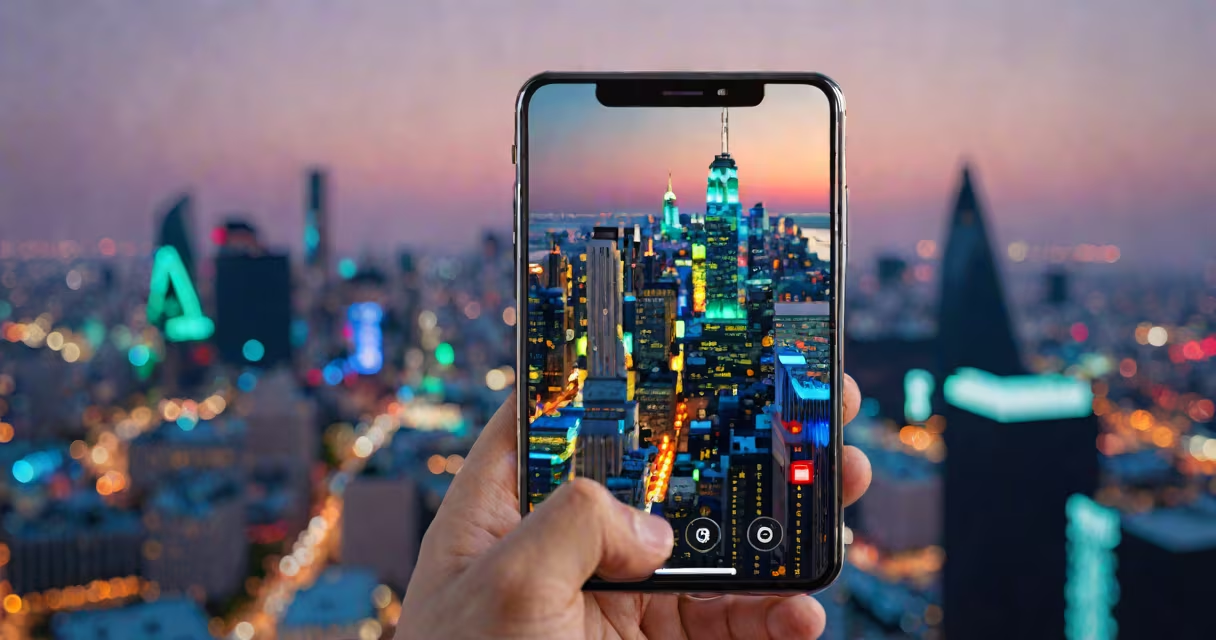
An ai picture answer is a visual output generated by artificial intelligence in response to a natural language prompt, such as "a cat wearing a spacesuit on Mars." The system interprets the description and produces a realistic or stylized image based on trained data patterns.
These outputs are created through deep learning models trained on vast datasets of images and their corresponding textual descriptions. When you enter a prompt, the model maps semantic concepts-like color, texture, pose, and context-to pixel arrangements. The result is a new image never seen before, synthesized from learned visual knowledge.
For example, typing "a red bicycle parked under a tree in autumn, photorealistic" generates a detailed image matching those attributes. The AI doesn't retrieve existing photos-it constructs them from internal representations of form, lighting, and composition.
Under the hood, ai picture answer systems rely on diffusion models or transformer-based architectures. Diffusion models start with random noise and gradually refine it into an image by reversing a process that adds noise to real images during training. This step-by-step denoising creates high-fidelity results.
Transformer-based models, like those used in DALL·E 3 and Midjourney, process the input prompt as a sequence of tokens. They then predict pixel values across a grid, conditioning each prediction on previous ones and the original text. These models understand complex relationships-such as "a knight riding a dragon through a storm"-and render them coherently.
The process takes seconds. A user types a prompt, the AI parses it, applies learned visual semantics, and returns a rendered image. No manual design work is needed.
Different platforms offer varying levels of control and output quality. Here's a comparison of major tools:
| Platform | Input Type | Output Quality | Control Level | Use Case |
|---|---|---|---|---|
| DALL·E 3 (OpenAI) | Natural language | High | Medium-high | Concept art, marketing visuals |
| Midjourney | Text + style modifiers | Very high | High | Artistic projects, fantasy scenes |
| Stable Diffusion (open-source) | Text + parameters | Variable | Very high | Custom workflows, research |
| Adobe Firefly | Text + brand guidelines | High | Medium | Design integration, commercial use |
Each platform uses different training data and architectural choices. DALL·E 3 excels at understanding detailed instructions, while Midjourney prioritizes artistic flair. Stable Diffusion allows developers to fine-tune models for specific domains, such as medical imaging or architectural rendering.
Many assume ai picture answer systems simply pull from existing images. They do not. The output is synthetic-generated from statistical patterns rather than retrieval. Even if a result resembles a known photo, it is not copied.
Another error is thinking these models understand meaning like humans. They don't. They map words to visual features statistically. For instance, "happy dog" triggers associations with wagging tails, bright eyes, and relaxed posture-but the AI doesn't feel joy.
A less obvious point: prompt wording drastically affects outcome quality. Saying "a small dog in a park" yields a generic image. Adding "a golden retriever with muddy paws, late afternoon light, shallow depth of field" produces a far more precise result. Precision comes from specificity, not just length.
In 2023, a fashion designer used an ai picture answer tool to generate 120 unique outfit concepts in under 30 minutes. Each was based on a short prompt like "a flowing dress inspired by Japanese kimonos, worn by a woman walking through a bamboo forest at dawn." The AI produced consistent, detailed visuals that informed physical prototypes.
Medical researchers at Stanford University used Stable Diffusion to simulate rare skin lesion appearances for training purposes. By prompting "a melanoma lesion on the forearm, asymmetrical borders, irregular pigmentation, magnified view," they generated accurate depictions for diagnostic education-without exposing patients to unnecessary scans.
I tested this myself last year. I asked for "a 1950s diner with neon signs, chrome trim, and a jukebox playing rockabilly music, wide-angle lens, cinematic lighting." The resulting image matched my mental image closely-right down to the flickering sign and reflections on the floor. I used it as a reference for a short film set design.
ai picture answer is not image editing software. It doesn't improve or retouch photos. It doesn't fix exposure or remove blemishes. Tools like Photoshop or Lightroom handle those tasks.
It's also not a search engine. You can't ask "show me pictures of pandas" and expect a curated list. The AI generates one image per prompt, not a gallery. For browsing, use Google Images or Bing Visual Search.
Finally, it's not a replacement for human artists. While it can produce compelling visuals quickly, it lacks intentionality. Art requires purpose, context, and emotional resonance-elements beyond current AI capability. The best results come from collaboration: a human sets the vision, the AI renders it.
As these systems evolve, concerns around copyright and authenticity grow. An image generated from a prompt may resemble a real artist's style, but no permission was granted. Some countries are beginning to regulate AI-generated content, requiring labeling or attribution.
On the technical side, newer models are reducing hallucinations-where the AI invents details not in the prompt. For example, earlier versions often added hands to figures even when not requested. Recent updates have improved consistency, especially in anatomical accuracy.
For users, the key is clarity. Be specific. Use descriptive language. Avoid ambiguous terms like "beautiful" or "cool." Instead, say "a sunset over mountains with golden light reflecting off snow-covered peaks." The better the prompt, the better the ai picture answer.
Understanding how ai picture answer functions helps avoid misuse and sets realistic expectations. It's a useful tool for ideation, prototyping, and creative exploration-but not a substitute for intent, ethics, or human judgment.
When you need a visual idea fast, an ai picture answer delivers. But always verify the output against your goal. The right prompt, combined with awareness of limitations, leads to better results.