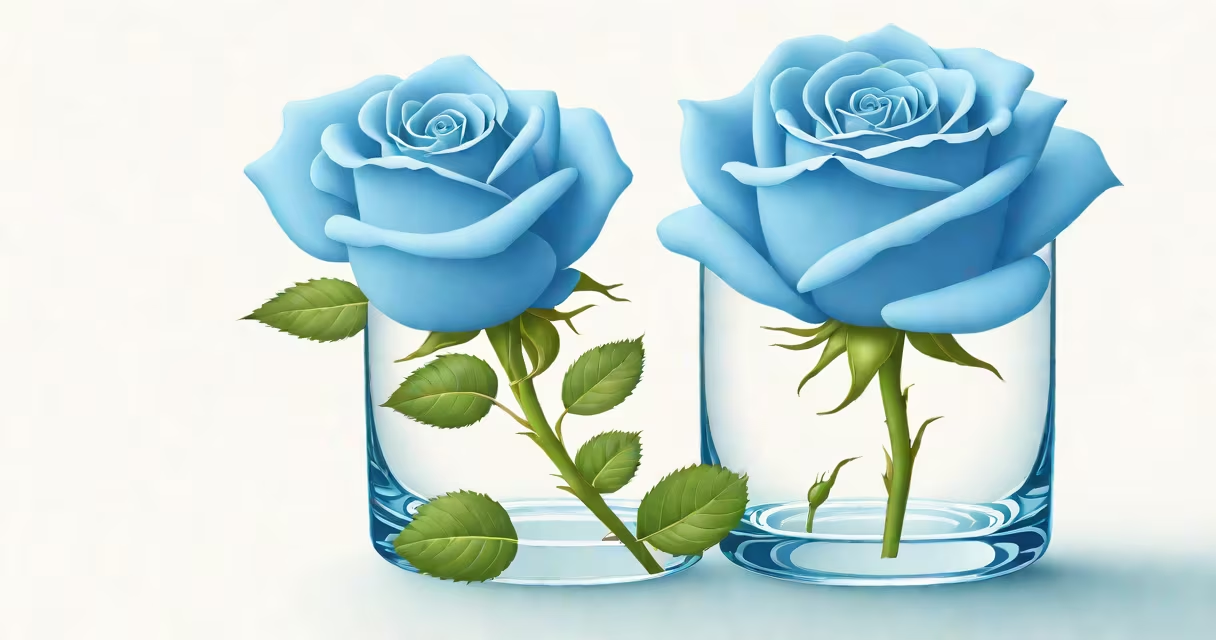
A blue rose symbolizes the impossible, rare beauty, and mystery. It represents a desire for something unattainable, often linked to longing, wonder, and the pursuit of the extraordinary. Unlike naturally occurring roses, blue roses do not exist in nature and are either artificially dyed or genetically modified.
Blue roses are not found in wild flora. The color blue is absent in the pigment family of roses due to the lack of delphinidin, the anthocyanin responsible for blue hues in flowers. This absence makes the blue rose a botanical impossibility without human intervention. As a result, the flower carries symbolic weight beyond its visual appeal-it embodies aspiration, innovation, and emotional depth.
The concept of a blue rose dates back to literary tradition. In 19th-century French poetry, the blue rose appeared as a metaphor for unfulfilled love and unreachable ideals. The symbol gained wider cultural traction through the work of authors like Victor Hugo, who referenced it in *Les Misérables* as a sign of hope amid despair. Modern interpretations retain this theme, using the blue rose to represent dreams that defy reality.
True blue roses do not grow naturally. To create them, horticulturists use two primary methods: dye injection and genetic modification. Dye injection involves placing cut roses into vats of blue dye, which the stem absorbs. This method produces immediate results but fades within days as the dye dissipates.
Genetic modification offers a permanent solution. In 2004, scientists at Florigene, an Australian biotech company, successfully engineered the first commercially viable blue rose. They inserted a gene from the pansy (Viola × wittrockiana) that produces delphinidin into a rose genome. The resulting flower, marketed under the name 'Blue Moon,' displays a true blue hue.
Despite their artificial origin, blue roses are widely accepted in floral symbolism. They appear in weddings, memorials, and romantic gestures-not because they're natural, but because their rarity amplifies emotional intent. A blue rose given as a gift signals that the recipient is someone strong, someone who defies expectations.
Blue roses carry layered meanings depending on context. In romantic relationships, they suggest a deep, enduring affection that transcends ordinary expression. Because blue is associated with calmness and introspection, the flower can also convey quiet devotion or a sense of peace in love.
In artistic and spiritual contexts, the blue rose represents enlightenment, inner transformation, and the search for truth. It appears in modern mysticism as a symbol of awakening, particularly in movements focused on personal growth and emotional healing. The flower's unnatural color reinforces its role as a signpost toward the unseen or unknown.
Commercially, the blue rose is used in branding to evoke uniqueness. Companies in fashion, perfumery, and tech have adopted the blue rose as a logo element. For example, the perfume brand *Blue Moon* uses the flower in its packaging, drawing on the idea of rare elegance and emotional resonance.
| Meaning | Context | Emotional Weight |
|---|---|---|
| Impossibility | Romance, art | Longing, yearning |
| Rare Beauty | Gift-giving, design | Appreciation, admiration |
| Mystery | Personal reflection, spirituality | Curiosity, introspection |
| Transformation | Healing, identity | Hope, renewal |
People often mistake blue-dyed roses for naturally blue varieties. A dyed rose may look authentic at first glance, but the petals fade quickly and the color bleeds unevenly. Natural blue roses, such as the 'Blue Moon' variety, maintain consistent pigmentation and are resistant to fading.
Another common error is equating the blue rose with the bluebell or other blue-flowered plants. While both feature blue blooms, the bluebell (Hyacinthoides non-scripta) is a woodland plant with a different structure and ecological role. The blue rose is not native to any region and is entirely cultivated or modified.
There's also confusion around whether blue roses are real symbols in cultures outside the West. In Japan, for example, the rose is not traditionally symbolic. However, imported Western floral meanings have taken root in urban centers. A blue rose given in Tokyo may carry the same romantic or aspirational message as one given in Paris or New York.
I once attended a memorial service where a single blue rose was placed beside a photograph of a young woman who died in a car accident. The family had chosen the flower deliberately. They said she had always dreamed of seeing a blue rose in person-she'd read about them in novels and seen them in paintings. Her favorite book, *The Night Circus* by Erin Morgenstern, features a blue rose as a central motif of magic and longing.
The choice wasn't decorative. It was a statement: "She wanted the impossible. We honored her dream." The blue rose became a silent tribute to a life lived with curiosity and wonder. It wasn't about grief alone-it was about legacy, imagination, and the courage to believe in what doesn't exist yet.
This moment reinforced a key insight: the meaning of a blue rose lies not in its biology, but in the intention behind it. When someone gives a blue rose, they aren't offering a flower-they're offering a promise. A promise that something rare, beautiful, and difficult to achieve is still worth pursuing.
When considering what a blue rose stands for, remember: it's not just a color. It's a challenge to the ordinary. A whisper that says, "This is not possible-but I believe it can be."