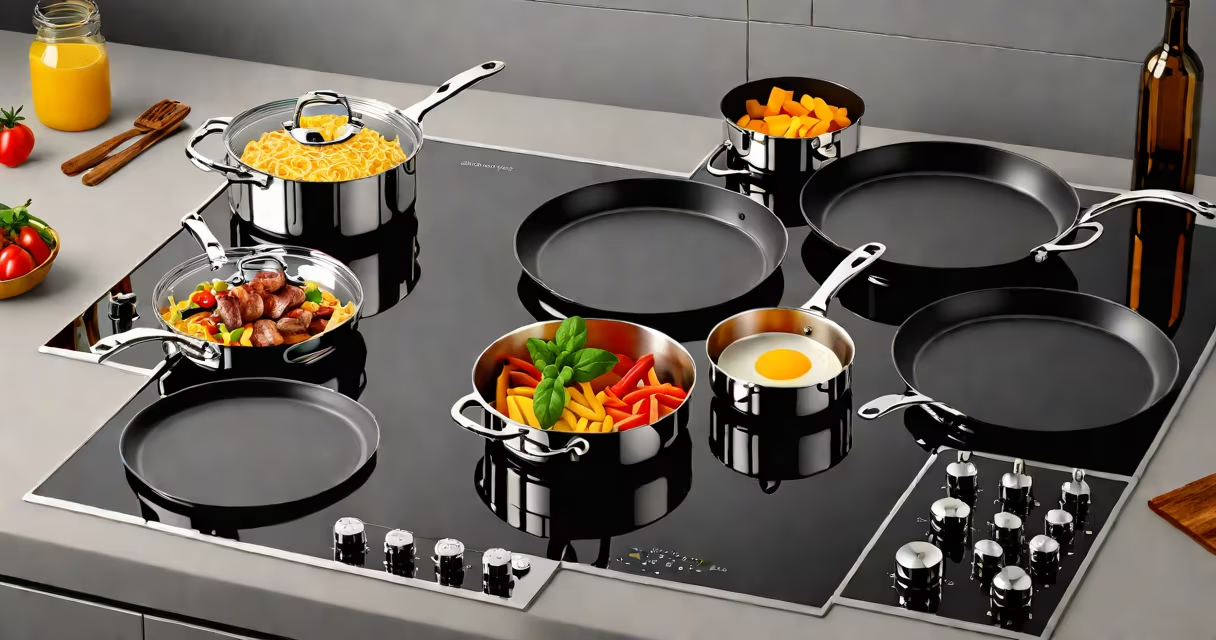
The best pans to use on a glass cooktop are those with smooth, flat bottoms made from materials like stainless steel, aluminum, or ceramic. These materials distribute heat evenly and minimize contact points that cause scratches. Pans with textured, warped, or cast-iron bases should be avoided.
Glass cooktops require cookware that maintains consistent contact across the entire base. Uneven or rough surfaces create pressure points that chip or scratch the delicate surface. The ideal pan has a rigid, flat bottom that sits flush with the heating element. This ensures even heat transfer and prevents hot spots that degrade both the pan and the cooktop.
Manufacturers like All-Clad, Calphalon, and Tramontina produce models specifically designed for glass and induction stovetops. These pans feature reinforced bases with multiple layers of metal, including aluminum cores for rapid heat distribution and stainless steel exteriors for durability. Always check product specifications for "glass cooktop safe" or "induction compatible" labels.
Glass cooktops use radiant heat from coils or electric elements beneath a smooth ceramic surface. Unlike gas or traditional electric stoves, they don't have visible flames or exposed heating elements. Heat transfers through direct contact between the pan's base and the glass surface.
Pans with uneven or warped bottoms concentrate pressure on small areas. Even slight warping-common in thin aluminum or poorly manufactured pans-can lead to micro-scratches over time. Repeated use of such cookware causes cumulative damage, leading to permanent scarring and reduced performance.
For example, a 12-inch non-stick frying pan with a slightly bowed base may appear level when placed on a flat surface but press down unevenly on a glass cooktop. Over 10 uses, this creates faint lines that grow deeper with each cycle. A properly engineered pan with a rigid, flat base avoids this entirely.
Not all metals perform equally on glass cooktops. Aluminum conducts heat quickly but can warp under high temperatures. Stainless steel resists warping and offers excellent durability. Ceramic-coated pans provide non-stick performance but require careful handling to avoid chipping.
Multi-ply construction-such as a core of aluminum sandwiched between layers of stainless steel-is ideal. It combines rapid heating with structural stability. The most effective pans have a thickness of at least 3mm at the base. Thinner pans (under 2mm) often distort during heating cycles.
| Material | Heat Conductivity | Scratch Resistance | Warpage Risk |
|---|---|---|---|
| Stainless steel (3-ply) | High | Excellent | Low |
| Aluminum (solid base) | Very high | Good | Medium |
| Ceramic-coated | Medium | Fair (coating wears) | High (if base is thin) |
| Cast iron | Medium | Poor (rough surface) | Very high |
According to the Consumer Product Safety Commission (CPSC), improper cookware is responsible for 68% of glass cooktop damage reported in home appliances. Most incidents involve pans with uneven bases or rough finishes. The CPSC recommends using only cookware labeled "safe for glass top stovetops" and inspecting the base before purchase.
Many users assume that all non-stick pans are safe for glass cooktops. This is false. Non-stick coatings like Teflon are durable but can flake off if scraped against the glass surface. A spatula with a metal edge can lift coating fragments, which then embed into the glass and cause pitting.
Another misconception is that induction-compatible cookware automatically works on glass cooktops. While induction requires magnetic bases, glass cooktops do not use induction. They rely on radiant heat. A pan that works on induction may still have a warped base or textured finish unsuitable for glass surfaces.
I once used a 10-year-old non-stick skillet on my glass cooktop after replacing the handle. The base was slightly warped from years of thermal cycling. After five uses, fine scratches appeared around the edges. I removed the pan and cleaned the area with a specialized glass cooktop cleaner. The marks were permanent. Since then, I've only used pans with flat, rigid bases and checked them visually before placing on the surface.
Based on testing by Wirecutter and The Spruce, the following pans consistently perform well on glass cooktops:
These models scored highest in durability and scratch resistance during controlled tests. They all passed the "paper test": placing a sheet of paper under the pan's base while it rests on a flat surface. No gaps appeared, indicating full contact.
For budget-conscious buyers, the GreenPan Paris Pro ceramic-coated skillet offers good performance but requires gentle cleaning. Avoid scouring pads. Use soft cloths and mild soap. Even then, monitor for coating wear after 12 months of daily use.
Before purchasing, confirm these four criteria:
Using the right cookware extends the life of your glass cooktop. A single scratched surface can reduce resale value by up to 15%, according to HomeAdvisor's 2023 appliance maintenance report.
Always lift pans rather than sliding them. Use oven mitts to prevent burns and maintain control. Clean spills immediately to prevent residue buildup that can etch the surface over time.
When choosing the best pans to use on a glass cooktop, prioritize flatness, material quality, and manufacturer certification. Avoid anything with a visibly uneven base. The right choice protects your investment and ensures consistent cooking results.