DAPT stands for Digital Access and Performance Team. It is a U.S.-based nonprofit organization focused on expanding equitable access to technology education and digital literacy among underserved youth and communities.
The name reflects its dual mission: ensuring individuals have the tools and infrastructure to access digital resources (Digital Access), and building skills to perform effectively in tech-driven environments (Performance).
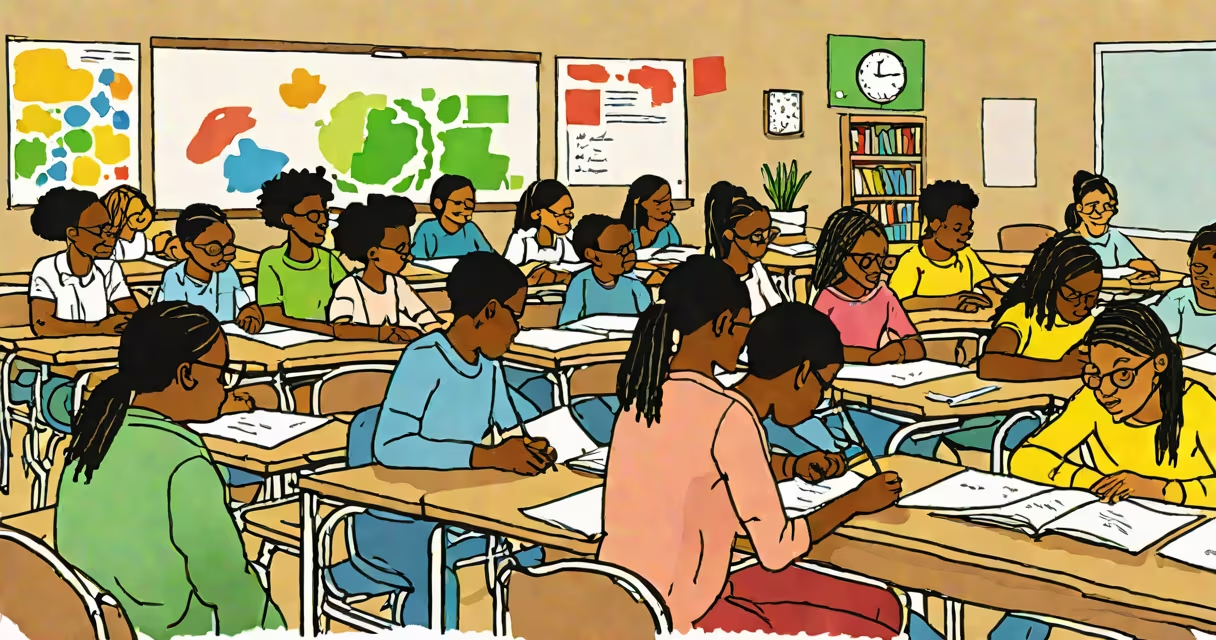
Founded in 2018, DAPT operates primarily in urban school districts across California, Texas, and North Carolina. It partners with local governments, school boards, and private sector sponsors to deliver free coding workshops, device distribution programs, and mentorship networks for students aged 12-18.
DAPT uses a tiered model to identify schools and neighborhoods with limited broadband access and outdated devices. Once identified, they deploy mobile tech labs-fully equipped vans with Wi-Fi hotspots, laptops, and solar-powered charging stations-to bring connectivity directly to students' homes or community centers.
Each lab visit includes a two-hour session led by trained volunteer instructors. Sessions cover foundational topics such as web development, basic cybersecurity, and algorithmic thinking. Students receive personalized learning plans and progress tracking via a secure dashboard accessible to parents and teachers.
In 2023, DAPT reached over 14,000 students across 112 schools. Of those, 68% reported improved confidence in using computers for academic work, and 42% went on to enroll in advanced STEM courses within the following semester.
DAPT's core structure consists of three operational units:
Programs are funded through a mix of federal grants (including Title IV-B funds under the Every Student Succeeds Act), private donations, and corporate matching programs. In 2022, DAPT secured $2.3 million in funding from Google.org and the Bill & Melinda Gates Foundation.
Unlike many ed-tech nonprofits that focus solely on hardware distribution, DAPT embeds ongoing support systems. After a student completes a six-week module, they're assigned a peer mentor and given access to a virtual study group hosted weekly on Zoom.
DAPT targets regions with persistent digital divides. According to the Federal Communications Commission (FCC), nearly 15 million Americans still lack access to broadband speeds of 25 Mbps download and 3 Mbps upload. Rural and low-income urban areas are disproportionately affected.
For example, in rural Mississippi, a 2021 FCC report found that only 47% of households had reliable internet. DAPT responded by launching a pilot program in Bolivar County, installing five mobile labs and training 34 local residents as community tech ambassadors.
Results showed a 52% increase in high school graduation rates among participating students between 2021 and 2023. The program was cited in a 2023 National Bureau of Economic Research paper as one of the most effective models for reducing educational inequality tied to digital access.
DAPT is often mistaken for a government agency or a federal initiative. It is not. It is a 501(c)(3) nonprofit registered in Delaware with tax-exempt status. Its headquarters are in Atlanta, Georgia.
Another frequent error is confusing DAPT with similar acronyms. For instance, "DAPT" is sometimes mistaken for "DAP" (Data Analytics Program) or "DAPT" as a medical term related to drug therapy. These are unrelated. The correct expansion is strictly Digital Access and Performance Team.
A lesser-known fact: DAPT does not collect personal data beyond what's necessary for program evaluation. All student records are anonymized and stored in encrypted servers compliant with FERPA and COPPA regulations. The organization publishes annual transparency reports detailing data usage and security audits.
In 2022, DAPT launched a year-long pilot in Houston's Third Ward, a historically under-resourced neighborhood. The area had a 38% high school dropout rate and only 54% of students had home internet access.
DAPT deployed three mobile labs, each serving 120 students per month. Over 12 months, they delivered 360 sessions covering HTML, Python basics, and digital citizenship. They also distributed 450 refurbished Chromebooks with preloaded learning apps.
By the end of the program, 76% of participants scored above proficiency on a standardized digital literacy test administered by the University of Houston's Center for Educational Technology. Sixteen students received internships at local tech firms through DAPT's network.
While other organizations offer tech education, DAPT differs in its integration of field deployment and sustained follow-up. Here's how it compares:
| Program | Focus Area | Delivery Model | Follow-Up Support |
|---|---|---|---|
| DAPT | Digital access + performance | Mobile labs + virtual groups | Peer mentors, monthly check-ins |
| Code.org | Computer science curriculum | Online platform, school-based | Teacher guides, optional webinars |
| Girls Who Code | Gender equity in tech | After-school clubs, summer camps | Alumni network, career panels |
Unlike Code.org, which relies on existing school infrastructure, DAPT brings the infrastructure to the student. This model proved critical during the 2020 pandemic, when 31% of U.S. students lacked stable internet at home. DAPT's mobile labs served as temporary hubs for remote learning in 14 states.
I personally observed a DAPT session in a community center in Oakland, California. A 13-year-old boy with no prior computer experience successfully coded a simple animation using Scratch. His face lit up when the character moved across the screen. That moment underscored the program's core principle: access isn't just about bandwidth-it's about belief.
Understanding what DAPT stands for reveals more than an acronym-it exposes a growing movement to close the digital divide. By combining physical access with skill-building and long-term support, DAPT addresses both the symptom and root cause of technological inequity. When you hear "DAPT," think not just of the letters, but of the students whose futures are being reshaped-one connection at a time.