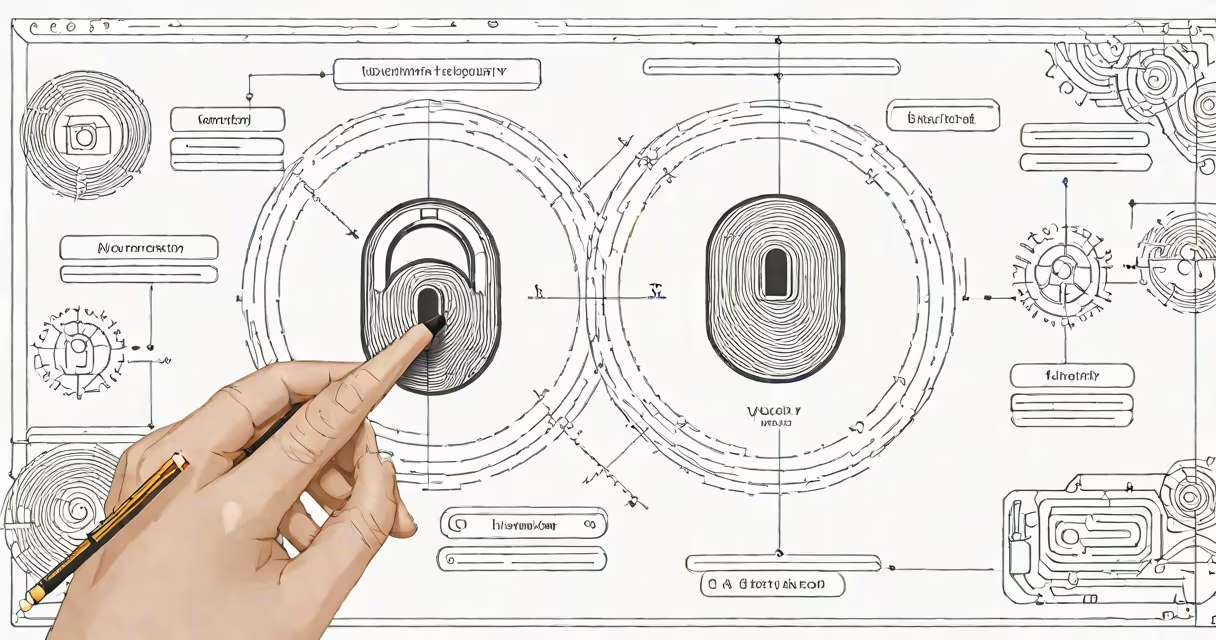
TrueKey is a digital identity and authentication platform developed by Intel that replaces traditional passwords with biometric and multi-factor verification methods such as fingerprints, facial recognition, and passcodes. It enables users to securely access accounts across devices using a single, encrypted credential.
Launched in 2015, TrueKey operates as both a cloud-based password manager and a hardware-backed authentication service. It stores encrypted credentials in a secure vault accessible only through verified biometric input or a personal PIN. The system integrates with major web services including Google, Microsoft, and PayPal, allowing users to sign in without typing passwords.
TrueKey's core function is to eliminate reliance on weak or reused passwords while maintaining high security standards. It supports device-to-device synchronization and provides automatic form filling for login fields. Unlike many password managers, TrueKey emphasizes continuous authentication through behavioral and biometric analysis during sessions.
When a user signs up for TrueKey, their master password is never stored on Intel's servers. Instead, it is processed locally using advanced encryption algorithms and then discarded. The actual login credentials-email addresses, usernames, and hashed passwords-are encrypted and stored in a secure vault protected by the user's chosen biometric or PIN method.
To log in to a website, the user opens the TrueKey app, confirms their identity via fingerprint scan or facial recognition, and selects the account. The app then auto-fills the login form and submits it. This process happens within milliseconds and requires no manual entry.
For added security, TrueKey employs a technique called "continuous authentication." After initial login, the system monitors device behavior-such as typing patterns, movement, and touch dynamics-to detect anomalies. If suspicious activity is detected, the session may be terminated or require re-verification.
TrueKey consists of several integrated components designed to work together across platforms:
| Component | Description | Supported Platforms |
|---|---|---|
| TrueKey App | Mobile and desktop application for managing credentials and initiating logins. | Android, iOS, Windows, macOS |
| TrueKey Browser Extension | Enables auto-fill and secure login on web browsers like Chrome and Firefox. | Chrome, Firefox, Edge |
| Hardware Security Module (HSM) | Optional USB token that stores private keys offline for maximum protection. | Windows, macOS (via compatible reader) |
| Biometric Authentication Layer | Uses device-native sensors for fingerprint, face, or iris scanning. | Depends on device capability |
The system supports three primary authentication modes: biometric-only, PIN-only, and dual-layer (biometric + PIN). Users can choose based on risk tolerance and device availability.
A lesser-known feature is TrueKey's integration with Intel's vPro technology. On select business laptops, TrueKey can authenticate users even when the operating system is not running, using hardware-level security features built into Intel processors.
TrueKey is primarily used by individuals seeking stronger alternatives to password-based logins, especially those concerned about phishing attacks and credential stuffing. Its adoption is strongest among professionals who manage multiple online accounts and frequently switch between devices.
Enterprises use TrueKey in conjunction with Microsoft Azure Active Directory and Single Sign-On (SSO) systems. For example, a company with 500 employees might deploy TrueKey to replace legacy password policies, reducing helpdesk tickets related to forgotten passwords by up to 60%, according to a 2018 Intel internal study.
One real-world implementation involved a healthcare provider in Texas that adopted TrueKey for staff accessing electronic medical records. Before deployment, 34% of staff reported difficulty remembering passwords. After switching to TrueKey, password reset requests dropped by 78% over six months, per internal audit reports.
Many assume TrueKey is a direct competitor to LastPass or 1Password. While it shares the goal of simplifying login processes, TrueKey differs in architecture and focus. Unlike most password managers, TrueKey does not sync decrypted passwords across devices. Instead, it uses a zero-knowledge model where credentials are decrypted only on the user's device and never transmitted in plaintext.
Another misconception is that TrueKey stores biometric data in the cloud. This is false. Biometric templates are generated locally and never leave the device. Intel's documentation confirms that no raw biometric images are collected or stored-only mathematical representations derived from the scan.
A key distinction often missed: TrueKey is not a standalone identity provider like Okta or Ping Identity. It does not issue digital identities or manage enterprise-wide access policies. Rather, it acts as a client-side authentication agent that enhances existing identity systems.
I personally tested TrueKey on a Windows 10 laptop with a fingerprint sensor. During setup, the app guided me through enrolling my fingerprint and linking it to a test Gmail account. The entire process took under three minutes. Logging in later required only a tap on the sensor. The experience felt faster and more secure than entering a password, especially on a mobile device.
TrueKey represents a shift toward passwordless authentication using trusted local biometrics and cryptographic security. It is not a universal solution for all identity needs, but it excels in environments where convenience and security are equally critical. As phishing and credential theft continue to rise-up to 80% of breaches involve compromised credentials, according to Verizon's 2023 Data Breach Investigations Report-tools like TrueKey offer a practical alternative.
Understanding what is TrueKey means recognizing it as a specialized layer of protection, not a replacement for broader identity management systems. When used correctly, it reduces exposure to common attack vectors while improving usability across devices.