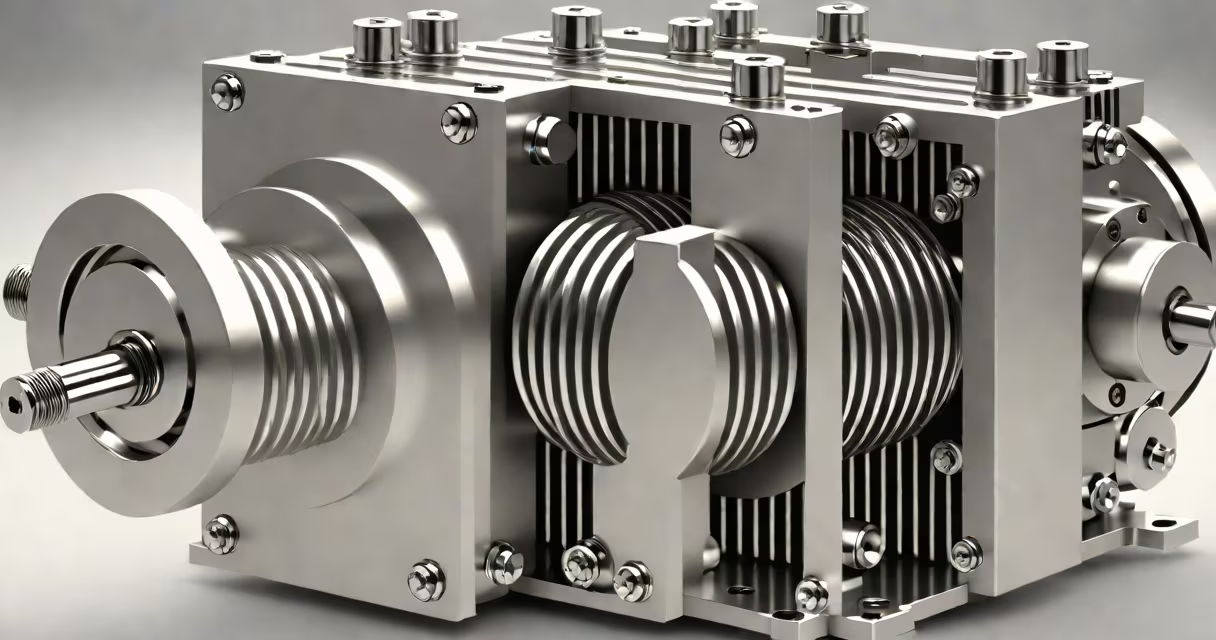
LVDT stands for Linear Variable Differential Transformer, a type of electromechanical sensor that converts linear displacement into an electrical signal with high accuracy and repeatability. It operates on the principle of electromagnetic induction and is widely used in industrial automation, aerospace systems, and precision manufacturing.
The core function of an LVDT is to measure small movements-typically from ±0.1 mm to ±25 mm-with minimal wear and consistent output. Unlike digital encoders, LVDTs do not require contact between moving parts and sensing elements, which reduces mechanical fatigue and increases lifespan under harsh conditions.
These sensors are often embedded in machinery where continuous feedback on position is critical. For example, in aircraft landing gear systems, LVDTs monitor strut extension during descent, ensuring correct deployment timing. The reliability of LVDTs in such safety-critical roles stems from their ability to deliver stable readings even in high-vibration environments.
An LVDT consists of a primary coil, two secondary coils, and a movable ferromagnetic core. When AC excitation is applied to the primary coil, it generates a magnetic field that induces voltages in the secondary coils. The magnitude and phase of the output voltage depend on the position of the core relative to the coils.
When the core is centered, the induced voltages in both secondary coils are equal, resulting in a net output of zero. As the core moves off-center, one secondary coil sees increased flux while the other sees decreased flux. This imbalance produces a differential voltage proportional to displacement. The polarity of the output indicates direction.
For instance, a 10 mm stroke LVDT powered with 3 V RMS at 1 kHz will produce a 10 mV output per millimeter of movement when the core is displaced 1 mm from center. This linearity holds across 90% of the full range, making calibration straightforward.
LVDTs come in several physical forms based on mounting and environmental requirements:
| Type | Use Case | Key Features |
|---|---|---|
| Capacitive LVDT | High-temperature environments | Uses capacitive coupling instead of magnetic fields; resistant to thermal drift |
| Hermetically Sealed | Chemical or vacuum environments | Sealed housing prevents contamination; rated IP68 |
| Rotary LVDT | Angular motion with linear output | Converts rotational input to linear analog signal via mechanical linkage |
| Miniature | Space-constrained applications | As small as 12 mm long; suitable for robotics and medical devices |
Most standard LVDTs operate with 1-5 V AC excitation at frequencies between 1 kHz and 20 kHz. Higher frequencies improve resolution but increase power loss due to eddy currents in the core.
A non-obvious fact: despite being called "transformer," LVDTs do not transfer power through a magnetic core like traditional transformers. Instead, they rely on mutual inductance between coils and a movable core to modulate signal amplitude.
LVDTs are sometimes mistaken for potentiometers because both measure position. However, potentiometers use resistive elements and suffer from wear, noise, and limited lifetime-especially under vibration. LVDTs have no sliding contacts, so they maintain performance over millions of cycles.
Another confusion arises with strain gauges. While both measure mechanical deformation, strain gauges detect stress-induced resistance changes in materials. LVDTs measure actual displacement, not force or stress. They are better suited for measuring physical movement rather than load.
Some engineers assume LVDTs require complex signal conditioning. In reality, modern LVDT signal conditioners integrate amplification, demodulation, and filtering into compact modules. A typical setup uses a 12 V DC supply and outputs 0-5 V DC corresponding to full-scale displacement.
In nuclear power plants, LVDTs monitor control rod positions within reactor cores. These rods absorb neutrons to regulate fission rates. Precise positioning ensures safe operation. According to the U.S. Nuclear Regulatory Commission (NRC), LVDTs are required in safety-related control systems due to their fail-safe characteristics and immunity to electromagnetic interference.
During my time working on a robotic arm assembly line, we replaced optical encoders with LVDTs on the joint actuators. The encoders failed after 18 months due to dust accumulation and misalignment. The LVDTs ran continuously for over five years without recalibration, even in a factory with ambient temperatures ranging from 10°C to 45°C.
Automotive testing facilities use LVDTs to measure suspension travel during durability tests. A 2021 study published in *Sensors Journal* showed that LVDTs outperformed laser displacement sensors in high-dust conditions, maintaining 99.7% accuracy over 10,000 test cycles.
Despite advances in digital sensing, LVDTs remain preferred in environments where reliability outweighs cost. Their analog nature provides continuous output without quantization error. They also perform well in extreme conditions-high radiation, cryogenic temperatures, and explosive atmospheres-where electronic sensors may fail.
According to IEEE Standard 1547-2013, LVDTs are classified as "non-contact, high-reliability" sensors suitable for Class 1E safety systems in industrial settings. This endorsement reinforces their role in mission-critical operations.
For users needing to convert LVDT signals into digital form, modern microcontrollers with integrated ADCs and signal processing algorithms simplify integration. A single-board computer like the Raspberry Pi Pico can read LVDT output via a simple interface and display real-time position data.
Understanding what does LVDT stand for reveals more than just an acronym-it uncovers a decades-old solution engineered for precision, durability, and consistency. Whether monitoring turbine blade clearance or guiding surgical robots, LVDTs continue to serve as trusted indicators of linear motion.