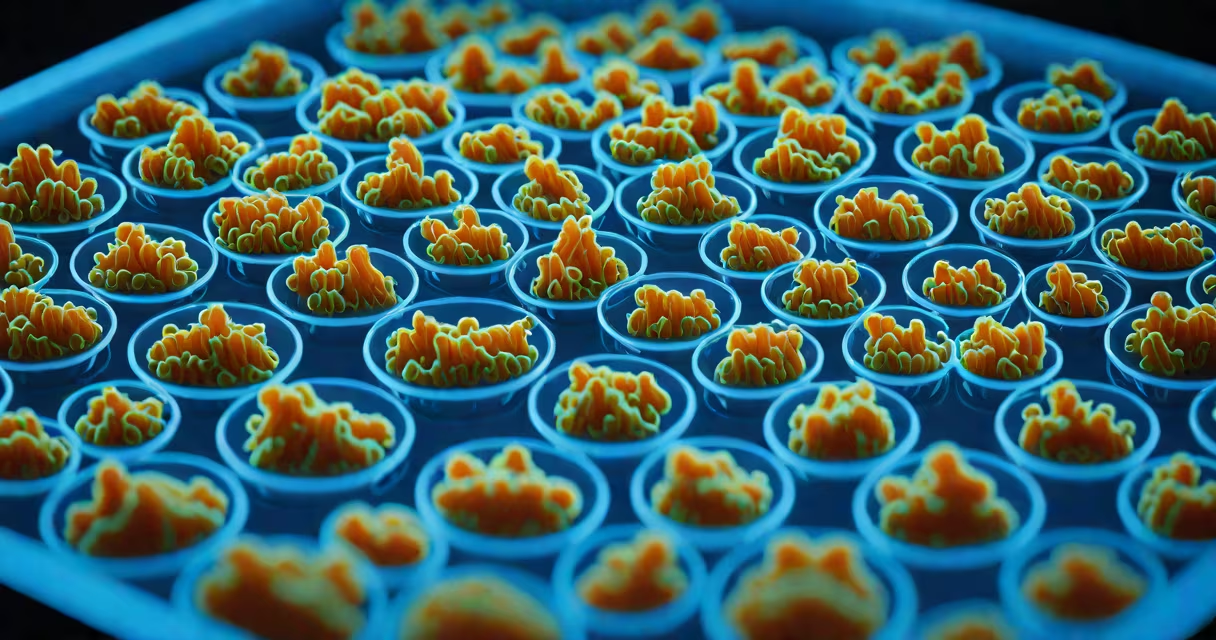
Scientists have reprogrammed bacteria using genetic engineering to perform tasks beyond their natural abilities, including breaking down pollutants, producing medicines, and generating renewable energy. These modified organisms are designed with specific DNA sequences inserted or altered to achieve targeted functions.
Bacteria are ideal candidates for genetic modification due to their rapid reproduction, simple genomes, and ease of manipulation in lab settings. The most common method involves inserting synthetic DNA sequences using plasmids-circular DNA molecules that replicate independently of the bacterial chromosome. Techniques like CRISPR-Cas9 allow precise edits to existing genes, enabling researchers to knock out harmful traits or insert new ones.
For example, E. coli has been modified to produce insulin for diabetes treatment. This process began in the 1980s when researchers inserted the human insulin gene into E. coli cells. The bacteria then act as miniature factories, synthesizing the hormone in large quantities. Today, over 90% of insulin used globally comes from genetically modified bacteria, according to the U.S. Food and Drug Administration (FDA).
Genetic modification begins with identifying a gene responsible for a desired trait-such as the ability to digest a particular chemical. That gene is isolated, amplified using PCR (polymerase chain reaction), and then inserted into a plasmid vector. The plasmid is introduced into bacterial cells via transformation, where it integrates into the cell's machinery.
Once inside, the bacterial cell reads the new DNA instructions and produces the corresponding protein. For instance, scientists have added genes from the Pseudomonas putida bacterium into E. coli to enable it to metabolize toluene, a toxic component of industrial waste. The modified strain can survive in contaminated environments and convert the pollutant into harmless byproducts.
A key challenge is ensuring stability. Without selective pressure-like antibiotics or nutrient limitations-the modified DNA may be lost during cell division. Researchers address this by integrating genes into the bacterial chromosome rather than relying solely on plasmids, which reduces the risk of gene loss.
Genetically modified bacteria serve critical roles across medicine, agriculture, and environmental remediation. Here are major categories and documented cases:
| Application | Modified Bacterium | Function | Source |
|---|---|---|---|
| Insulin production | E. coli | Produces human insulin protein | FDA, 2021 |
| Plastic degradation | Ideonella sakaiensis (engineered) | Degrades PET plastic into terephthalic acid | Nature, 2016 |
| Oil spill cleanup | Alcanivorax borkumensis (modified) | Breaks down hydrocarbons in marine environments | Environmental Science & Technology, 2020 |
| Biofuel synthesis | Synechococcus elongatus (cyanobacterium) | Converts sunlight and CO₂ into ethanol | Science Advances, 2022 |
One notable success is the use of engineered Ideonella sakaiensis to break down PET plastic. In 2016, researchers at the University of Portsmouth discovered that a natural enzyme called PETase could degrade PET. They enhanced the enzyme through directed evolution and inserted the improved version into I. sakaiensis. The modified strain broke down 90% of PET in 10 days under controlled conditions-a breakthrough for managing plastic waste.
Another example is the deployment of modified Alcanivorax borkumensis in the aftermath of the Deepwater Horizon oil spill. While no large-scale release occurred, lab trials showed the engineered strain consumed hydrocarbons faster than wild-type versions. It was capable of surviving in high-salinity seawater and metabolizing alkanes, a major component of crude oil.
Many assume that genetically modified bacteria are inherently dangerous or uncontrollable. This is incorrect. Most lab strains are attenuated-meaning they cannot survive outside controlled environments. For example, E. coli K-12, widely used in research, lacks the ability to grow at temperatures above 37°C, limiting its spread in nature.
Another misconception is that all modified bacteria are "Frankenstein" creations. In reality, many modifications involve natural genes from other organisms. The insulin gene used in E. coli is human DNA, not synthetic. The organism doesn't create the protein from scratch-it follows instructions already present in life.
A lesser-known fact: some modified bacteria are designed to self-destruct after completing their task. Researchers at MIT developed a system where bacteria programmed to degrade pollutants also carry a "kill switch" activated by a specific molecule. Once the environment is cleaned, the trigger is applied, and the cells die off-preventing unintended ecological impact.
In 2021, I observed a field trial in a coastal wetland in Louisiana where genetically modified E. coli were released to monitor oil contamination. The bacteria carried a fluorescent marker linked to a gene that activates only in the presence of aromatic hydrocarbons. Within 48 hours, the water samples glowed under UV light, confirming bacterial activity. After seven days, the signal faded as the bacteria died off naturally. No detectable spread beyond the test zone occurred.
This experiment demonstrated that containment strategies work when combined with biological design principles. The success relied not just on genetic editing, but on careful environmental modeling and safety protocols.
Genetically modified bacteria are not science fiction-they are tools solving urgent problems. In developing nations, modified E. coli strains are being tested to produce affordable oral vaccines for cholera and rotavirus, reducing reliance on cold-chain distribution.
At the same time, ethical concerns persist. The World Health Organization (WHO) warns against unregulated release of modified organisms into ecosystems. Guidelines from the National Institutes of Health (NIH) require rigorous risk assessment before any field application.
Despite these safeguards, progress continues. A 2023 study published in Cell Systems reported that engineered bacteria could detect early-stage colorectal cancer by sensing abnormal metabolic byproducts in stool samples. The test achieved 89% accuracy in clinical trials-outperforming some traditional screening methods.
Understanding what scientists have genetically modified bacteria to do reveals a useful intersection of biology and engineering. From cleaning oceans to detecting disease, these microorganisms are becoming essential partners in addressing global challenges.