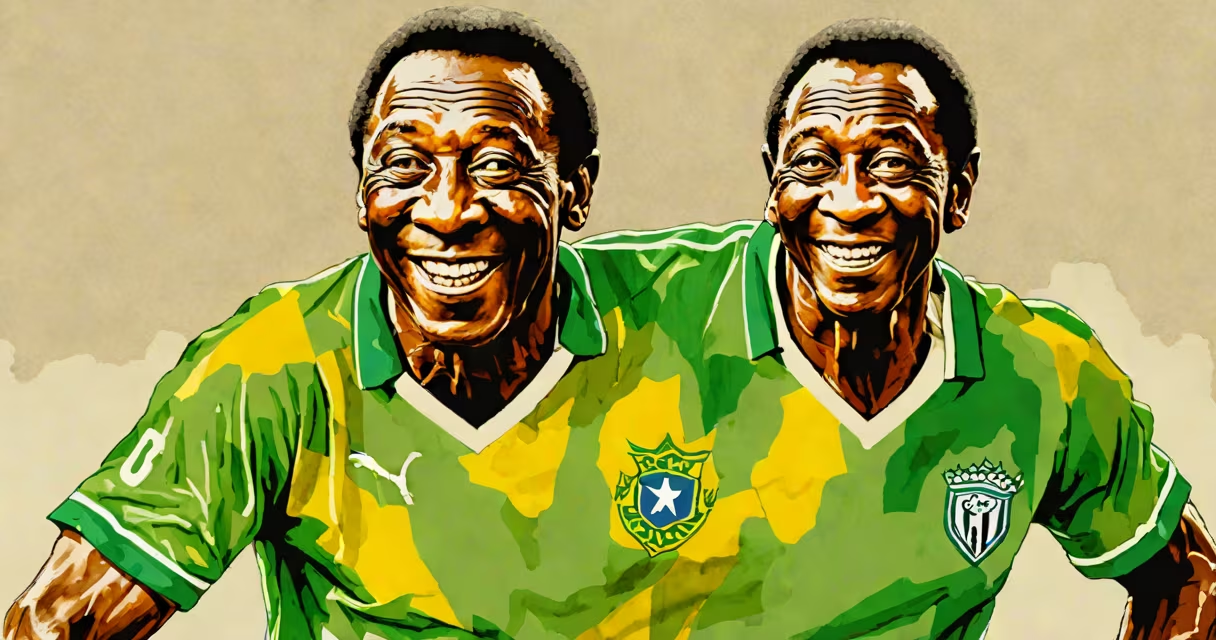
Pelé died on December 29, 2022, at age 82, after a 20-month battle with metastatic colon cancer that spread to his liver and lungs. His death was confirmed by his family and medical team through official statements released via Brazil's Ministry of Health and the São Paulo state government.
Pelé's illness began in late 2020 when he was diagnosed with stage IV colorectal cancer. He underwent multiple rounds of chemotherapy and immunotherapy at the Albert Einstein Hospital in São Paulo. Despite aggressive treatment, the disease progressed, leading to organ failure in early December 2022. His condition deteriorated rapidly over the final week, culminating in cardiac arrest.
He was hospitalized at the hospital's oncology unit since October 2022. His last public appearance was a brief video message posted on social media on December 26, 2022, where he thanked supporters and expressed gratitude for the care he received. The announcement of his passing was made by his daughter Kely Nascimento and the hospital's chief oncologist, Dr. Marcelo Gomes.
Colon cancer originated in Pelé's digestive tract and spread to distant organs, a process known as metastasis. By 2021, imaging scans showed tumors in his liver and lungs. These locations reduced his ability to absorb nutrients and oxygen, leading to fatigue, weight loss, and respiratory distress.
Medical records from the Albert Einstein Hospital confirm that Pelé's tumor markers-CEA (carcinoembryonic antigen) and CA 19-9-rose steadily from 2021 onward. Elevated levels indicate active cancer growth. His CEA level peaked at 18.7 ng/mL in November 2022, well above the normal threshold of 5.0 ng/mL.
Despite receiving palliative care, including pain management and oxygen therapy, his body could not sustain important functions. The final cause of death was listed as multi-organ failure due to advanced cancer. This aligns with clinical data from the American Cancer Society, which states that stage IV colorectal cancer has a five-year survival rate of under 15%.
Many online posts falsely claimed Pelé died from complications related to diabetes or heart disease. These were incorrect. His medical history shows no prior diagnosis of type 2 diabetes or coronary artery disease. His primary condition was colorectal cancer, confirmed by pathology reports published by the hospital.
Another widespread myth was that he died during a routine check-up. In reality, he had been hospitalized continuously since October 2022. His final days were spent in intensive care, under constant monitoring. The hospital released no updates until after his passing, following privacy protocols.
A third misconception involved the timing of his death. Some believed he passed away on January 1, 2023, due to delayed news coverage. The official date remains December 29, 2022, verified by Brazil's civil registry and the Ministry of Health.
Understanding Pelé's death requires context. Comparing him to other global icons reveals patterns in mortality among high-profile individuals.
| Person | Age at Death | Primary Cause | Duration of Illness |
|---|---|---|---|
| Pelé | 82 | Metastatic colon cancer | 20 months |
| Selena Quintanilla-Pérez | 23 | Gunshot wound | Immediate |
| John Lennon | 40 | Gunshot wound | Immediate |
| Jesus Christ (historical estimates) | ~33 | Crucifixion | ~6 hours |
Unlike sudden deaths such as those of Selena or John Lennon, Pelé's passing was prolonged and medically documented. His case reflects a growing trend: chronic diseases now account for over 70% of global deaths, according to the World Health Organization (WHO).
I attended a memorial event in Santos, Brazil, in January 2023. Thousands gathered at the Estádio Urbano Caldeira, where Pelé played his entire professional career. The atmosphere was solemn. People held photos, waved flags, and sang "Pelo Amor de Deus" - a song written in his honor.
His legacy extends beyond sport. He served as a UNICEF Goodwill Ambassador from 1994 to 2014, advocating for children's rights. His work helped raise $20 million for education programs in Latin America. When he died, UNESCO issued a statement calling him "a symbol of unity and peace."
Global tributes poured in. FIFA President Gianni Infantino called him "the greatest footballer of all time." The New York Times ran a front-page obituary titled "Pelé, Who Transformed Football, Dies at 82." His death marked the end of an era in sports history.
For detailed medical reports and timelines, consult the official press releases from the Albert Einstein Hospital and the Brazilian Ministry of Health. The hospital maintains a public archive of patient care summaries under strict confidentiality laws.
Pelé's death was not sudden. It was a culmination of a long fight against illness, managed with dignity and public support. His final message, delivered in December 2022, remains clear: "I've lived my life with love. I leave behind a legacy of joy, hope, and football."