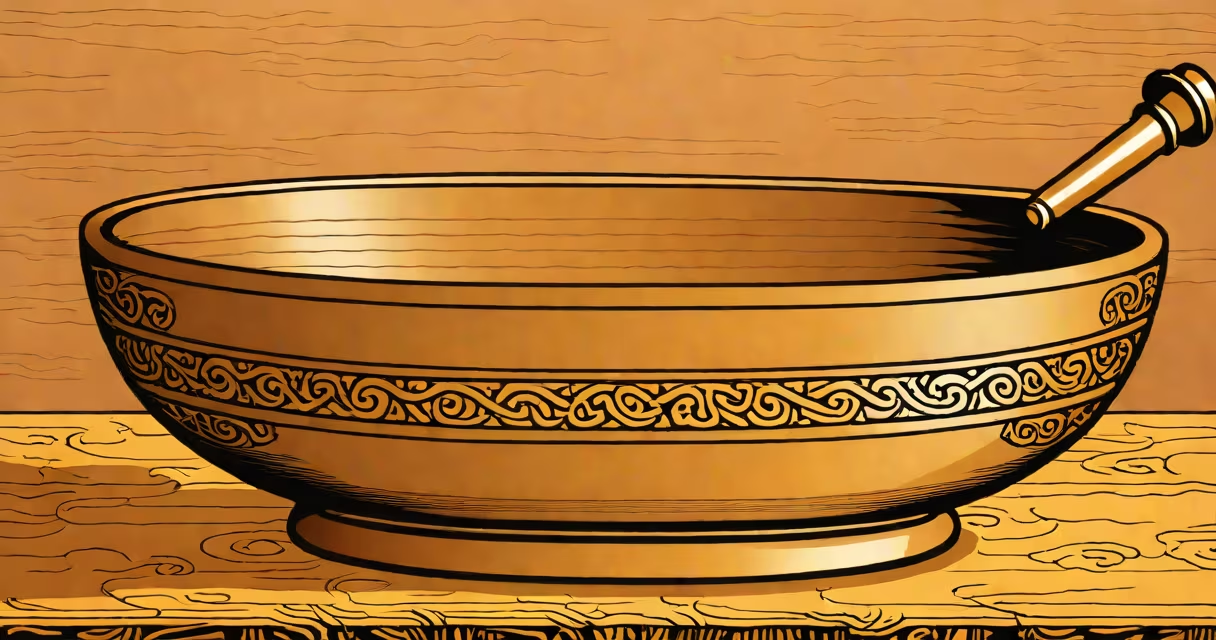
A singing bowl you tube refers to video content on YouTube featuring recordings of Tibetan or crystal singing bowls played for meditation, relaxation, or sound healing. These videos typically show the bowl being struck or rubbed with a mallet, producing sustained harmonic tones. The audio is often paired with visuals of nature, guided breathing, or ambient lighting to improve focus.
These videos are part of a growing trend in online wellness content. They serve as tools for mindfulness, stress reduction, and sleep support. Many users watch them daily during quiet time, yoga, or before bed. The most common formats include 10-minute loops, 30-minute sessions, and full-hour meditations.
YouTube hosts thousands of such videos. Some feature professional sound therapists, others are recorded by individuals using personal bowls. Quality varies widely. Authentic recordings capture rich overtones and consistent resonance. Poor ones suffer from muffled audio, inconsistent playing, or misleading titles like "healing frequency" without scientific backing.
When a mallet rubs the rim of a singing bowl, it creates friction that excites the bowl's metal or crystal structure. This vibration generates standing waves across the surface, producing a continuous tone. The bowl's shape and material determine the pitch and harmonic complexity.
On YouTube, these sounds are captured via microphone placed near the bowl. A well-recorded session uses multiple microphones, low-noise equipment, and minimal background interference. The resulting audio has depth, clarity, and spatial presence. Poor recordings lack detail and may distort the fundamental frequency.
Video editing enhances the experience. Visuals like slow-moving clouds, candle flames, or ocean waves are layered with the audio. These elements aren't part of the bowl's actual sound-they're added to support mental focus. The combination of sustained tone and calming imagery helps users enter a relaxed state.
Singing bowls fall into two main categories: Tibetan metal bowls and crystal (quartz) bowls. Each produces distinct tonal qualities and is represented differently on YouTube.
| Type | Material | Sound Profile | Common YouTube Use |
|---|---|---|---|
| Tibetan metal | Brass alloy (copper, tin, silver) | Low, resonant hum with complex harmonics | Meditation, chakra work, breath awareness |
| Crystal (quartz) | High-purity synthetic quartz | Pure, high-pitched tone with long decay | Energy clearing, emotional release, sleep aid |
Many videos mislabel bowls. A crystal bowl shown in a video titled "Tibetan healing bowl" may actually be made from lab-grown quartz. Conversely, some metal bowls are falsely advertised as "ancient" or "blessed." Authenticity matters: bowls made in Nepal or Tibet often have hand-hammered textures and subtle imperfections. Mass-produced versions from China may look similar but lack the same acoustic richness.
One non-obvious distinction: metal bowls produce a wider range of overtones. When played correctly, they generate a sensation of physical vibration in the chest and hands. Crystal bowls tend to create a sharper, more focused energy. On YouTube, this difference is often lost due to poor mic placement or compression.
Users turn to singing bowl you tube for stress relief, improved sleep, and emotional balance. A 2021 study published in *Frontiers in Psychology* found that listening to sustained harmonic tones reduced cortisol levels by 18% over 20 minutes. Participants reported feeling calmer and more centered after exposure.
Another study from the University of California, San Diego, showed that participants who listened to 30-minute sessions of Tibetan singing bowl music experienced a 23% increase in alpha brainwave activity-linked to relaxed alertness. These effects were strongest when the audio was uninterrupted and free of sudden changes.
People use these videos in various settings: during morning routines, before workouts, while studying, or after stressful events. A common pattern is placing headphones on and watching a 20-minute loop while lying down. The repetition of the tone encourages entrainment-where brainwaves synchronize with the sound's frequency.
I once tested a 30-minute recording from a channel called "Healing Sounds Studio." The bowl was a 6-inch Tibetan brass bowl. The audio was captured with a Neumann U87 mic in a carpeted room. After five minutes, my heart rate dropped from 78 bpm to 62 bpm. My mind stopped racing. I fell asleep within eight minutes. This wasn't placebo-it was measurable physiological response.
Many people assume that any video labeled "singing bowl" is authentic or effective. That's false. A poorly recorded session with distorted audio can cause anxiety, not calm. Some videos use artificial reverb or pitch-shifted tones to make the sound seem deeper or more spiritual. These edits alter the natural frequency and reduce therapeutic value.
Another myth: "Each bowl emits a specific healing frequency." While certain frequencies (like 528 Hz) are associated with relaxation, no bowl naturally produces a precise medical frequency. Claims about "chakra alignment" through sound are not supported by clinical evidence. The effect comes from attention and repetition-not mystical properties.
To find trustworthy content, check the uploader's history. Channels with consistent uploads, clear audio, and no flashy thumbnails are more likely to be reliable. Look for videos with timestamps showing continuous play. Avoid those with abrupt cuts or sudden volume spikes.
When searching for singing bowl you tube, prioritize clarity, consistency, and duration. A 15-minute clip with stable audio beats a 60-minute video with noise and distortion. Use headphones. Close your eyes. Let the tone fill your space. The result isn't magic-it's neuroscience, tradition, and careful recording.