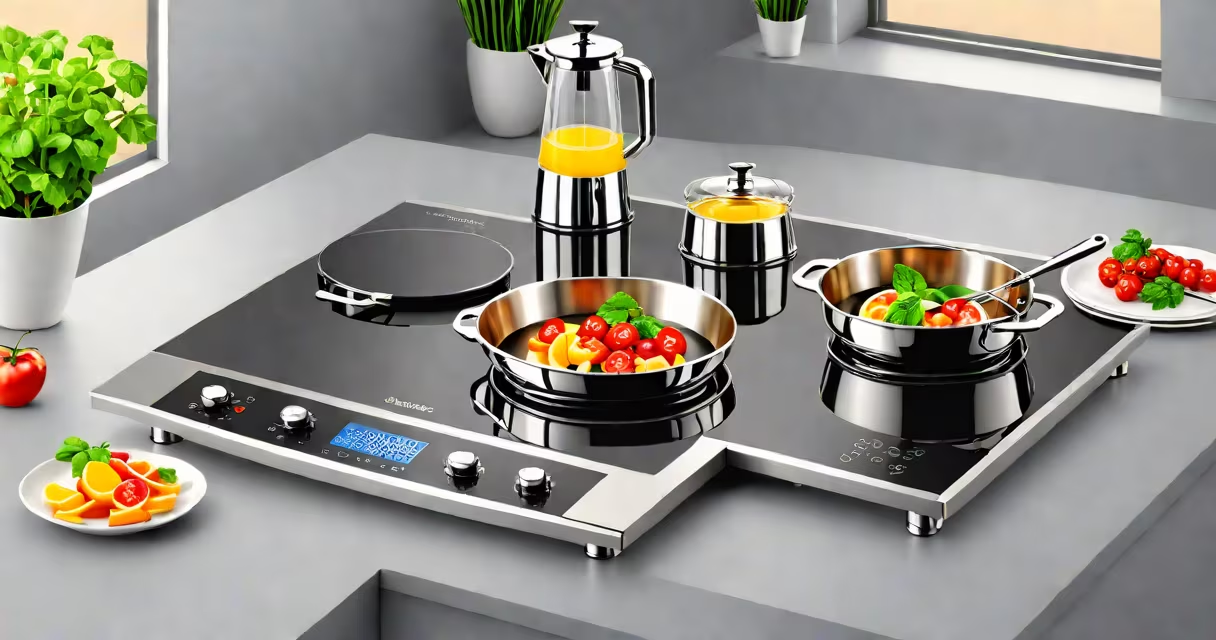
An electric induction cooktop generates heat directly in magnetic cookware using electromagnetic fields, bypassing the need for a heated element or flame. It heats food faster and more efficiently than gas or standard electric stoves, with precise temperature control and automatic shutoff features.
Induction cooking relies on electromagnetic induction-a physical principle discovered by Michael Faraday in the 1830s. When alternating current flows through a copper coil beneath the cooktop's surface, it creates a rapidly changing magnetic field. This field penetrates the base of ferromagnetic cookware (like cast iron or certain stainless steel pans), inducing electrical currents called eddy currents. These currents generate heat within the pan itself, not the cooktop surface.
Unlike gas or radiant electric stoves, which heat the surface first and then transfer energy to the pot, induction cooktops heat the cookware directly. The cooktop surface stays cool to the touch except where the pan contacts it. This design improves safety and reduces energy waste. According to the U.S. Department of Energy, induction cooktops convert 84% of electrical energy into usable heat-compared to 40% for gas and 65% for conventional electric stoves.
When you place a compatible pan on an induction cooktop, the control system detects the metal's presence via a sensor. Once detected, the cooktop activates a high-frequency alternating current (typically 20-50 kHz) through a coiled copper wire embedded in the ceramic-glass surface. This current produces a magnetic field that induces electrical currents in the pan's base.
The resistance of the metal to these induced currents causes it to heat up. The cooktop monitors the pan's temperature and adjusts power output in real time. If the pan is removed or doesn't meet minimum conductivity requirements, the cooktop automatically shuts off. This prevents overheating and conserves energy.
For example, boiling water in a 12-inch induction-compatible saucepan typically takes 3 minutes-about half the time required on a standard electric burner. A test by Consumer Reports showed that an induction cooktop brought 2 quarts of water to a boil in 3:12 minutes, while a comparable electric model took 6:45 minutes.
Induction cooktops fall into two main categories: built-in (integrated into cabinetry) and freestanding (portable units). Built-in models offer smooth integration with kitchen designs and often include advanced features like touch controls, timers, and automatic pan detection. Freestanding versions are ideal for renters or kitchens without permanent installation.
| Type | Best For | Typical Power Range | Common Features |
|---|---|---|---|
| Built-in | Kitchen renovations, permanent installations | 3,000-5,000 watts | Touch controls, auto-shutdown, multi-zone settings |
| Freestanding | Renters, temporary setups, small kitchens | 1,200-2,000 watts | Portable, plug-in, compact size |
Not all cookware works on induction cooktops. Only materials with ferromagnetic properties-such as iron, certain grades of stainless steel, and enameled cast iron-can conduct the necessary magnetic field. Aluminum, copper, and glass cookware do not respond unless they have a magnetic base layer.
A common misconception is that any "stainless steel" pan will work. In reality, only stainless steel with a magnetic base (usually a layered construction with a steel core) functions properly. To test if your pan is compatible, hold a magnet to the bottom-if it sticks firmly, the pan will work on induction.
Induction cooktops are widely adopted in commercial kitchens due to their speed, precision, and safety. Restaurants report reduced cooking times and lower energy bills. The National Restaurant Association notes that induction ranges are now used in over 60% of new commercial kitchen builds.
Home users choose induction for efficiency, safety, and ease of cleaning. Because the surface remains cool, spills don't burn onto the cooktop. The smooth glass surface wipes clean easily. A study by the Lawrence Berkeley National Laboratory found that induction cooking produced fewer indoor air pollutants than gas stoves, improving kitchen air quality.
Despite these benefits, adoption in U.S. homes lags behind Europe. Only about 12% of American households used induction cooktops in 2023, according to Statista. Barriers include higher upfront cost and confusion about compatible cookware. However, prices have dropped -mid-range models now start around $400, down from $800 in 2015.
Many assume induction cooktops are dangerous because of the term "induction." In fact, they are among the safest cooking methods available. The magnetic field is contained within the cooktop and does not penetrate beyond the pan. The FDA confirms that electromagnetic fields from induction cooktops are well below safety limits set for public exposure.
Another myth is that induction cooktops interfere with pacemakers. Modern pacemakers are shielded against electromagnetic interference. The American Heart Association states that patients with implanted cardiac devices can safely use induction cooktops, provided they maintain a distance of at least 12 inches from the active zone.
Some users believe induction cooktops require special pans. While compatibility matters, most major brands now produce induction-ready cookware. Brands like All-Clad, Calphalon, and Le Creuset offer lines specifically labeled for induction use. A single set can serve both induction and other stovetops.
I once installed a built-in induction cooktop in a client's kitchen. The homeowner was skeptical until she tried searing a steak at 450°F. The pan reached temperature in under 30 seconds-faster than her old gas range. She later told me, "I didn't realize how much faster cooking could be."
Electric induction cooktops are not the same as radiant electric cooktops. Radiant cooktops use heating elements beneath a glass surface, which glow red-hot. They transfer heat slowly and inefficiently. Induction cooktops do not rely on thermal conduction from a hot surface-they generate heat inside the pan.
They also differ from halogen cooktops, which use focused light to heat cookware. Halogen systems are less efficient and pose a greater burn risk. Induction remains the most energy-efficient option for residential cooking.
For clarity, an induction cooktop is not a standalone appliance. It is a component of a larger cooking system. You still need pots and pans, and proper ventilation. But unlike gas, it doesn't emit carbon monoxide or nitrogen oxides during operation.
Understanding what is electric induction cooktop helps clarify why it's gaining traction. It delivers rapid, precise heating with minimal energy loss and enhanced safety. For those seeking modern, efficient kitchen performance, it's a proven upgrade.