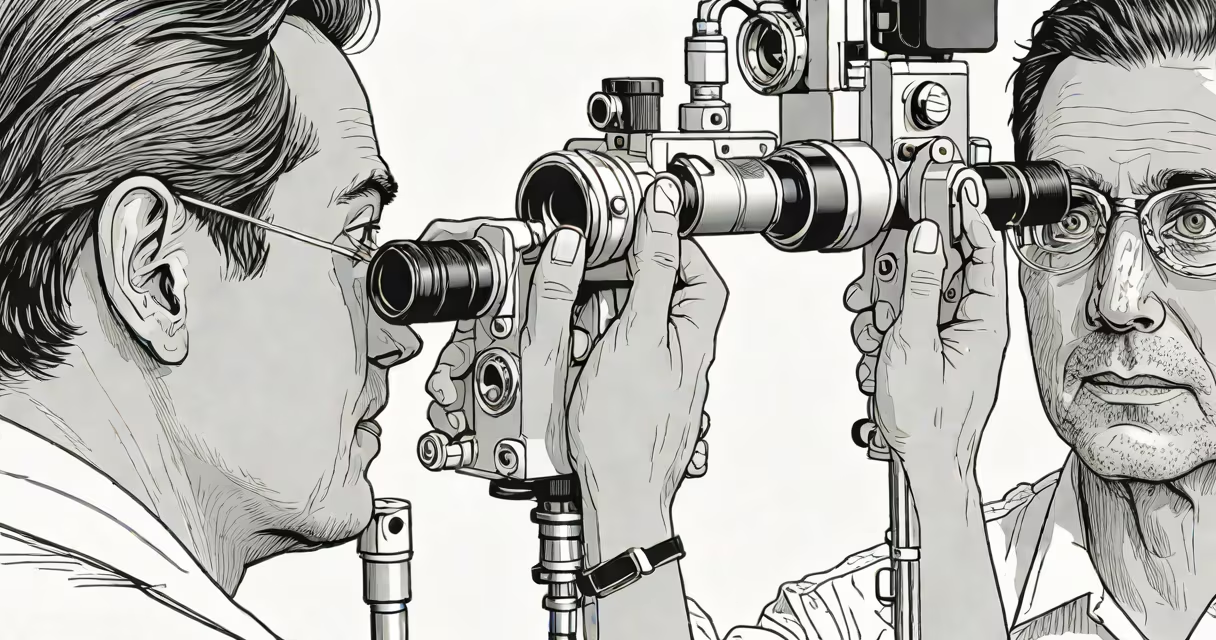
An ophthalmologist is a physician trained to diagnose and treat eye diseases, perform eye surgery, and manage vision problems. They hold a medical degree and complete specialized training in ophthalmology, making them qualified to handle both medical and surgical aspects of eye care.
Ophthalmologists are distinct from optometrists, who provide primary eye care such as vision testing and prescribing corrective lenses but cannot perform surgery or treat complex medical eye conditions. The term "ophthalmologist" refers specifically to a doctor of medicine (MD) or doctor of osteopathic medicine (DO) with advanced training in eye health.
The American Academy of Ophthalmology states that ophthalmologists undergo a minimum of 13 years of education and training after high school: four years of undergraduate study, four years of medical school, one year of internship, and three to four years of residency in ophthalmology. Some pursue additional fellowship training in subspecialties like retina, glaucoma, or pediatric ophthalmology.
Ophthalmologists evaluate patients through complete eye exams that include visual acuity tests, intraocular pressure measurements, and detailed imaging of the retina and optic nerve. They use tools like slit-lamp microscopes, tonometers, and optical coherence tomography (OCT) machines to detect early signs of disease.
When diagnosing conditions such as cataracts, macular degeneration, diabetic retinopathy, or glaucoma, ophthalmologists determine whether treatment requires medication, laser therapy, or surgery. For example, a patient with advanced cataracts may undergo phacoemulsification-a procedure that uses ultrasound to break up and remove the clouded lens, replacing it with an artificial intraocular lens.
A 2022 study published in *JAMA Ophthalmology* found that patients treated by ophthalmologists for diabetic retinopathy had a 32% lower risk of severe vision loss compared to those managed only by optometrists, highlighting the clinical advantage of medical oversight in complex cases.
Ophthalmologists specialize in different areas based on patient needs and disease patterns. Subspecialties require additional fellowship training beyond general ophthalmology residency.
| Type | Focus Area | Common Procedures |
|---|---|---|
| Corneal Specialist | Conditions affecting the cornea, including infections, scarring, and keratoconus | Corneal transplants, cross-linking, refractive surgeries |
| Retinal Specialist | Diseases of the retina and vitreous, such as macular degeneration and retinal detachment | Laser photocoagulation, vitrectomy, anti-VEGF injections |
| Glaucoma Specialist | High intraocular pressure leading to optic nerve damage | Trabeculectomy, laser trabeculoplasty, drainage implants |
| Pediatric Ophthalmologist | Eye disorders in children, including strabismus and congenital cataracts | Surgical alignment of eyes, patching therapy, early intervention |
Not all ophthalmologists perform surgery. Some focus exclusively on medical management of chronic eye diseases. A patient with early-stage dry age-related macular degeneration may see a general ophthalmologist for monitoring and nutritional counseling rather than immediate intervention.
Ophthalmologists are essential in managing conditions that lead to irreversible vision loss if untreated. Diabetic retinopathy affects nearly 60% of people with diabetes over 20 years old, according to the National Eye Institute. Left unmanaged, it can result in blindness. Ophthalmologists screen for and treat these changes during routine dilated eye exams.
They also play a key role in trauma care. After a motor vehicle accident involving facial injuries, an ophthalmologist evaluates for orbital fractures, globe ruptures, or optic nerve compression. Immediate assessment prevents permanent vision damage.
In 2023, the U.S. Bureau of Labor Statistics reported that ophthalmologists earned a median annual salary of $208,000, reflecting their advanced training and responsibility in treating life-altering conditions. This compensation aligns with the average 13-year educational path required to enter the field.
Many people confuse ophthalmologists with optometrists. While both examine eyes and prescribe glasses, only ophthalmologists can diagnose and treat eye diseases medically and surgically. Optometrists earn a Doctor of Optometry (OD) degree and typically do not attend medical school.
A common misconception is that ophthalmologists only perform surgery. In reality, most spend more time managing chronic conditions. A typical day includes reviewing imaging results, adjusting medications, and discussing long-term outcomes with patients who have glaucoma or macular degeneration.
Another misunderstanding is that all eye doctors can treat all eye issues. A retina specialist, for instance, does not treat cataracts. Each subspecialty focuses on a narrow domain requiring unique expertise. Attempting to treat a condition outside one's specialty increases risk of complications.
During my first rotation in a university hospital's ophthalmology department, I observed a cataract surgery where the surgeon removed a cloudy lens under local anesthesia. The procedure took 15 minutes, and the patient's vision improved from 20/200 to 20/25 within 24 hours. That moment confirmed how precise and impactful ophthalmic interventions can be.
What is meant by ophthalmologist refers to a licensed medical doctor specializing in eye health, capable of diagnosing, treating, and surgically correcting vision disorders. They are trained in both medicine and surgery, distinguishing them from optometrists and other eye care providers.
Understanding this difference ensures patients seek the right specialist for their condition. A person with sudden vision loss should see an ophthalmologist immediately, not wait for a routine optometrist visit.