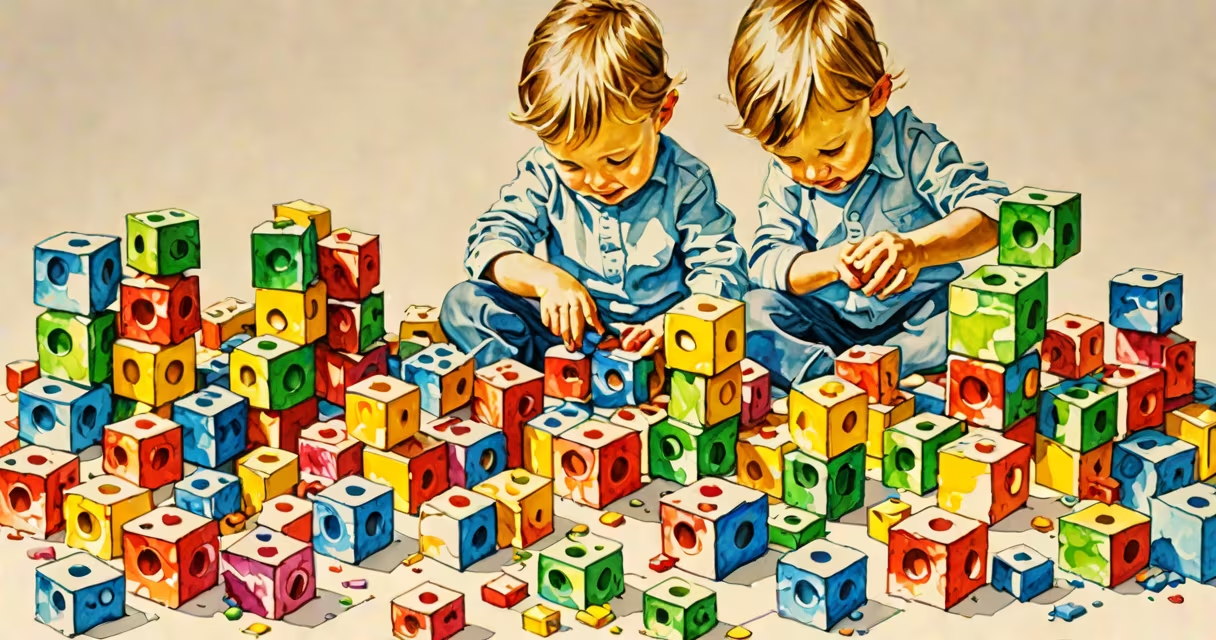
Play is a deliberate, often spontaneous activity involving physical movement, imagination, or rule-based engagement, typically pursued for enjoyment or personal growth rather than direct utility. It ranges from children's games to improvisational theater, competitive sports, and even structured learning environments.
At its core, play is behavior that serves no immediate survival purpose but contributes to cognitive development, emotional regulation, and social bonding. The term applies to metaphorical uses-such as "playing politics" or "playing a role"-where participants engage in strategic or performative actions.
Play is not merely entertainment. It is a fundamental human behavior observed across species. Researchers have documented play in wolves, dolphins, and primates, indicating evolutionary roots. In humans, play develops motor skills, problem-solving abilities, and empathy. According to the American Psychological Association, play supports neural plasticity in early childhood, shaping brain architecture critical for lifelong learning.
Play operates through structured or unstructured forms depending on environment and intent. Structured play follows agreed-upon rules-like chess, soccer, or board games. Unstructured play allows free exploration-such as a child pretending to be a superhero or arranging toys into stories.
Language reflects this duality. The verb "to play" appears in both literal and figurative senses. You can play a violin, play football, or play a joke. Each use shares the underlying idea of engaging with something in a flexible, experimental way-not strictly functional, but creative and responsive.
Consider a classroom where students simulate a historical debate. They don't just recite facts-they adopt roles, argue positions, and improvise responses. This is play because it involves role-taking, narrative construction, and emotional investment, even though the goal is academic understanding. The teacher may call it "role-playing," but the mechanism is still play.
Different forms of play serve distinct developmental and practical purposes. Psychologists categorize them based on cognitive and social function:
| Type | Description | Real-World Example |
|---|---|---|
| Functional Play | Repetitive actions with objects (e.g., stacking blocks) | A toddler repeatedly dropping a spoon to observe its fall-testing cause and effect. |
| Social Play | Cooperative games with shared goals and turn-taking | Children playing tag at recess, negotiating rules mid-game. |
| Symbolic Play | Using objects to represent other things (pretend or imaginative) | A child using a stick as a wand, acting out a fantasy battle. |
| Rule-Based Play | Structured games with defined objectives and boundaries | High school students competing in a debate tournament with time limits and scoring. |
These categories aren't rigid. A game of hide-and-seek blends functional, social, and symbolic elements. The child who hides uses spatial reasoning (functional), waits quietly (social), and imagines being invisible (symbolic).
Adults engage in similar patterns. A software developer debugging code might "play" with different inputs to test system behavior-experimentation that mimics childlike curiosity. This form of play is essential in innovation, as noted by MIT researchers studying creative problem-solving in engineering teams.
People often equate play with idleness or lack of seriousness. But research from the University of Cambridge shows that play activates the prefrontal cortex-the brain region responsible for planning, decision-making, and self-control. Play isn't the opposite of work; it's a mode of preparation for it.
Another misconception is that play is purely childish. While it begins in infancy, adults continue to use play in professional settings. Design thinking workshops, for example, rely on "playful prototyping"-rapid, low-stakes experimentation with ideas. These sessions encourage risk-taking without fear of failure, leading to breakthrough solutions.
There's also confusion between "play" and "performance." Performance implies a fixed outcome and audience evaluation. Play, by contrast, values process over product. When a musician improvises, they're not performing-they're playing. The difference lies in intention: performance seeks approval; play seeks discovery.
In a kindergarten class in Portland, Oregon, a teacher introduced a "museum day" project. Children were asked to create artifacts from recycled materials and display them in a classroom gallery. They labeled each exhibit with drawings and short stories.
One group built a "time machine" from cardboard boxes and aluminum foil. They assigned roles: pilot, scientist, and navigator. They scripted dialogue, rehearsed entrances, and invited classmates to "travel through time." This was not pretend-it was structured play. The children negotiated turns, resolved conflicts over space, and adapted their story when someone dropped a prop.
The teacher later observed that during the activity, children used complex vocabulary ("chronological," "prototype") and demonstrated collaborative problem-solving. None of this was taught directly. It emerged from the act of playing.
This example illustrates how play integrates language, math, science, and social skills. It's not a side activity-it's central to learning. As the National Association for the Education of Young Children states, "Play is the primary vehicle for learning in early childhood."
Understanding the full scope of "play" prevents misjudgment. A teenager spending hours on a video game isn't wasting time. If they're strategizing, collaborating with teammates, and adapting to changing scenarios, they're practicing executive function under pressure-skills transferable to real-world challenges.
Even in formal education, play remains important. A study published in *Child Development* found that students in schools with regular play-based curricula scored higher on standardized tests in reading and math than peers in traditional lecture-only classrooms. The difference wasn't due to more teaching time-it was due to increased attention, motivation, and retention.
When we say "play," we're not talking about leisure alone. We're referring to a changing, adaptive mode of interaction that shapes how we learn, relate, and innovate. It's not a luxury. It's a necessity.