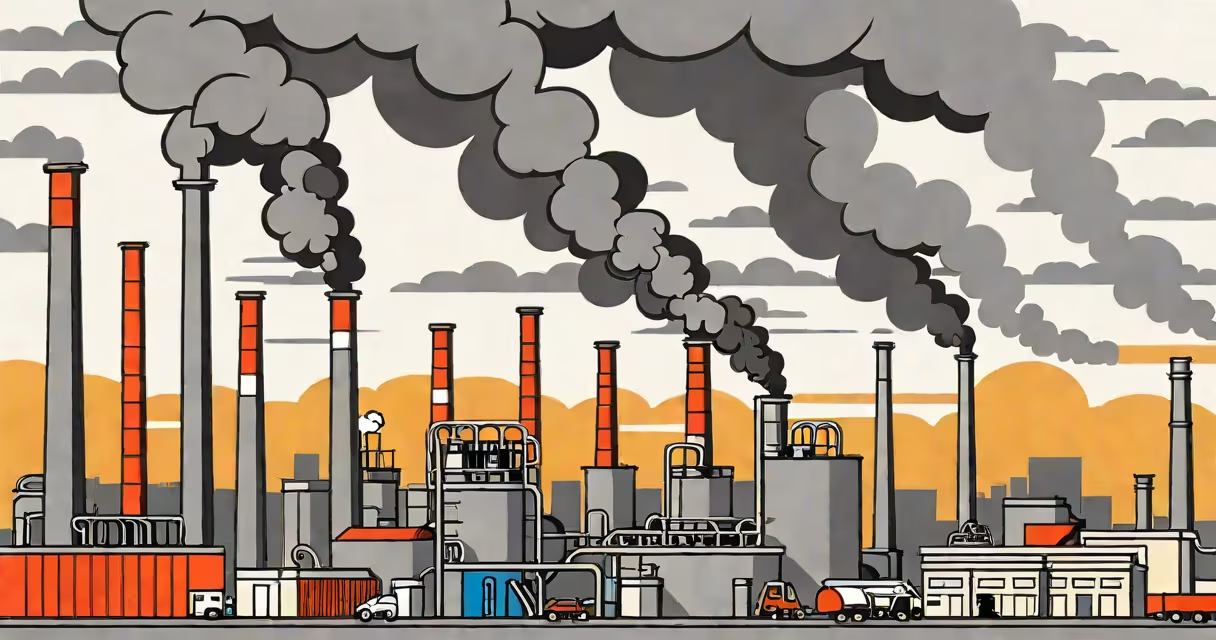
Pollution means the introduction of harmful substances into the environment that disrupt natural processes and endanger living organisms. It occurs when contaminants-chemicals, particles, or noise-enter air, water, or soil beyond safe levels.
These pollutants originate from human activities such as manufacturing, transportation, agriculture, and waste disposal. Natural events like volcanic eruptions or wildfires also contribute, but most pollution stems from industrialization and population growth. The World Health Organization (WHO) estimates that 9 out of 10 people breathe air containing high levels of pollutants, leading to 7 million premature deaths annually.
Environmental degradation from pollution alters ecosystems, reduces biodiversity, and compromises food and water safety. For example, nitrogen runoff from fertilizers causes algal blooms in lakes, which deplete oxygen and kill fish. In cities, vehicle emissions increase ground-level ozone, worsening respiratory conditions like asthma.
Pollution spreads through physical and chemical pathways. Air pollutants travel via wind currents, settling in distant regions. Water pollutants move downstream, contaminating rivers, lakes, and groundwater. Soil contamination persists for decades, affecting crops and entering the food chain.
When pollutants enter a system, they interact with biological and chemical processes. For instance, lead in gasoline once degraded into airborne particles that settled in urban soil. Children exposed to leaded dust developed learning delays and behavioral issues. The U.S. Environmental Protection Agency (EPA) banned leaded gasoline in 1996 after linking it to neurological harm.
Some pollutants degrade slowly. DDT, a pesticide banned in the U.S. in 1972, still appears in Arctic wildlife due to atmospheric transport and bioaccumulation. This shows pollution isn't confined to its source-it moves globally and accumulates over time.
Pollution is categorized by medium: air, water, soil, noise, and light. Each type has distinct sources and impacts.
| Type | Primary Sources | Common Pollutants | Health or Environmental Effect |
|---|---|---|---|
| Air | Factories, vehicles, power plants | PM2.5, NO₂, SO₂, ozone | Respiratory disease, acid rain |
| Water | Industrial discharge, sewage, agricultural runoff | Nitrates, heavy metals, microplastics | Algal blooms, fish kills, contaminated drinking water |
| Soil | Landfills, pesticides, mining | Lead, mercury, PCBs | Reduced crop yield, groundwater contamination |
| Noise | Urban traffic, construction, aircraft | Sound pressure above 85 dB | Hearing loss, stress, sleep disruption |
| Light | Streetlights, billboards, indoor lighting | Excessive artificial illumination | Disrupted animal migration, human circadian rhythm |
Each category overlaps. For example, wastewater from textile factories contains dyes and heavy metals that pollute rivers and poison aquatic life. When fish absorb toxins, humans consuming them risk long-term health problems like cancer or organ failure.
Pollution isn't always visible. Smog is obvious, but invisible pollutants like carbon monoxide or benzene pose greater risks because they go undetected without testing. A study by the National Institute of Environmental Health Sciences found that indoor air pollution can be two to five times higher than outdoor levels due to poor ventilation and household products.
Another misconception is that pollution only harms nature. In reality, it directly affects human health. In India, air pollution contributes to 1.6 million deaths annually-more than smoking or road accidents. The WHO classifies outdoor air pollution as a Group 1 carcinogen, meaning it causes cancer in humans.
Some assume recycling eliminates pollution. But producing recycled paper uses 30% less energy than virgin pulp, yet still generates wastewater and greenhouse gases. Recycling reduces harm but doesn't eliminate it. True pollution control requires reducing consumption at the source.
In June 1969, the Cuyahoga River in Cleveland, Ohio, caught fire due to oil and debris floating on its surface. The river had been heavily polluted by industrial waste for decades. News coverage of the fire shocked the public and helped spur passage of the Clean Water Act in 1972.
Before the fire, local industries discharged untreated effluent into the river. By 1970, the river's dissolved oxygen dropped below 2 mg/L-well below the 5 mg/L needed to support aquatic life. Fish populations vanished. The fire was not a rare event; similar incidents occurred in the 1930s and 1940s, but were ignored until media attention forced action.
After federal regulations were enforced, the river's water quality improved. Fish returned. Today, the Cuyahoga is designated a National Heritage Area. Its recovery demonstrates that pollution can be reversed-but only with sustained policy and enforcement.
Pollution is often conflated with environmentalism or sustainability. While related, they're distinct. Environmentalism is a movement advocating for nature protection. Sustainability focuses on meeting current needs without compromising future generations. Pollution is a measurable condition: the presence of harmful substances in the environment.
For example, a city may install solar panels (sustainable practice) but still emit particulate matter from diesel buses. The solar panels reduce carbon output, but the buses contribute to air pollution. Both issues coexist. Addressing pollution requires targeting specific contaminants, not just adopting green technologies.
I once monitored air quality near a highway using a handheld sensor. Particulate levels spiked during rush hour, even though nearby trees and parks were labeled "green zones." The data showed that vegetation alone cannot filter out fine particles from vehicle exhaust. This confirmed that pollution control demands engineering solutions, not just symbolic gestures.
Pollution means the release of hazardous materials into the environment, disrupting ecosystems and threatening human health. It results from industrial activity, transportation, agriculture, and improper waste management. Understanding what pollution means includes recognizing its invisible forms, global reach, and long-term consequences.
Effective responses require regulation, monitoring, and technological innovation. The Cuyahoga River fire remains a benchmark for environmental intervention. Without addressing pollution at its source, improvements remain temporary.