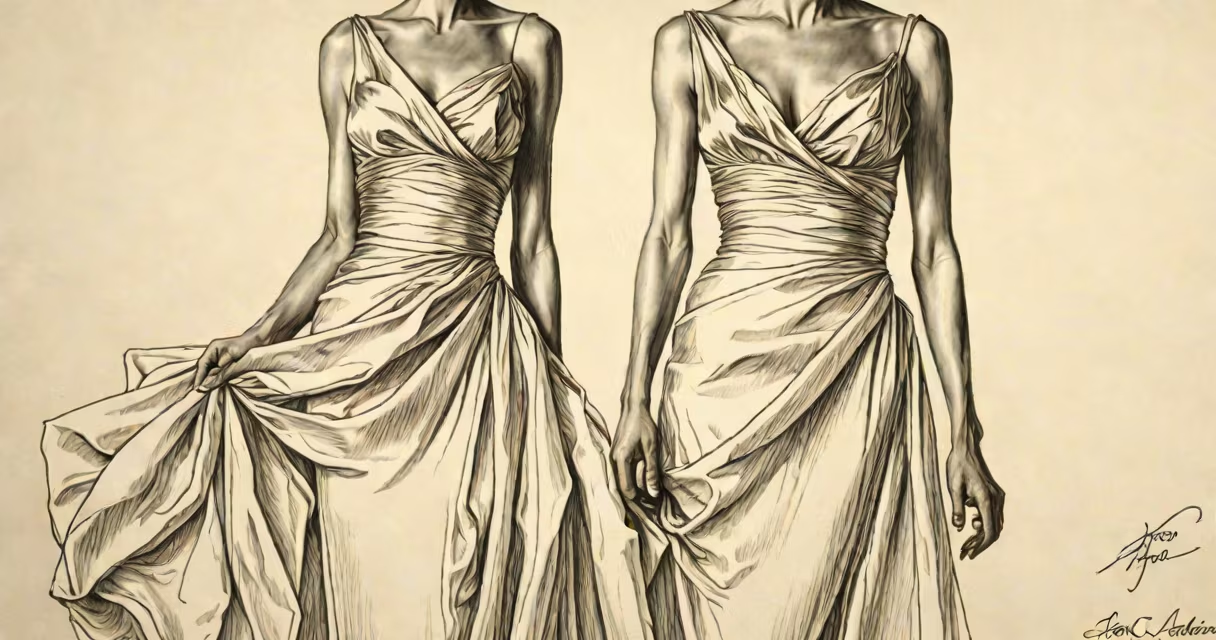
Lori Ann Talens is an American fashion designer whose work centers on vintage-inspired silhouettes, handcrafted construction, and timeless elegance. She creates custom and limited-run garments that blend 1940s and 1950s aesthetics with contemporary fit and function.
Her designs emphasize structure and proportion, using techniques like pattern drafting, darts, and internal boning to achieve a sculpted form. Materials include cotton voile, silk faille, and heavy-duty wool crepe-fabrics chosen for their weight, drape, and ability to hold shape. Each piece is constructed entirely by hand, often taking 60 to 80 hours to complete.
Talens operates primarily through private commissions and select boutique partnerships. She does not sell online or participate in mass-market retail. Her client base includes performers, event attendees, and collectors seeking distinctive, wearable art. A single custom dress may cost between $2,500 and $5,000 depending on complexity and fabric choice.
Talens begins each design with a physical sketch, then drafts patterns on muslin to test fit and movement. She uses a vintage Singer 201K sewing machine for most seams, preserving the tactile quality of handmade construction. The process includes multiple fittings-typically three-to ensure the garment moves with the body while maintaining silhouette integrity.
She avoids synthetic fabrics and industrial finishes. Instead, she finishes edges with French seams, hand-stitches hems, and applies bias binding by hand. Buttons are sourced from estate sales or specialty suppliers; zippers are often hidden within the seamline to preserve clean lines.
One project involved recreating a 1947 Christian Dior "New Look" silhouette for a client celebrating her 70th birthday. The result was a navy-blue wool crepe dress with a nipped-in waist, full circle skirt, and hand-pleated detailing. The entire piece took 72 hours to construct and required five fitting sessions.
Talens specializes in three core categories: evening gowns, tailored daywear, and bridal separates. Each serves a distinct purpose and reflects different historical references.
| Type | Key Features | Common Use Cases | Historical Reference |
|---|---|---|---|
| Evening Gowns | Fitted bodice, full skirts, satin or velvet finishes | Galas, red carpet events, milestone celebrations | 1940s Hollywood glamour |
| Daywear | Structured blazers, high-waisted trousers, bias-cut dresses | Professional settings, formal events, travel | 1950s American suburban elegance |
| Bridal Separates | Corseted tops, detachable skirts, lace appliqué | Non-traditional weddings, vow renewals, destination ceremonies | 1930s and 1940s bridal fashion |
She does not produce ready-to-wear collections. All pieces are made to order. This limits availability but ensures personalization and long-term wearability. A 2022 commission for a wedding party included four bridesmaids' dresses in varying shades of dusty rose, each tailored to individual body types and worn for over ten years with minimal maintenance.
Talens' designs are used in high-impact personal moments: weddings, anniversaries, award ceremonies, and performance events. They're favored by clients who seek clothing that feels both significant and intimate-clothing that tells a story beyond appearance.
One client, a stage actress preparing for a role in a revival of *Gypsy*, commissioned a custom sequined gown based on 1950s burlesque costumes. The dress featured a detachable train and a structured corset. It was worn during the show's final scene and later donated to a theater museum in New York City.
Her work is frequently mistaken for mass-produced vintage replicas. Unlike commercial reproductions, Talens' garments are original designs rooted in historical research. She consults archival sources such as *The Costume Institute at The Metropolitan Museum of Art* and digitized issues of *Vogue* from the 1940s and 1950s to inform proportions and fabric choices.
Many assume Talens works in haute couture due to her handcrafting methods. However, she is not a member of the Chambre Syndicale de la Haute Couture in Paris. Her work falls under the category of "artisanal fashion" rather than official couture, which requires adherence to specific legal and institutional standards.
Another misconception is that her designs are purely nostalgic. While they draw from past decades, they are engineered for modern mobility. A 2021 coat design included a hidden zipper and adjustable shoulder straps to accommodate seasonal layering and varied body shapes.
During a visit to her studio in Portland, Oregon, I observed her measuring a client's torso with a tailor's tape while adjusting a drape on a mannequin. The precision in her hand movements-folding fabric, pinning seams-revealed decades of practice. She spoke of "wearing the body" as a central principle: garments should move with the wearer, not against them.
Her work is not available for public purchase. Clients must apply through a formal inquiry process. She maintains a small portfolio on her private website, but no images are publicly searchable. This scarcity reinforces the exclusivity and intentionality behind each piece.