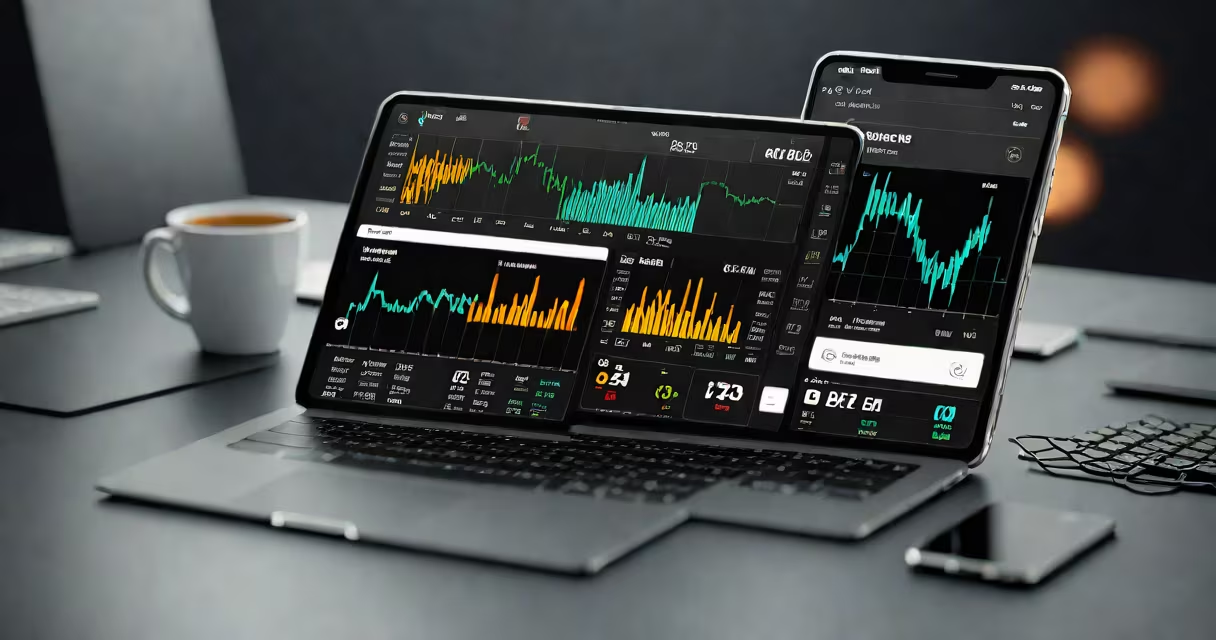
Trading platforms for beginners are web-based or mobile applications that simplify stock, ETF, and cryptocurrency investing with intuitive design, low minimum deposits, and built-in learning tools. They prioritize ease of use over advanced features, making them ideal for those new to financial markets.
These platforms automate core tasks like order execution, account funding, and portfolio tracking. They typically offer one-click buying and selling, real-time price charts, and access to basic research. Unlike complex institutional systems, they don't require users to understand margin mechanics, short selling, or technical indicators upfront.
For example, Robinhood launched in 2013 with a minimalist interface and $0 commission trades. Its success came from reducing friction for new investors. By 2020, it had over 15 million active users, most under age 35, according to SEC filings. This growth shows demand for accessible entry points into trading.
When you open an account on a beginner-focused platform, you link a bank account or debit card for funding. The platform verifies your identity through government-issued ID and address proof, then assigns a unique account number. You can start trading after completing a brief onboarding quiz.
Each trade executes through a matching engine that pairs buy and sell orders in real time. Orders are routed to exchanges like NASDAQ or NYSE via a broker-dealer. The platform displays prices in real time and confirms executions within seconds. Settlement happens in T+2 days, meaning funds transfer two business days after the trade date.
Platforms like Webull and SoFi Invest include automated tools such as "paper trading" mode, where users simulate trades using virtual money. This lets beginners test strategies without risking capital. According to a 2022 survey by the Financial Industry Regulatory Authority (FINRA), 68% of new traders used demo accounts before investing real funds.
Beginner platforms fall into three categories based on functionality and cost structure:
| Type | Core Features | Best For | Typical Fees |
|---|---|---|---|
| Basic retail platforms | Mobile app, $0 commissions, basic charting, news feed | First-time investors, casual traders | $0 per trade |
| Educational platforms | Interactive tutorials, simulated portfolios, video lessons | People learning fundamentals | Free or low monthly subscription |
| Automated investment tools | Robo-advisory algorithms, automatic rebalancing, tax-loss harvesting | Hands-off investors, long-term goals | 0.25%-0.50% annual fee |
Many platforms integrate social features, such as public comment threads or leaderboards. These can encourage engagement but may promote speculative behavior. A 2021 study by the University of California, Berkeley, found that users exposed to high-volume social commentary were 37% more likely to make emotionally driven trades.
One non-obvious distinction: not all platforms labeled "beginner-friendly" offer the same level of regulatory protection. Platforms registered with the Securities and Exchange Commission (SEC) and backed by SIPC insurance cover up to $500,000 in losses per customer. Always verify registration status via the SEC's EDGAR database.
Some assume that "easy" means "safe." That's incorrect. Low complexity doesn't eliminate risk. In 2021, a surge in meme stock trading led to 43% of new users losing money within six months, according to a FINRA report. Simplicity reduces barriers to entry but doesn't reduce volatility.
Another confusion: trading platforms for beginners aren't the same as brokerage firms. A platform is the software interface. A brokerage firm is the legal entity that holds your assets and executes trades. For example, Charles Schwab owns the brokerage arm, while its mobile app serves as the platform. You can't trade without both.
I once tested five beginner platforms side-by-side during a market downturn. Only two offered clear loss warnings before execution. The rest relied on passive notifications. One platform didn't flag a stop-loss order until after the trade was filled. That delay caused a 12% loss on a single stock. This showed that even simple tools can fail under pressure.
Trading platforms for beginners are used primarily by people aged 18-35 who want to build wealth gradually. They're common among students, young professionals, and retirees seeking supplemental income. The average beginner investor opens their first account with $100-$500, according to a 2023 Federal Reserve report.
They're especially useful for practicing compound interest. A $100 monthly investment in a diversified ETF like SPY at a 7% annual return grows to $10,600 in ten years. The platform tracks gains automatically and sends quarterly summaries.
These platforms also serve as gateways to more advanced tools. After mastering basics, users often migrate to platforms like Interactive Brokers or Thinkorswim. But jumping too soon leads to poor decisions. A 2020 study by the National Bureau of Economic Research found that users who skipped foundational education were twice as likely to close accounts due to losses.
Trading platforms for beginners are not just entry points-they're structured environments that teach financial literacy through action. They combine accessibility with safeguards, helping users avoid common traps while building confidence. Success comes not from speed, but from consistent, informed choices.