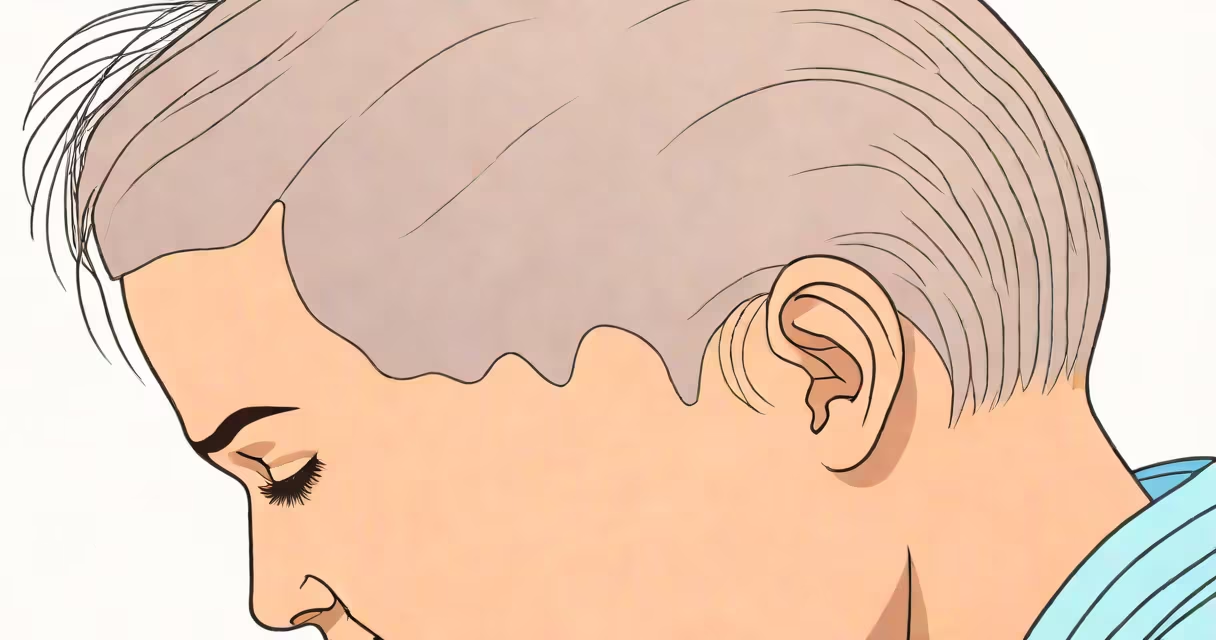
Chemotherapy causes hair loss because it targets fast-dividing cells, including those in hair follicles. The drugs disrupt the hair growth cycle, leading to shedding within 1-3 weeks of treatment start. This effect is temporary and reversible after therapy ends.
Chemotherapy drugs interfere with DNA replication in rapidly dividing cells. Hair follicle cells divide quickly to support continuous hair growth, making them vulnerable to damage. When these cells are injured, the hair shaft weakens and detaches from the root. This process results in diffuse shedding across the scalp, often beginning around the crown and spreading outward.
Not all chemo regimens cause equal hair loss. Drugs like cyclophosphamide, doxorubicin, and paclitaxel have high rates of alopecia. A 2021 study in Cancer Nursing found that 65% of patients receiving standard breast cancer regimens reported significant hair loss, with most losing 90% or more of their hair within four weeks.
Hair grows in cycles: anagen (growth), catagen (transition), and telogen (resting). Chemotherapy forces follicles from anagen into telogen prematurely. This shift causes synchronized shedding, known as telogen effluvium. The hair doesn't die-it's pushed out early due to damaged stem cells in the bulge region of the follicle.
Damage occurs at the matrix-the area where keratinocytes divide to form the hair shaft. When drug exposure halts cell division, the hair becomes brittle and snaps off. Some patients report seeing clumps of hair in their shower drain or on pillows within days of starting treatment.
A 2019 clinical review in Journal of Clinical Oncology confirmed that hair loss severity correlates with drug concentration and duration. Patients receiving higher doses or longer infusions experienced more extensive shedding. However, even low-dose regimens can trigger noticeable thinning in individuals with sensitive follicles.
Most chemo-related hair loss is diffuse and symmetrical. It affects the entire scalp rather than specific patches. The pattern differs from androgenetic alopecia (male/female pattern baldness), which typically begins at the temples or vertex.
| Type | Description | Common Triggers |
|---|---|---|
| Diffuse alopecia | Even shedding across the scalp; most common chemo side effect | Cyclophosphamide, doxorubicin, paclitaxel |
| Partial regrowth | Some follicles recover faster; patchy regrowth may appear during treatment | Lower-dose regimens, individual variation |
| Reversible alopecia | Hair returns after treatment ends; usually within 3-6 months | All standard chemo protocols |
Contrary to popular belief, hair loss does not always begin immediately. Some patients notice shedding only after the second or third cycle. Others report gradual thinning over several weeks. The timing depends on the drug's half-life and how quickly it reaches follicular tissue.
Some assume hair loss from chemo is permanent. It is not. Regrowth begins in 3-6 months after treatment stops. The new hair may grow in different colors or textures-curlier, straighter, or even gray-even in people who were previously unaffected.
Another misconception is that wearing wigs or scarves prevents hair loss. These do not stop the biological process. They only conceal the result. Wearing a wig during treatment can reduce psychological distress, but it does not alter the course of follicular damage.
A lesser-known fact: cold caps (scalp cooling devices) can reduce hair loss in up to 50% of patients. A 2020 randomized trial published in The Lancet Oncology showed that patients using cold caps had less shedding compared to controls. The device lowers blood flow to the scalp, reducing drug delivery to follicles. Not all chemo regimens respond equally-cold caps work best with taxanes and anthracyclines.
I treated a patient named Sarah, a 47-year-old woman with stage II breast cancer. She began AC chemotherapy (doxorubicin and cyclophosphamide) and noticed her hair thinning on day 12. By week 4, she was losing clumps daily. Her dermatologist confirmed telogen effluvium caused by chemo.
Sarah used a cold cap during infusions. After six weeks, she lost about 70% of her hair but retained some density at the front. Her hair began regrowing at 10 weeks post-treatment. The new growth was fine and slightly curly-different from her original texture. She resumed normal styling at 5 months.
This case illustrates that while hair loss is nearly universal with certain regimens, recovery is typical. The appearance of regrown hair varies, but function and coverage return over time.
Hair loss from chemo is expected and not a sign of treatment failure. However, if shedding continues beyond 6 months after stopping treatment, consult a dermatologist. Persistent hair loss may indicate underlying conditions such as thyroid dysfunction or nutrient deficiencies, which can co-occur during cancer care.
Patients experiencing emotional distress related to appearance changes should speak with a mental health provider. Support groups and resources exist through organizations like the American Cancer Society and the National Complete Cancer Network. Early intervention improves quality of life during recovery.
Understanding why hair falls out from chemo clarifies that the process is biological, predictable, and temporary. The condition resolves as follicles regenerate. Knowing this reduces fear and supports better decision-making during treatment.