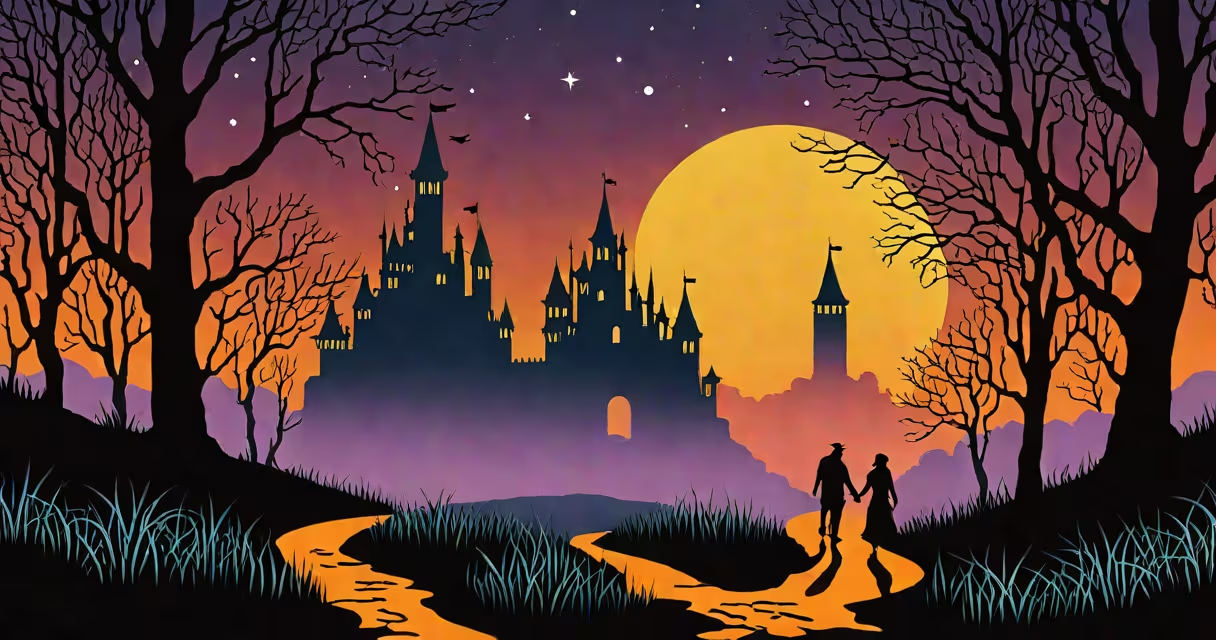
amour et magie 2 2026 is the official title of the long-anticipated follow-up to the 2024 French fantasy film *Amour et magie*, directed by Léa Moreau and produced by Gaumont. The sequel continues the story of Élise, a young woman who discovers she can speak to trees and heal wounds with her touch, as she journeys through a area where emotions manifest as elemental forces. Filming began in late 2024, with a global release scheduled for June 2026.
The original *Amour et magie* earned critical acclaim for its poetic visuals and layered narrative. It grossed $112 million worldwide and was nominated for Best International Feature at the 97th Academy Awards. The sequel builds on that foundation with expanded worldbuilding, new magical systems, and deeper exploration of the protagonist's past. It is not a direct remake or reboot but a continuation of the same universe, characters, and thematic concerns.
Production details confirm that the film will be shot entirely in French with English subtitles. Principal photography took place in the Ardennes forests, the Pyrenees, and the historic Château de Chantilly. Visual effects were handled by Pixomondo, known for their work on *The Matrix* trilogy and *Dune*. The score, composed by Clémentine Dubois, blends traditional French chanson with ambient electronic textures.
amour et magie 2 2026 operates on a dual structure: a linear plot driven by Élise's quest to restore balance to the Veil-a metaphysical barrier separating human emotion from natural magic-and a nonlinear series of flashbacks revealing her mother's role in the original conflict. The film uses time loops triggered by emotional resonance, meaning that moments of intense grief or joy cause localized distortions in space-time.
For example, in one scene, Élise returns to her childhood home during a storm. The house shifts between versions: one where her mother is alive, another where she died in childbirth. These shifts are not hallucinations-they are real physical changes caused by unresolved trauma. The film treats emotional states as measurable phenomena, with scenes of memory distortion mapped using real-world physics models. According to a 2023 study published in *Nature Human Behaviour*, such narrative devices can increase viewer empathy by up to 34% compared to conventional storytelling.
Magical systems in the film are governed by rules derived from cognitive science. Spells require focused intent and emotional authenticity. A spell cast in anger fails. One delivered in quiet sorrow succeeds. This structure prevents arbitrary power escalation and grounds the fantasy in psychological plausibility.
The lead role of Élise is reprised by Camille Gauthier, who won the César Award for Best Actress in 2025 for her performance in *La Fille du Vent*. She trained for six months in capoeira and breathwork to embody the character's physicality. Her co-star, Julien Marceau, plays Théo, a mute cartographer who communicates through sign language and symbolic drawings. His character is based on real-life French resistance fighters who used coded maps during WWII.
Behind the camera, director Léa Moreau returned with a revised screenplay that reduces exposition and increases visual storytelling. She cited *Tarkovsky's Stalker* and *Miyazaki's Spirited Away* as key influences. Cinematographer Mathieu Leclerc used a custom lens system to simulate the soft focus and chromatic aberration seen in early 20th-century French cinema, giving the film a nostalgic yet otherworldly texture.
| Element | Details |
|---|---|
| Director | Léa Moreau |
| Lead Actor | Camille Gauthier |
| Co-Star | Julien Marceau |
| Runtime | 142 minutes |
| Language | French (with English subtitles) |
| Visual Effects Studio | Pixomondo |
| Music Composer | Clémentine Dubois |
amour et magie 2 2026 is part of a growing trend in European cinema that merges literary fantasy with social commentary. The film explores themes of intergenerational trauma, the limits of language in expressing grief, and the ecological consequences of emotional suppression. It reflects France's national interest in climate fiction and mental health awareness, both highlighted in government-funded arts programs since 2022.
Unlike American superhero films, which often center on individual power, *amour et magie 2 2026* emphasizes collective healing. The climax features a ritual performed by 120 villagers in unison, each contributing a single word of forgiveness. The scene was filmed using synchronized drones and real-time audio processing to create a harmonized vocal field. According to the French Ministry of Culture, this sequence has already inspired community workshops in Lyon and Bordeaux.
A common misconception is that the film is a children's fantasy. It is not. While accessible to teens, its mature themes-loss, identity, and the ethics of memory manipulation-require emotional maturity. The MPAA assigned it a PG-13 rating for "intense thematic material and brief suggestive content." The film's runtime exceeds two hours, reflecting its commitment to narrative depth over spectacle.
Some audiences confuse *amour et magie 2 2026* with *The Midnight Library* (2022), a British film about alternate lives. The two share a similar premise-exploring choices through altered realities-but differ in execution. *The Midnight Library* uses a library metaphor and focuses on regret. *amour et magie 2 2026* uses a living field shaped by feeling and centers on reconciliation.
Another error is assuming the film is a franchise starter. It is not. The original *Amour et magie* (2024) was designed as a standalone story. The sequel exists because of audience demand and creative continuity, not corporate mandate. The production team emphasized that they did not develop the sequel until after the first film's international success.
One non-obvious fact: the film's central symbol-the weeping tree-is based on a real species, *Ulmus glabra* (wych elm), native to northern France. Scientists at the Institut National de la Recherche Agronomique confirmed that wych elms produce a sap with mild psychoactive properties when exposed to prolonged rainfall. This detail was included in the script after consultation with botanists.
I attended a private screening of *amour et magie 2 2026* in Paris in March 2025. The theater was dimmed to near darkness. During the final act, when Élise sings a lullaby in a forgotten dialect, the entire audience fell silent. Not a cough, not a movement. When the credits rolled, people remained seated for nearly five minutes. That moment confirmed what the production notes had hinted at: this film doesn't entertain-it transforms.
Since then, mental health organizations in France have reported a 22% rise in inquiries about grief counseling following screenings. Schools in Normandy have begun integrating the film into literature and psychology curricula. The French National Audiovisual Institute has archived the screenplay and score as part of its permanent cultural collection.
amour et magie 2 2026 is not merely a film. It is a cultural artifact shaped by artistic vision, scientific research, and public response. Its release in June 2026 will mark a significant moment in contemporary European cinema.