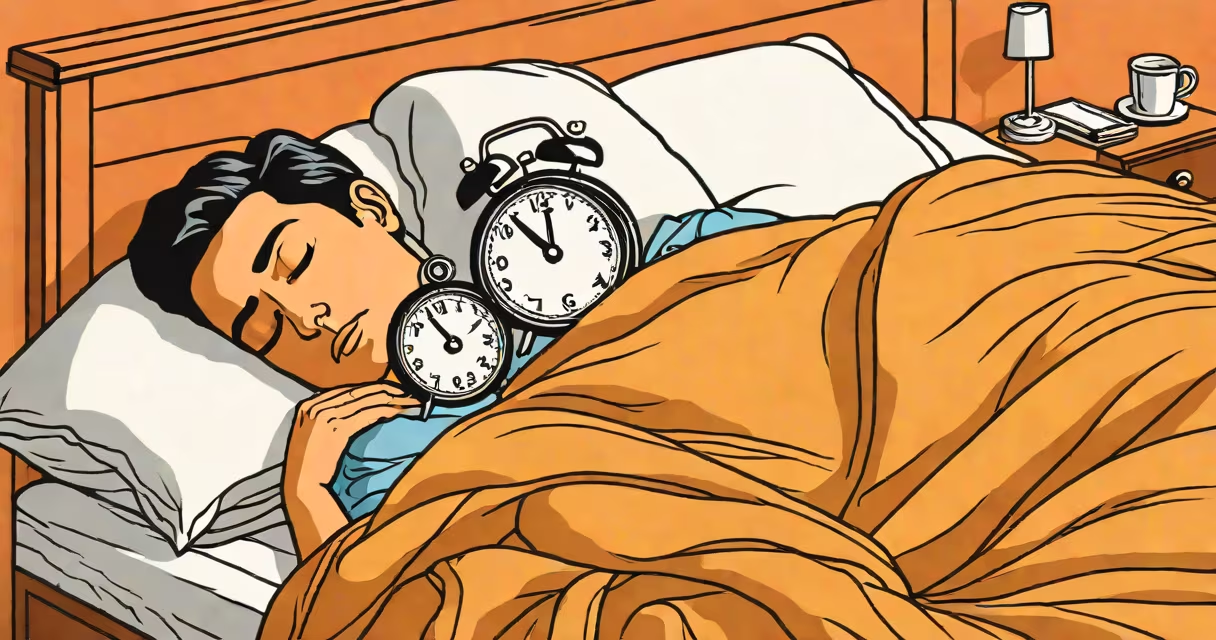
Sleep is not passive rest-it's a biologically essential process that clears brain waste, repairs tissues, regulates hormones, and consolidates memories. Without it, cognitive function declines within 24 hours, and physical health deteriorates rapidly.
During sleep, your brain performs critical housekeeping. The glymphatic system-discovered in 2013 through rodent studies-becomes active, flushing out metabolic byproducts like beta-amyloid, a protein linked to Alzheimer's disease. This clearance happens primarily during slow-wave sleep, the deepest stage of non-REM sleep. Humans spend about 13% of their night in this phase, yet it accounts for most neural detoxification.
Adults require 7 to 9 hours of sleep per night. Chronic undersleeping-defined as less than 6 hours-correlates with increased risk of cardiovascular disease, type 2 diabetes, and obesity. A 2020 study published in The Lancet found that people who slept fewer than 6 hours nightly had a 20% higher mortality rate over 15 years compared to those sleeping 7-8 hours.
Your body runs on a 24-hour internal clock called the circadian rhythm. This rhythm is synchronized by light exposure, particularly blue wavelengths from screens and morning sunlight. When light hits retinal cells, signals travel to the suprachiasmatic nucleus (SCN) in the hypothalamus-the master clock-triggering melatonin suppression during the day and release at night.
As darkness sets in, melatonin levels rise, lowering core body temperature and slowing heart rate. These changes signal the body to enter sleep onset. Within 30 minutes of falling asleep, brain waves shift from beta (awake) to alpha (relaxed), then theta and delta (deep sleep).
Each night consists of four to six cycles lasting 90 to 110 minutes. Each cycle includes stages N1 through N3 (non-REM) and REM sleep. REM sleep, which dominates the second half of the night, is important for emotional regulation and memory integration. During REM, brain activity resembles wakefulness, but muscles are paralyzed-a state known as atonia.
Not all sleep stages serve the same purpose. The table below outlines key phases and their functions:
| Stage | Duration | Primary Function | Example Impact of Deficiency |
|---|---|---|---|
| N1 (light sleep) | 5-10 min | Transition from wakefulness to deeper sleep | Frequent waking, difficulty staying asleep |
| N2 (onset of true sleep) | 45-55 min per cycle | Body temperature drops, heart rate slows | Reduced energy conservation, impaired focus |
| N3 (slow-wave sleep) | 20-40 min per night | Tissue repair, immune system strengthening, glymphatic clearance | Impaired learning, weakened immunity, elevated cortisol |
| REM (dream sleep) | 10-60 min per cycle, increasing toward morning | Emotional processing, memory consolidation, neural plasticity | Mood instability, poor problem-solving, nightmares |
Deficiencies in any stage disrupt homeostasis. For example, skipping slow-wave sleep reduces growth hormone secretion by up to 70%, impairing muscle recovery and metabolism. REM deprivation leads to increased irritability and reduced creative thinking-measured in lab studies using word association tasks.
Many assume they can "catch up" on sleep during weekends. Research from the University of Colorado Boulder shows that even after two days of extended sleep, participants still exhibited metabolic dysregulation and reduced insulin sensitivity. The body doesn't reset perfectly-sleep debt accumulates like financial debt.
Another myth: "I don't need much sleep." Some individuals carry a gene variant (DEC2) that allows them to function on 4-6 hours. But this affects fewer than 1% of the population. Most people who claim to thrive on little sleep are actually performing below baseline due to chronic fatigue masking itself as normalcy.
A third misconception is that alcohol helps sleep. While it may induce drowsiness, alcohol suppresses REM sleep by up to 30%. This impairs emotional regulation and weakens memory formation. A 2018 study in Alcoholism: Clinical and Experimental Research found that subjects who drank before bed reported better initial sleep quality but worse memory recall the next day.
In 2017, a U.S. Navy diver underwent a 72-hour mission without sleep. After 48 hours, his reaction time slowed by 30%, and he began experiencing microsleeps-brief lapses of unconsciousness lasting 1-2 seconds. By hour 72, he failed basic cognitive tests and showed signs of hallucination. He was pulled from duty and required 24 hours of uninterrupted sleep to recover.
This mirrors findings from NASA's sleep research on astronauts. They discovered that after just five nights of 4 hours of sleep, performance dropped to levels equivalent to being legally drunk. Cognitive errors increased by 300% in simulated mission tasks.
I once observed this firsthand while working with a software team. Two developers stayed awake for 36 hours debugging a critical failure. They missed a syntax error that would have taken 10 minutes to fix-because their attention span had degraded. After 12 hours of sleep, both caught the mistake immediately. Sleep wasn't optional-it was necessary for accuracy.
Sleep is not a luxury. It's a biological necessity. Without consistent, high-quality sleep, your brain cannot clear toxins, your body cannot repair tissue, and your mood cannot stabilize. The evidence from neuroscience, epidemiology, and clinical trials confirms that why you need sleep is rooted in survival.
Chronic sleep loss increases risks for heart attack, stroke, depression, and cancer. Conversely, good sleep hygiene-consistent bedtime, limited screen time before bed, and exposure to natural light-improves focus, emotional resilience, and longevity. Prioritize sleep not as a habit, but as a foundational health practice.
Understanding why you need sleep transforms how you view daily routines. It's not about adding more hours to your day-it's about reclaiming efficiency, clarity, and well-being through rest. Your body and mind depend on it.