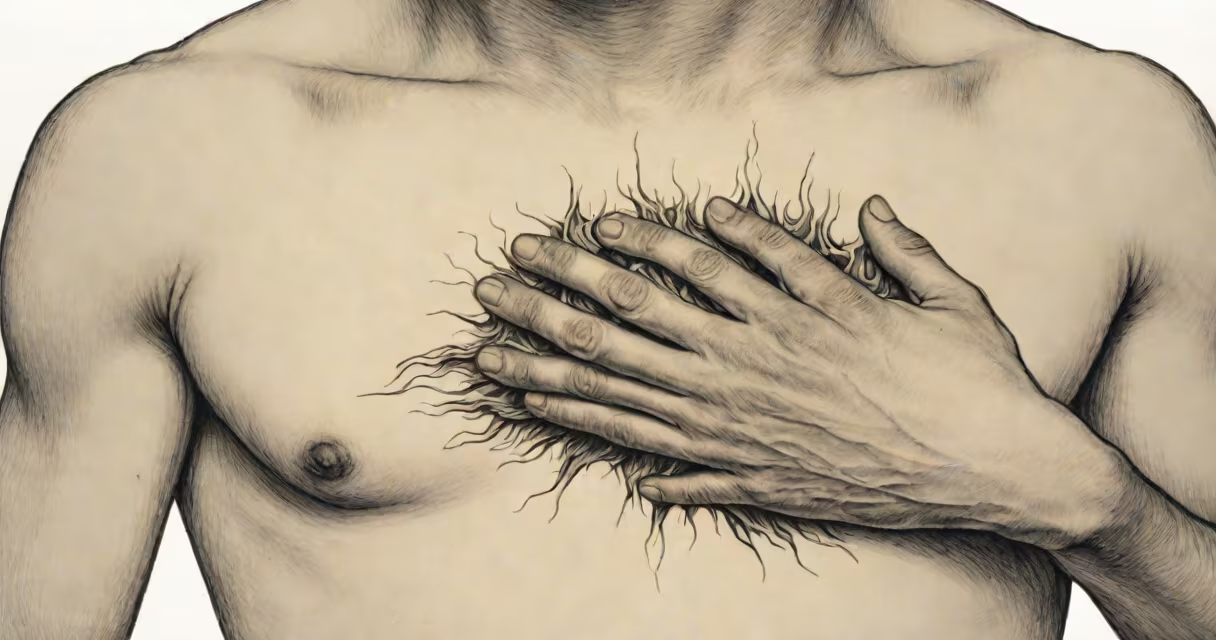
Burning under sternum is a sharp, heat-like sensation felt just behind the breastbone, typically caused by stomach acid flowing into the esophagus. This condition often results from gastroesophageal reflux disease (GERD), where the lower esophageal sphincter fails to close properly. The sensation may last minutes to hours and worsen after eating or lying down.
The esophagus lacks protective mucus lining like the stomach, making it sensitive to acidic contents. When acid contacts the esophageal lining, nerve endings trigger the burning feeling. This is distinct from cardiac pain, which tends to radiate to the arm or jaw and is often described as pressure or tightness.
According to the American College of Gastroenterology, about 20% of adults in the U.S. experience heartburn at least once a week. Persistent burning under sternum may indicate chronic GERD, requiring medical evaluation to prevent complications such as Barrett's esophagus or esophageal stricture.
When you eat, the lower esophageal sphincter (LES) relaxes to allow food into the stomach. Normally, it closes tightly afterward. In people with acid reflux, the LES weakens or relaxes abnormally, allowing gastric acid to flow backward into the esophagus. Acid irritates the esophageal mucosa, triggering pain receptors and producing the characteristic burning sensation.
Several factors increase risk: obesity, hiatal hernia, smoking, alcohol consumption, and high-fat or spicy foods. A 2021 study published in Alimentary Pharmacology & Therapeutics found that individuals who consumed more than two alcoholic drinks daily had a 60% higher incidence of frequent heartburn compared to non-drinkers.
Some people experience silent reflux, where acid reaches the upper airway or throat without typical heartburn. This can cause hoarseness, chronic cough, or throat clearing. Silent reflux may be misdiagnosed as asthma or allergies, delaying proper treatment.
Burning under sternum varies in intensity and timing. Common patterns include:
| Type | Timing | Common Triggers | Associated Conditions |
|---|---|---|---|
| Acute heartburn | After meals, especially large or fatty ones | Spicy food, citrus, caffeine, alcohol | Occasional GERD |
| Chronic reflux | Recurrent, occurring multiple times weekly | Obesity, smoking, stress, certain medications | GERD, Barrett's esophagus |
| Nocturnal reflux | At night, often waking from sleep | Lying flat, late-night eating, alcohol | Hiatal hernia, delayed gastric emptying |
One non-obvious distinction: the burn may feel like it starts in the upper abdomen and moves upward. This is because the stomach's acid can rise into the esophagus, creating a sensation that begins below the sternum and travels upward. Patients often describe it as "rising" or "crawling."
I once observed a patient with persistent burning under sternum who reported relief only when standing upright. After a pH impedance test, we confirmed abnormal acid exposure during recumbent periods. He had a small hiatal hernia, which allowed acid to reflux easily when lying down. Elevating the head of his bed reduced episodes by 70% within two weeks.
Burning under sternum is frequently mistaken for angina or a heart attack. Both can present with chest pressure or discomfort. However, cardiac pain rarely improves with antacids and often occurs during exertion. It may radiate to the left arm, neck, or jaw. The National Heart, Lung, and Blood Institute notes that chest pain lasting less than 10 minutes and relieved by antacids is unlikely to be cardiac in origin.
Another common error is attributing the symptom solely to diet. While triggers exist, persistent burning under sternum despite dietary changes suggests a structural or functional issue. For example, a 2020 study in Gastroenterology showed that 35% of patients with chronic reflux had normal endoscopy findings-meaning no visible damage-but still experienced significant symptoms due to impaired esophageal motility.
Some patients confuse this with gallbladder pain, which typically presents as a dull ache in the upper right abdomen, often after fatty meals. Gallbladder-related pain doesn't usually burn under the sternum and doesn't improve with antacids.
If burning under sternum occurs more than twice a week, lasts longer than 15 minutes, or interferes with daily life, consult a healthcare provider. Red flags include difficulty swallowing, unexplained weight loss, vomiting blood, or black stools-signs of potential bleeding or obstruction.
Diagnostic tools include endoscopy, pH monitoring, and manometry. Endoscopy allows visualization of esophageal inflammation or strictures. pH testing measures acid exposure over 24 hours. Manometry assesses esophageal muscle contractions.
For mild cases, lifestyle changes and over-the-counter antacids may suffice. But persistent symptoms require prescription treatment such as proton pump inhibitors (PPIs). A 2022 review in JAMA Internal Medicine found PPIs reduced heartburn frequency by 70% in patients with diagnosed GERD.
Long-term PPI use carries risks, including vitamin B12 deficiency, increased infection rates, and potential bone density loss. Always discuss duration and alternatives with your provider.
Burning under sternum is not just a minor annoyance-it's a signal from the digestive system. Identifying the root cause enables effective management and prevents long-term damage. Early intervention reduces the risk of complications like esophageal cancer, which is linked to untreated GERD.