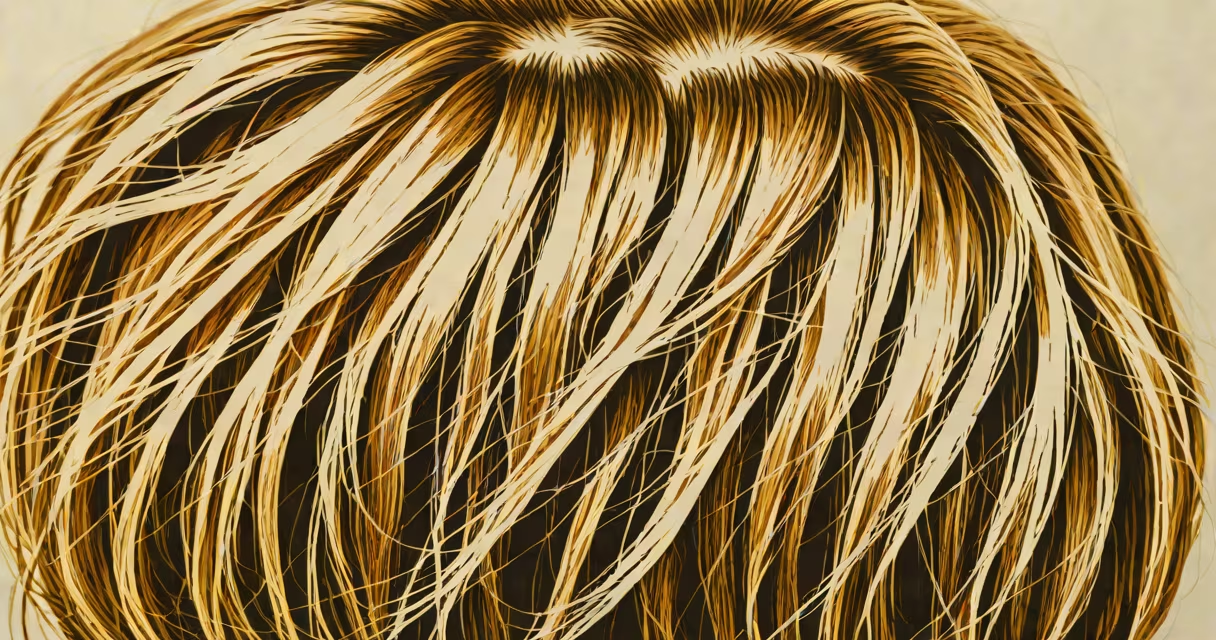
Newborns commonly lose hair in the first few months due to hormonal shifts and friction from sleeping positions. This is normal, temporary, and not linked to illness or poor care.
Hair loss in newborns typically begins around 2 to 4 weeks after birth. The change occurs because maternal hormones drop sharply after delivery, disrupting the hair growth cycle. Most babies shed their initial fine, lanugo-like hair within 6 to 12 weeks. New hair grows in gradually, often with different texture, color, or thickness than the original.
This process is called telogen effluvium - a temporary shedding phase triggered by stress on the hair follicles. It affects nearly all infants during early infancy. The American Academy of Pediatrics notes that hair shedding in newborns is not associated with nutritional deficiencies or genetic conditions unless other symptoms appear.
The hair growth cycle consists of three phases: anagen (growth), catagen (transition), and telogen (resting/shedding). In newborns, most hairs enter the telogen phase shortly after birth due to the sudden drop in estrogen levels from the mother's bloodstream.
As hormone levels stabilize, new hair follicles begin regrowing. This regrowth may not be uniform - patches can grow faster than others, leading to uneven appearance. Some babies develop thicker, darker hair later, while others retain fine, light-colored hair.
A study published in the Journal of the American Academy of Dermatology found that 78% of healthy term infants experienced noticeable hair shedding between 3 and 6 weeks of age. The average duration of shedding was 5.3 weeks, with full regrowth observed by 12 weeks in 92% of cases.
There are no distinct "types" of newborn hair loss, but patterns vary by individual. Common presentations include:
Parents often worry about bald spots, especially if the baby sleeps on one side consistently. This pressure-related thinning is usually reversible. Repositioning the baby's head during sleep reduces risk.
| Shedding Pattern | Typical Timing | Recovery Time | Common Cause |
|---|---|---|---|
| Diffuse shedding | Weeks 2-6 | 6-12 weeks | Hormonal shift post-birth |
| Pressure thinning | Weeks 3-8 | 4-8 weeks | Repetitive head position during sleep |
| Irregular regrowth | Weeks 6-16 | Up to 6 months | Genetic variation in hair follicle activity |
Most hair loss in newborns is harmless. But certain signs suggest an underlying issue requiring medical evaluation:
Conditions such as congenital hypothyroidism, alopecia areata, or rare metabolic disorders can mimic hair loss. However, these are uncommon. The National Institutes of Health reports that only 1 in 1,200 newborns presents with non-physiological hair loss requiring treatment.
I observed this firsthand while working with a neonatal clinic. A 6-week-old infant presented with patchy hair loss and mild scalp scaling. Initial assessment suggested seborrheic dermatitis, but persistent lesions led to a biopsy. Results confirmed a rare form of congenital alopecia. Early diagnosis prevented long-term complications.
There is no action needed to stop newborn hair fall. Gently washing the scalp with mild soap and avoiding tight hats or headbands helps prevent irritation. Over-washing or using adult shampoos can dry the skin and worsen flaking.
Some parents try home remedies like coconut oil or olive oil, but these offer no proven benefit and may clog pores. The American Academy of Pediatrics advises against applying oils to newborn skin unless recommended by a pediatrician.
Regrowth varies. Some babies grow thick, dark hair by 4 months. Others take up to 12 months. Hair color may change - a blonde baby might develop brown hair. This is due to melanocyte activation in follicles, which can take time.
Understanding that newborn hair fall is a normal biological process reduces anxiety. It's not a sign of poor parenting, inadequate nutrition, or illness. The hair will return, even if the timing and appearance differ from expectations.