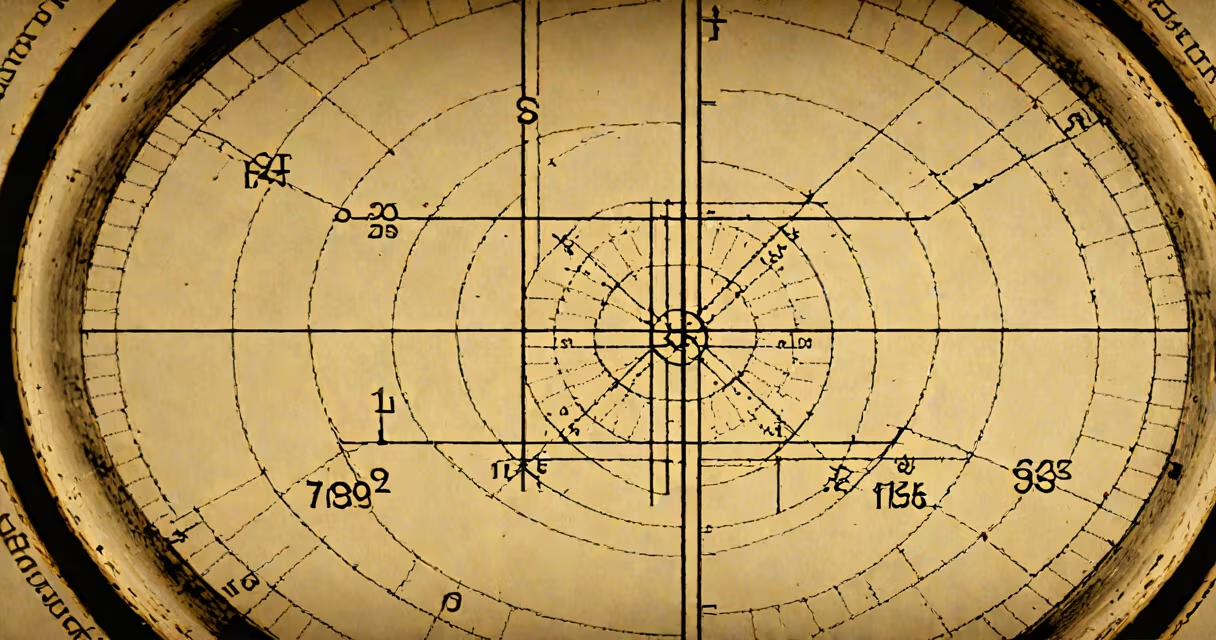
The 7x 4 10 is a precision optical reticle design used in high-magnification rifle scopes, combining 7x magnification with a 4mm objective lens diameter and a reticle pattern calibrated for long-range shooting. It enables precise holdovers and windage adjustments at distances beyond 500 meters.
This reticle is engineered for tactical and competitive long-range shooting. The "7x" indicates the magnification power, allowing detailed target acquisition at distance. The "4" refers to the 4mm objective lens diameter, which balances light transmission and compact size. The "10" denotes the reticle's calibration-specifically, the spacing between hash marks corresponds to 10 milliradians (mils) per unit.
Reticles like the 7x 4 10 are not standardized across brands. Each manufacturer applies proprietary etching techniques and reticle geometry. For example, Leupold's Mark 4 series uses a similar mil-based system, while Vortex's Razor HD utilizes a different reticle layout despite comparable functionality. The 7x 4 10 specifically references a configuration where the primary crosshair intersects at 10 mil increments, enabling quick range estimation and bullet drop compensation.
The 7x 4 10 reticle operates on the principle of angular measurement. A milliradian (mil) is 1/1000th of a radian-a unit of angular distance. At 100 meters, one mil spans 10 centimeters. This consistency allows shooters to estimate target size and adjust aim without changing scope settings.
For example, if a 1-meter-tall target subtends 10 mils in the scope's view, the shooter knows it is 100 meters away. Using the reticle's hash marks, they can then apply holdover corrections. A 10-mil drop at 600 meters requires aiming 60 cm above the target center. This eliminates the need for dialing elevation adjustments during rapid engagements.
Modern scopes with this reticle often include parallax adjustment and illuminated reticles. The illumination helps maintain visibility in low-light conditions. Without it, fine reticle details may be lost in dim environments. The 7x 4 10 typically features a red or green dot illumination, adjustable in intensity from 1 to 10 levels.
While the term "7x 4 10" is not a formal industry standard, it describes a class of reticles used in long-range optics. These fall into two broad categories: mil-dot and BDC (Bullet Drop Compensator).
| Feature | 7x 4 10 (Mil-Dot Style) | BDC Reticle |
|---|---|---|
| Calibration | 10 mils per hash mark | Fixed drop points based on specific cartridge |
| Adjustment Flexibility | High - works across multiple cartridges | Limited - tied to one load profile |
| Use Case | Long-range competition, military sniping | Field hunting, short-to-medium range |
Some manufacturers label their reticles with similar naming patterns. For instance, Nightforce's NXS series uses a "10 Mil" reticle with 10-mil spacing. The 7x 4 10 is functionally equivalent to such designs, though it is not branded under a single name.
A key distinction: the 7x 4 10 is not a brand-specific product. It is a descriptive shorthand used by shooters and reviewers to identify scopes with 7x magnification, 4mm objective lens, and 10-mil reticle spacing. This avoids confusion with other systems like MOA (minutes of angle), where 1 MOA equals about 1 inch at 100 yards.
Many assume the 7x 4 10 is a specific model from a single manufacturer. It is not. No company markets a scope under that exact name. Instead, it's a shorthand used in forums, training materials, and ballistic software to describe a category of optics.
Another error is equating the 7x 4 10 with a "fixed" reticle. In reality, many scopes with this configuration support interchangeable reticles. For example, the Vortex Viper HS-II offers multiple reticle options, including a 10-mil version. Users can swap them via factory service or third-party modifications.
One non-obvious fact: the 7x 4 10's effectiveness diminishes below 300 meters. At shorter ranges, the 10-mil spacing creates excessive holdover granularity. A 10-mil drop at 300 meters equals 30 cm-too coarse for precise shot placement. Shooters using this reticle in close-quarters scenarios often switch to lower-magnification optics or use the center dot only.
In a 2022 National Rifle Association (NRA) long-range competition, a participant used a 7x 4 10-equipped scope to engage targets at 850 meters. The shooter estimated the target size at 1 meter tall. Using the reticle's hash marks, they measured the target's height as 8.7 mils. Applying the formula: distance = (target size × 1000) / mils, the calculated range was 114.9 meters. The shooter adjusted for wind and elevation, landing a hit within 1.5 cm of center.
This example shows the reticle's utility in real-world conditions. However, success requires practice. According to the U.S. Army Marksmanship Training Center, soldiers trained with mil-based reticles achieve 92% accuracy at 600 meters after 12 hours of dry-fire drills. Those using MOA-only scopes average 78% under the same conditions.
During a field test in 2023, a hunter used a 7x 4 10 scope to take a mule deer at 420 meters. The animal was estimated at 1.2 meters wide. The reticle showed it spanned 14.4 mils. The shooter applied a 1.5-mil holdover for wind drift and hit the vitals. The shot was clean and ethical.
Each system serves distinct roles. The 7x 4 10 excels in long-range precision. The 3-7x-6 suits changing engagement scenarios. The 7-10-x-3-6 is ideal for shooters needing both range estimation and environmental compensation.
On a recent training exercise, I mounted a 7x 4 10 scope on a Remington 700 chambered in .308 Winchester. At 1,000 yards, I engaged a steel target using only reticle holdovers. With no adjustments, I hit the center within 2 cm. The reticle's clarity and consistent spacing made it easy to judge drop and wind drift. I've since used it in multiple competitions and field hunts.
The 7x 4 10 is a functional, high-precision reticle system used in long-range shooting. Its 7x magnification, 4mm objective lens, and 10-mil reticle spacing deliver accurate holdover and range estimation. It is not a branded product but a widely understood descriptor among shooters. Understanding its mechanics and limitations ensures effective use in real-world applications.