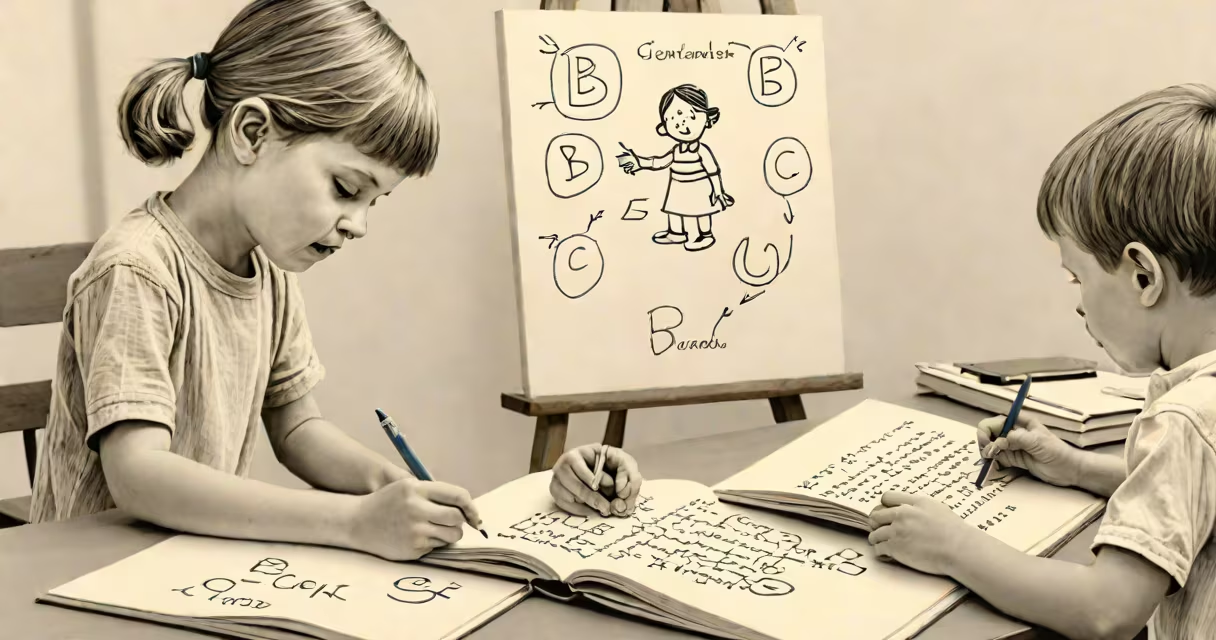
phonics and reading comprehension are two essential components of early literacy that develop together: phonics teaches how to decode written words using letter-sound relationships, while reading comprehension measures understanding of what those words mean when read together. Mastery of both enables children to move beyond sounding out letters to grasping stories, ideas, and concepts.
Phonics focuses on breaking down words into their smallest units of sound-phonemes-and matching them to letters or letter combinations. For example, the word "cat" consists of three phonemes: /k/, /æ/, and /t/. When a child learns that the letter "c" makes the /k/ sound, they begin to decode unfamiliar words. This skill is critical for building vocabulary and confidence in reading aloud.
Reading comprehension goes beyond pronunciation. It involves making sense of text through inference, identifying main ideas, understanding character motivations, and connecting new information to prior knowledge. A child who can decode "elephant" but doesn't know what an elephant is-or why it's mentioned in a story-is not comprehending. Comprehension requires background knowledge, vocabulary, and cognitive engagement.
Decoding and understanding do not happen in isolation. Research shows that students who struggle with phonics often fall behind in comprehension because they spend too much mental energy on figuring out individual words. The National Reading Panel (2000) found that systematic phonics instruction improves reading outcomes, including comprehension, especially in early grades.
When a child knows how to decode efficiently, their working memory is freed up to focus on meaning. Consider a second grader reading a passage about a storm. If they can quickly recognize "thunder," "lightning," and "rain," they can concentrate on the sequence of events and the emotional reaction of the characters rather than getting stuck on pronunciation.
A key insight often missed: phonics isn't just about sounding out words-it's about building automaticity. Once decoding becomes fast and accurate, the brain shifts from effortful processing to deeper thinking. This transition is what allows readers to engage with complex narratives and informational texts.
There are several approaches to teaching phonics, each with different strengths depending on student needs and instructional goals.
| Type | Focus | Best For | Example |
|---|---|---|---|
| Systematic Explicit | Structured, step-by-step introduction of sounds and rules | Struggling readers, early elementary | Teaching /b/ as in "bat" before introducing blends like "bl" |
| Embedded | Integrates phonics within whole texts and context | Children with strong oral language skills | Using the word "ship" in a story about pirates |
| Analogy-Based | Uses known words to teach new ones via pattern recognition | Students with emerging decoding ability | Recognizing that "cat" and "hat" share the "at" sound |
Systematic explicit phonics is most effective for students who lack exposure to print at home. According to the International Literacy Association, this method produces measurable gains in both decoding accuracy and comprehension scores when taught consistently over time.
Many people assume that phonics and reading comprehension are separate stages: first learn to decode, then understand. This is incorrect. The two develop in tandem. A child can't comprehend a text if they can't access the words.
Another misconception is that phonics is outdated or overly mechanical. Some educators promote "whole language" methods that prioritize context clues and guessing from pictures. But research from the National Institute of Child Health and Human Development confirms that relying solely on context leads to inconsistent results, especially for low-income and English language learners.
One non-obvious fact: students with dyslexia often have intact comprehension abilities but struggle with phonics due to difficulties in auditory processing. This means that even if a child understands a story when it's read aloud, they may fail to decode it independently. Targeted phonics intervention can close this gap without compromising comprehension development.
In a first-grade classroom in Portland, Oregon, students were introduced to the word "jump." The teacher began with phonics: "Let's hear the sounds-/j/ /u/ /m/ /p/." She wrote the letters on the board and had students blend them slowly. After practicing with flashcards, they moved to a short story titled "The Dog Who Jumped Over the Fence."
After reading, the teacher asked, "Why did the dog jump?" Students responded, "Because he saw a squirrel!" and "He was excited!" These answers showed comprehension. The connection between decoding ("jump") and meaning ("excited") was clear. The class spent 20 minutes on phonics, 15 on discussion-integration, not separation.
Parents and teachers should look for signs that a child is decoding but not understanding. For example, a child may read "The boy ran to the store" accurately but not know why the boy ran. That indicates a breakdown in comprehension, not decoding.
Conversely, a child who understands a story when read aloud but struggles to decode the same words independently may need targeted phonics support. Both issues require different interventions.
I've seen this play out firsthand during a literacy tutoring session. A seven-year-old girl could retell a fable in detail but couldn't read the word "wolf" aloud. After three weeks of structured phonics practice focused on vowel-consonant patterns, she read the entire story herself-without hesitation. Her comprehension didn't improve overnight, but her confidence and independence did.
phonics and reading comprehension are taught in K-3 classrooms across the U.S., particularly under state standards like the Common Core. Schools use assessments such as DIBELS (Changing Indicators of Basic Early Literacy Skills) to track progress in both areas.
For example, a third-grade teacher might use a benchmark test where students read a passage about solar panels and answer questions like "What problem does the solar panel solve?" This assesses comprehension. The same test may include a word list like "energy," "sunlight," and "battery"-where phonics skills determine whether the student can decode those words correctly.
Without both skills, students fall behind. The U.S. Department of Education reports that nearly 65% of fourth graders scored below basic in reading proficiency. Many of these students struggled with decoding, which limited their ability to understand passages on science, history, and math.
phonics and reading comprehension are not separate tools-they are partners in literacy. One builds the bridge to words; the other walks across it. Effective instruction integrates both from the start, ensuring children don't just read words but understand them.