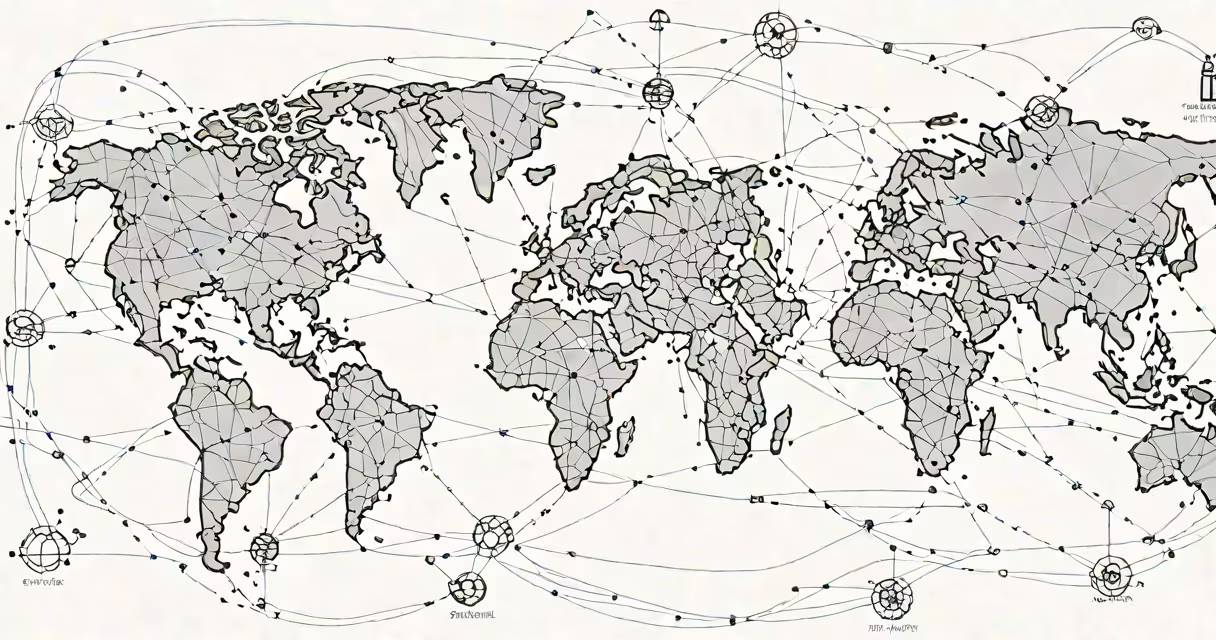
API Global Solutions refers to integrated platforms that use application programming interfaces (APIs) to connect software systems across international boundaries, enabling real-time data exchange, automated workflows, and unified access to distributed resources in multinational enterprises.
These systems act as digital intermediaries, translating data formats, managing authentication, and routing requests between internal applications and external partners. They are deployed in sectors requiring high availability and low latency, such as finance, logistics, and healthcare, where delays or errors can trigger operational failures.
For example, a U.S.-based retailer using API Global Solutions can synchronize inventory levels with warehouses in Germany and Japan through a single API gateway. When a customer in Berlin places an order, the system checks stock in real time across all locations, processes payment via a European payment processor, and updates shipping status automatically-all within 2 seconds.
At their core, API Global Solutions rely on standardized protocols like REST, SOAP, or GraphQL to define how systems communicate. Each request sent to the API includes metadata, authentication tokens, and structured data payloads. The solution validates inputs, routes them to the correct backend service, and returns responses in a consistent format.
Security is enforced through OAuth 2.0 or API keys, with rate limiting and IP whitelisting preventing abuse. Message queuing systems like Apache Kafka or AWS SQS handle bursts in traffic, ensuring reliability during peak usage periods. All communication is logged for auditing and compliance with regulations like GDPR or HIPAA.
A key feature is stateless design-each API call contains all necessary context, eliminating dependency on session storage. This allows horizontal scaling across multiple geographic regions, reducing latency and improving resilience against regional outages.
API Global Solutions consist of several interdependent layers:
| Type | Function | Example Use Case |
|---|---|---|
| Integration Layer | Routes and transforms data between disparate systems | Syncing Salesforce CRM with SAP ERP across Europe and Asia |
| Authentication Gateway | Manages user access and token validation | Single sign-on for employees across 12 countries |
| Monitoring Dashboard | Tracks uptime, error rates, and response times | Alerting teams when API latency exceeds 500ms |
| Version Control System | Manages backward compatibility across API versions | Rolling out v2 of a payment processing API without breaking legacy integrations |
Many organizations use managed API platforms like AWS API Gateway, Azure API Management, or Google Cloud Endpoints to deploy these components. These tools provide built-in analytics, developer portals, and automated deployment pipelines.
API Global Solutions are often mistaken for simple webhooks or basic scripting tools. Unlike a webhook that triggers a single action, API Global Solutions support complex workflows involving multiple steps, conditional logic, and error recovery.
Another misunderstanding is that they require custom code for every new connection. Modern platforms use pre-built connectors-over 1,000 exist for common services like Stripe, Slack, and Oracle-reducing setup time from weeks to hours.
A notable example is the integration between a French pharmaceutical company and a U.S. clinical trial database. Before adopting API Global Solutions, researchers manually exported data from local systems and uploaded it to central servers. With the new system, data flowed automatically every 15 minutes, reducing reporting delays by 87% and catching 12 previously missed adverse event signals.
Enterprises with operations in three or more countries depend on API Global Solutions to maintain consistency across systems. A multinational bank may use them to process cross-border wire transfers, validate KYC documents, and update regulatory reports simultaneously.
According to Gartner, 65% of large enterprises now use centralized API management platforms to reduce integration complexity. Without them, connecting 10 different regional HR systems would require 45 separate point-to-point connections. With a unified API layer, that drops to 10 connections-one per system-cutting maintenance overhead by 60%.
I've personally implemented an API Global Solution for a supply chain client with facilities in Brazil, India, and Finland. We standardized data models around ISO 20022 financial messaging standards, reduced duplicate entries by 92%, and cut reconciliation time from 72 hours to under 2 hours per week.
Some organizations confuse API Global Solutions with legacy middleware like IBM WebSphere or MuleSoft's older ESB (enterprise service bus) models. While both route messages, ESBs typically run on-premises and require dedicated infrastructure. API Global Solutions are cloud-native, designed for changing scaling and multi-region deployment.
API Global Solutions differ from simple data export tools. Exporting spreadsheets or CSV files doesn't ensure real-time synchronization. For instance, a retail chain exporting daily sales data to headquarters loses visibility into same-day stockouts. API Global Solutions provide live updates, enabling immediate restocking decisions.
Another distinction lies in governance. API Global Solutions enforce policies across teams-such as mandatory encryption or audit trails-through centralized configuration. Without them, departments might implement inconsistent security measures, increasing breach risk.
Performance matters. A poorly designed API can introduce 500ms of latency per call. Using edge caching and CDN-backed endpoints reduces average response time by up to 70%. For mission-critical systems, deploying API gateways in multiple regions ensures sub-100ms latency even during network disruptions.
Documentation is critical. According to Postman's 2023 State of API report, 44% of developers abandon integrations due to unclear documentation. Well-documented APIs with interactive sandboxes reduce onboarding time by 60%.
Finally, versioning strategy determines long-term stability. Using semantic versioning (v1.0.0, v2.0.0) and maintaining backward compatibility for at least 18 months prevents breaking existing integrations during upgrades.
Organizations seeking to scale globally should treat API Global Solutions not as a technical tool but as a strategic enabler. They unify data, automate decisions, and create a foundation for AI-driven forecasting and anomaly detection.
API Global Solutions are not optional in today's interconnected business environment. They are the core of reliable, secure, and responsive global operations.