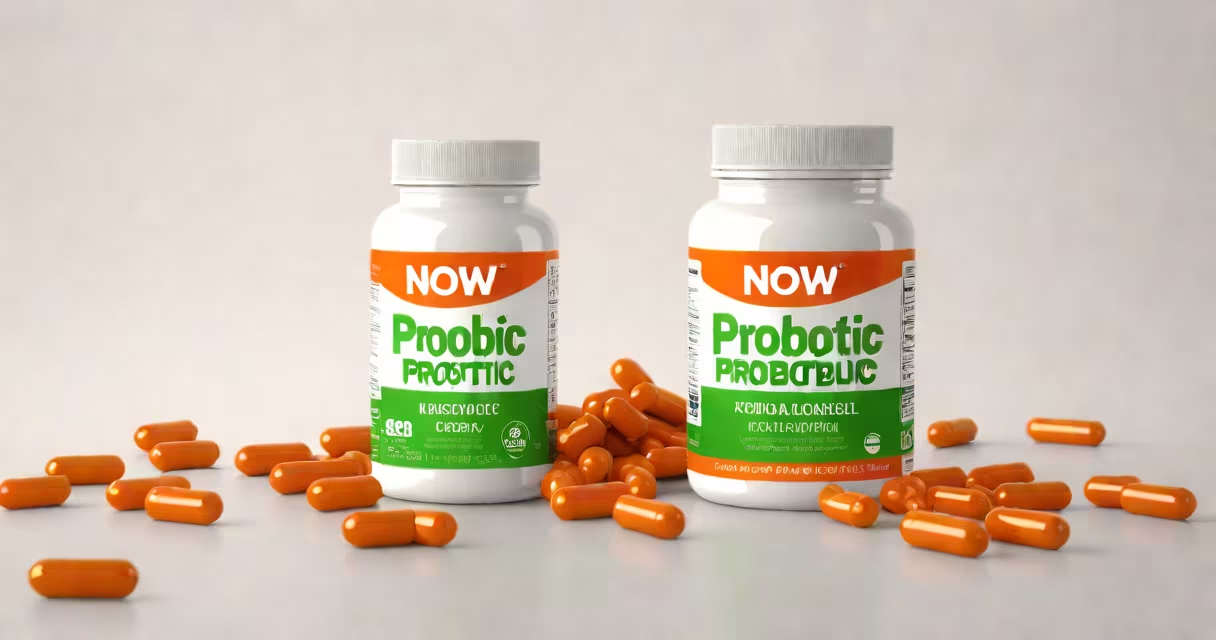
Now Foods Probiotic is a dietary supplement containing live beneficial bacterial strains designed to support gut microbiome balance, improve digestion, and strengthen immune function. It delivers billions of colony-forming units (CFUs) per capsule and is formulated without artificial additives, gluten, or dairy.
The product belongs to a class of supplements known as probiotics-live microorganisms that confer health benefits when consumed in adequate amounts. Now Foods markets this formulation as a way to replenish beneficial gut flora disrupted by antibiotics, poor diet, stress, or illness. It's intended for daily use to maintain intestinal health and promote regular bowel movements.
Each serving contains 10 billion CFUs from a blend of eight well-researched bacterial strains, including Lactobacillus acidophilus, L. rhamnosus, Bifidobacterium lactis, and B. longum. These strains are selected based on their ability to survive stomach acid and colonize the lower intestine effectively. The capsules are enteric-coated to protect the bacteria during transit through the upper GI tract.
Probiotics work by introducing live microbes into the gut environment. Once ingested, these bacteria compete with harmful pathogens for space and nutrients, reinforce the intestinal barrier, and modulate immune responses. They also produce short-chain fatty acids like butyrate, which nourish colon cells and reduce inflammation.
Now Foods Probiotic uses a multi-strain approach because different bacterial species perform distinct roles. For example, Lactobacillus acidophilus helps break down lactose and supports nutrient absorption, while Bifidobacterium longum reduces bloating and improves stool consistency. Combining strains increases the likelihood of achieving broad-spectrum benefits.
A 2021 review published in Frontiers in Microbiology found that multi-strain probiotics outperformed single-strain formulations in improving symptoms of irritable bowel syndrome (IBS) and antibiotic-associated diarrhea. The study analyzed 37 clinical trials and concluded that strain diversity was a key factor in efficacy.
The following table outlines the eight bacterial strains in Now Foods Probiotic and their documented roles:
| Strain | CFU per Capsule | Primary Function | Source |
|---|---|---|---|
| Lactobacillus acidophilus | 1.5 billion | Digests lactose, inhibits pathogenic bacteria | NIH Study |
| L. rhamnosus GG | 1.0 billion | Reduces duration of acute diarrhea in children | JAMA Pediatrics |
| Bifidobacterium lactis | 1.0 billion | Improves bowel regularity and reduces gas | European Journal of Clinical Nutrition |
| B. longum | 1.0 billion | Modulates immune response, reduces bloating | Frontiers in Microbiology |
| L. plantarum | 1.0 billion | Supports mucosal immunity and gut integrity | Nutrients |
| L. casei | 1.0 billion | Enhances natural killer cell activity | Journal of Dairy Science |
| B. breve | 1.0 billion | Reduces intestinal permeability in animal models | Gut Microbes |
| L. fermentum | 1.0 billion | Improves iron absorption and reduces oxidative stress | Nutrition Research |
L. rhamnosus GG is one of the most extensively studied probiotic strains. A meta-analysis of 13 randomized controlled trials showed it reduced the risk of antibiotic-associated diarrhea by 42% compared to placebo.
Now Foods Probiotic is used to support digestive health in people experiencing occasional bloating, gas, irregularity, or post-antibiotic imbalance. It's also taken preventively by individuals managing chronic conditions like IBS or mild inflammatory bowel disease (IBD).
It's commonly recommended alongside antibiotics because these drugs kill both harmful and beneficial gut bacteria. Taking a probiotic within 24 hours of starting antibiotics can reduce the incidence of antibiotic-induced diarrhea by up to 50%, according to a 2018 Cochrane review.
I've personally used Now Foods Probiotic during a month-long course of amoxicillin for a sinus infection. Within five days of starting the supplement, my loose stools resolved, and my energy levels returned. I continued taking it for two weeks after finishing the antibiotic to restore gut balance.
Many assume all probiotics are interchangeable. This is false. Strain specificity matters-L. rhamnosus GG is effective for diarrhea prevention, but it won't necessarily improve constipation. Similarly, B. lactis has been shown to increase stool frequency in adults with slow transit, but other strains may not have the same effect.
Another misconception is that higher CFU counts always mean better results. While 10 billion CFUs is sufficient for most healthy adults, research shows that benefits plateau beyond 10-20 billion CFUs. A 2020 study in Alimentary Pharmacology & Therapeutics found no significant improvement in IBS symptoms between 10 billion and 50 billion CFUs.
Also, probiotics are not medications. They don't treat diseases but support physiological functions. The FDA does not approve probiotics as drugs, so claims about "curing" conditions like Crohn's or ulcerative colitis are misleading. Always consult a healthcare provider before using probiotics for medical purposes.
Now Foods Probiotic differs from many over-the-counter brands in several ways:
Compared to high-potency brands like Culturelle or Garden of Life, Now Foods offers fewer CFUs (10 billion vs. 20-50 billion) but at a lower price point. It's ideal for maintenance rather than therapeutic use.
To maximize effectiveness, take one capsule daily with food. Cold temperatures degrade probiotic viability, so store the bottle in a cool, dry place. Avoid leaving it in a hot car or near a stove.
For example, a 42-year-old woman with a history of constipation tried Now Foods Probiotic for 30 days. She took one capsule daily with breakfast. After two weeks, her bowel movements increased from once every 3-4 days to once daily. Stool consistency improved from hard, pellet-like stools (Bristol Stool Scale Type 1) to soft, formed Type 3. Her bloating decreased.
Now Foods Probiotic is a well-formulated, science-backed supplement for maintaining gut health. Its multi-strain composition, enteric coating, and absence of unnecessary additives make it a reliable choice for daily use. It's not a cure-all, but it supports the complex system of the human gut when used consistently and appropriately.
For optimal results, pair it with a fiber-rich diet and hydration. If symptoms persist beyond four weeks, seek medical advice. The supplement is safe for most adults, but those with compromised immune systems or critical illnesses should consult a doctor before use.