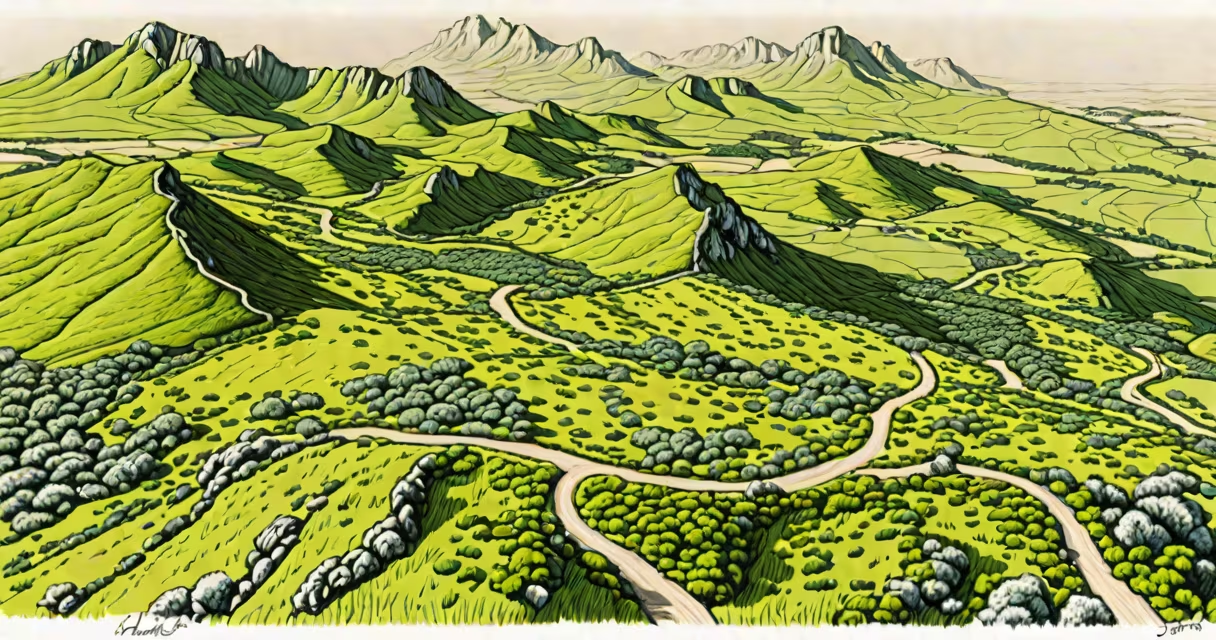
Helderberg Nature Reserve is a 670-hectare protected area located on the eastern edge of the Cape Fold Mountains, just south of False Bay in South Africa's Western Cape. It lies within the Greater Cape Town region and forms part of the critically endangered fynbos biome, known for high plant diversity and endemism.
The reserve is managed by the City of Cape Town's Environmental Services department under the National Environmental Management: Protected Areas Act (NEMPAA). Its primary purpose is to conserve native vegetation, protect threatened species, and provide public access for low-impact recreation such as walking and birdwatching.
Despite being adjacent to urban development, Helderberg maintains ecological integrity due to strict land-use controls and ongoing restoration efforts. The area was historically used for grazing and small-scale agriculture but was formally declared a nature reserve in 2004 following years of advocacy by local conservation groups.
Access to Helderberg Nature Reserve is regulated through designated entry points and trailheads. Visitors must enter via the main gate at the intersection of Helderberg Road and the R44 highway. Entry is free during daylight hours, but visitors are required to sign in at the kiosk and follow marked paths to minimize soil erosion and habitat disturbance.
Trail systems are designed to avoid sensitive zones. The most popular route is the 5-kilometer loop trail that ascends from the lower slopes to the summit plateau. This path passes through stands of erica, protea, and restio species typical of the fynbos system. Trail markers are spaced every 200 meters and include directional signs and hazard warnings.
During peak summer months (December-February), park rangers conduct weekly patrols to monitor invasive plant species such as black wattle (Acacia mearnsii) and Lantana camara. These non-native plants outcompete indigenous flora and increase fire risk. Removal operations occur between June and August when conditions are drier and less disruptive to wildlife.
Helderberg hosts over 500 plant species, including 38 that are endemic-found nowhere else on Earth. Among them are the Helderberg sugarbush (Protea humifusa), which grows only in sandy soils on north-facing slopes, and the rare Helderberg dune lily (Tulbaghia violacea var. capensis).
These plants thrive in nutrient-poor, acidic soils derived from sandstone bedrock. The reserve's geology includes quartzitic sandstone layers formed over 300 million years ago. Rainfall averages 650 mm annually, concentrated in winter months, supporting seasonal flowering cycles.
At least 110 bird species have been recorded, including the Cape sugarbird (Promerops cafer), which relies exclusively on protea nectar. The reserve also supports populations of the endangered Cape mountain zebra (Equus zebra zebra), though these animals are not resident-they are occasionally seen migrating from nearby Table Mountain National Park.
| Type | Examples in Helderberg | Conservation Status |
|---|---|---|
| Fynbos shrubs | Protea repens, Erica cerinthoides | Endemic, Vulnerable |
| Reptiles | Common flat lizard (Platysaurus intermedius) | Near Threatened |
| Small mammals | Four-striped mouse (Rhabdomys pumilio) | Least Concern |
A 2021 study by the South African National Biodiversity Institute (SANBI) confirmed that Helderberg supports one of the highest densities of fynbos endemics in the Western Cape. The report noted that 18% of vascular plant species in the reserve are restricted to a single mountain range.
Local schools and universities use Helderberg as a field site for ecology and botany courses. The University of Cape Town's Department of Biological Sciences runs annual biodiversity surveys here, collecting data on pollinator networks and seed dispersal patterns.
Community groups organize monthly clean-up days to remove plastic waste and discarded fishing gear left behind by visitors. Since 2019, over 1.2 tons of litter have been removed from the reserve's drainage lines.
For recreational users, the reserve offers panoramic views of False Bay and the surrounding suburbs. The summit platform, accessible via the main trail, features a weathered stone marker inscribed with "Helderberg - 1,080m above sea level." On clear days, visibility extends to the Cape Peninsula and the Atlantic Ocean.
Many visitors assume Helderberg is part of Table Mountain National Park. It is not. While both lie within the Cape Floristic Region, they are administered separately. Table Mountain National Park covers the western escarpment; Helderberg lies on the eastern side of the city's urban core.
Another frequent error is believing the reserve allows off-trail hiking. This is prohibited. Unauthorized movement causes compaction of fragile root mats and increases the risk of soil loss during winter rains. Violators may face fines under the National Environmental Management Act.
Some think the reserve is closed to the public during droughts. This is false. Water restrictions apply only to facilities such as picnic shelters and toilets. Trails remain open year-round unless flash flooding occurs.
One non-obvious fact: Helderberg's name originates from Dutch colonial records. In 1700, surveyor Hendrik van der Hulst named the mountain after his hometown, Helderberg in the Netherlands. The name persisted despite later attempts to rename it "Molten Peak" during the 19th century gold rush era.
In March 2023, a group of 12 students from Stellenbosch University completed a full-day field assessment on Helderberg's southern slope. They documented 47 plant species using a standardized checklist developed by SANBI. Of these, 14 were new to their prior field guides.
They recorded four sightings of the Cape sugarbird feeding on Protea eximia blooms. Temperature readings ranged from 12°C at dawn to 24°C at noon. The team used GPS units to map microhabitats and noted that erica-dominated patches had higher soil moisture retention than rocky outcrops.
After returning, they submitted findings to the City of Cape Town's biodiversity database. Their data contributed to a revised management plan published in 2024, which prioritized the protection of two newly identified fynbos enclaves.
Helderberg Nature Reserve remains a important sanctuary for native flora and fauna in a rapidly urbanizing region. Its existence underscores the importance of integrating protected spaces into metropolitan planning. For those seeking quiet immersion in natural landscapes, it offers a rare opportunity to walk among ancient ecosystems untouched by large-scale development.