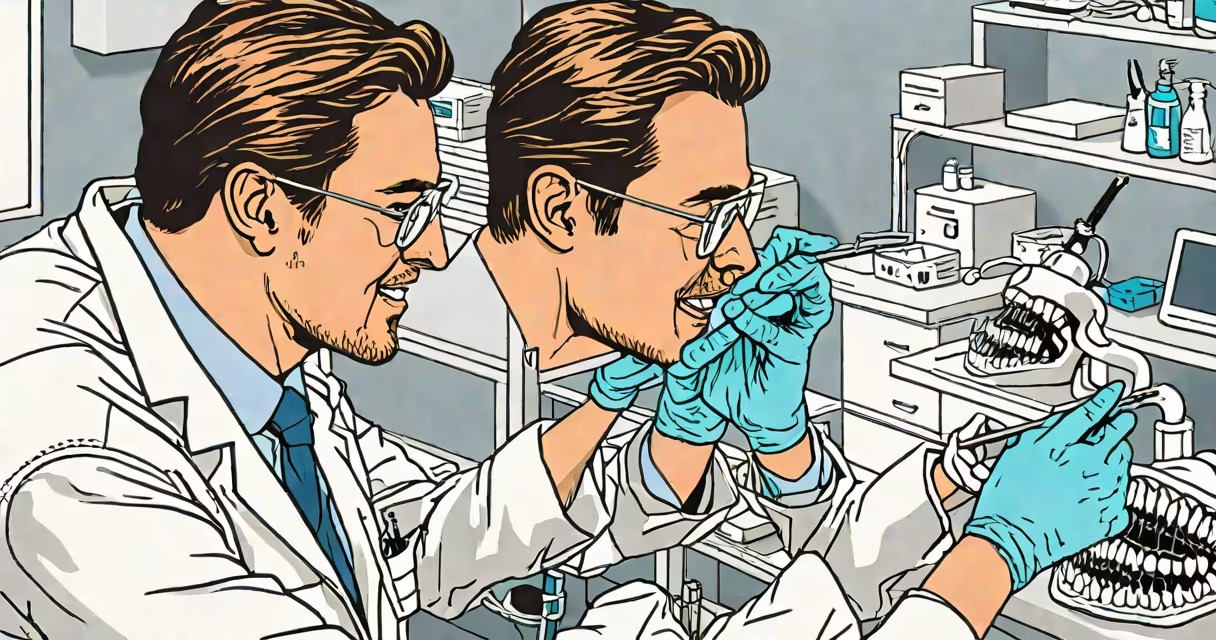
A bachelor of dentistry is a professional undergraduate degree that qualifies graduates to practice as licensed dentists. It combines scientific coursework, clinical training, and supervised patient treatment over four to five years. The degree is awarded upon completion of a structured curriculum approved by national dental accreditation bodies.
The program begins with foundational sciences such as anatomy, physiology, biochemistry, and microbiology. Students study tooth structure, oral pathology, and dental materials in laboratory settings before progressing to clinical rotations. By the final year, they perform procedures like fillings, extractions, and root canals under direct supervision in university dental clinics or affiliated hospitals.
In the United States, the equivalent credential is the Doctor of Dental Surgery (DDS) or Doctor of Dental Medicine (DMD). In Canada, the UK, Australia, and many other countries, the Bachelor of Dental Surgery (BDS) is the standard entry-level degree. The term "bachelor" reflects the undergraduate nature of the qualification, even though it leads to a professional license.
Admission to a bachelor of dentistry program typically requires a high school diploma with strong grades in biology, chemistry, and mathematics. Many programs require standardized test scores such as the DAT (Dental Admission Test) in North America or equivalent exams in other regions. Applicants must also demonstrate communication skills, empathy, and manual dexterity through interviews and portfolios.
Curriculum is divided into pre-clinical and clinical phases. The first two years focus on theory and simulation labs. Students learn to diagnose cavities using radiographs, model tooth restorations on mannequins, and simulate surgical techniques. In the third and fourth years, they treat real patients under supervision. A typical student sees 600-800 patients during their training, performing procedures ranging from cleanings to complex restorative work.
Each country sets its own licensing requirements. In the UK, graduates must pass the Membership in Dental Surgery (MDS) exam administered by the Royal College of Surgeons. In India, the Dental Council of India mandates a state-level exit examination. Without passing these, graduates cannot legally practice.
Differences in duration, structure, and recognition exist globally. The following table outlines key variations:
| Country/Region | Program Name | Duration | Licensing Body | Notes |
|---|---|---|---|---|
| United Kingdom | Bachelor of Dental Surgery (BDS) | 5 years | General Dental Council (GDC) | Includes mandatory foundation training post-graduation |
| Canada | Bachelor of Dental Surgery (BDS) | 4 years | Provincial dental boards | Requires additional provincial exams for licensure |
| India | Bachelor of Dental Surgery (BDS) | 4 years + 1-year internship | Dental Council of India (DCI) | Internship includes rural outreach and public health rotations |
| United States | Doctor of Dental Surgery (DDS) | 4 years | State dental boards | Not a bachelor's degree; classified as a professional doctorate |
Despite naming differences, all programs aim to produce clinicians capable of diagnosing and treating oral diseases. The U.S. system diverges by awarding a doctoral title rather than a bachelor's, reflecting historical evolution and regulatory frameworks.
Many assume the bachelor of dentistry is only for those who want to open private practices. This is incorrect. Graduates work in hospitals, public health departments, military dental services, research institutions, and academic teaching roles. Over 30% of BDS graduates in South Africa pursue careers in community health centers serving underserved populations.
Another misconception is that the degree allows immediate independent practice. In reality, most jurisdictions require a period of supervised practice before full licensure. In Australia, new graduates must complete six months of supervised work under a registered dentist before applying for full registration.
At the University of Malaya, the bachelor of dentistry program spans five years. The first two years cover basic sciences and dental anatomy. In Year 3, students begin treating patients in the university's dental hospital, which serves over 10,000 patients annually. They rotate through pediatric dentistry, orthodontics, prosthodontics, and oral surgery.
During a typical week, a third-year student spends 20 hours in classrooms, 15 hours in labs, and 10 hours treating patients. They manage cases like early-stage gum disease, minor tooth decay, and simple fillings. All procedures are reviewed by faculty supervisors before being documented in patient records.
By graduation, students have completed 1,200 clinical hours and passed a national board exam. About 70% secure jobs in government hospitals or private clinics within six months of graduation. The program's success rate in licensing exams exceeds 95%, according to data from the Malaysian Dental Council (2023).
The bachelor of dentistry is a rigorous, clinically focused degree that leads to a regulated profession. It is not a general science degree, nor is it equivalent to a bachelor in IT security or other unrelated fields. The training emphasizes precision, ethical responsibility, and long-term patient care. For those seeking to enter healthcare with a direct impact on oral health, it remains one of the most respected and demanding undergraduate paths available.
After earning the bachelor of dentistry, professionals may pursue advanced training in specialties such as periodontics, endodontics, or oral and maxillofacial surgery. These pathways require additional years of residency and certification. The core mission remains unchanged: to restore function, relieve pain, and improve quality of life through skilled dental care.