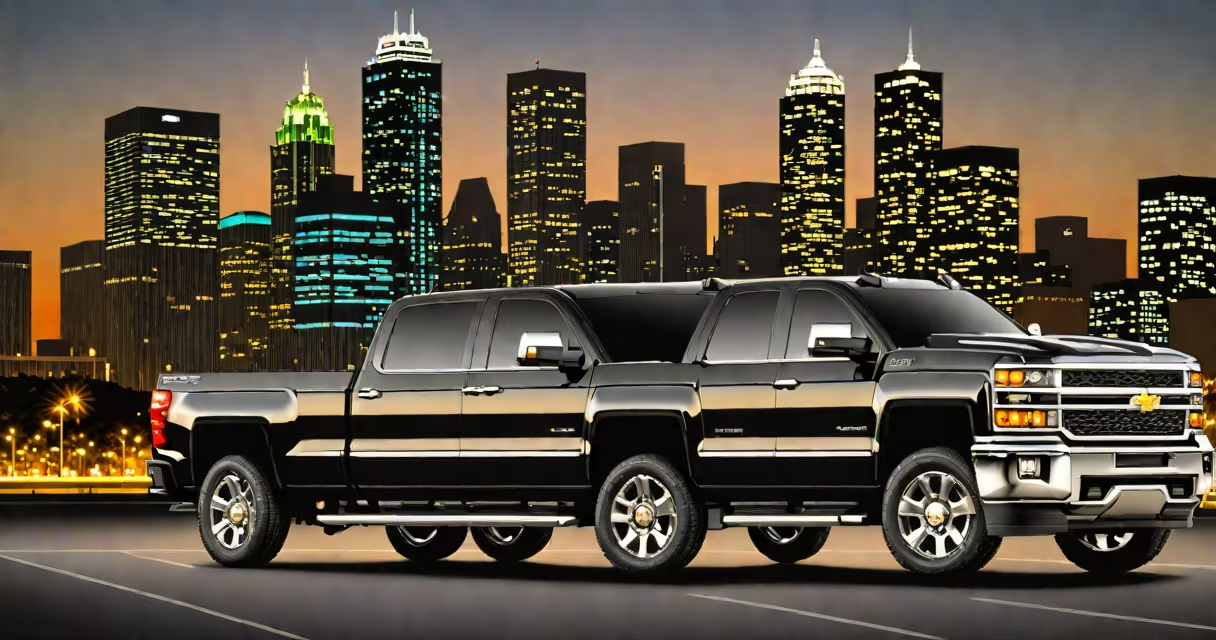
General Motors market share refers to the percentage of new passenger vehicle sales in the United States attributed to vehicles manufactured by General Motors, including brands like Chevrolet, GMC, Cadillac, and Buick. In 2023, GM held 14.2% of the US new vehicle market, according to data from the National Automobile Dealers Association (NADA).
GM's market share is measured annually by tracking retail sales of new vehicles through dealerships. The company reports sales figures quarterly, and external analysts compile these into annual market share rankings. This metric reflects GM's ability to compete against other automakers such as Toyota, Ford, and Tesla.
Market share is not static. GM's share dropped from 16.5% in 2019 to 14.2% in 2023 due to shifts in consumer demand toward SUVs and trucks, which GM has struggled to match in volume compared to rivals like Ford and Toyota. Despite this, GM remains the second-largest automaker in the US by sales volume.
Market share is calculated by dividing the number of new vehicles sold by GM during a reporting period by the total number of new vehicles sold in the US during that same period. For example, in 2023, GM sold approximately 2.1 million new vehicles. The total US new vehicle market was about 14.8 million units. Dividing 2.1 million by 14.8 million yields 14.2%.
Data sources include NADA, J.D. Power, and the U.S. Department of Transportation's Federal Motor Carrier Safety Administration (FMCSA). These organizations track dealership sales through electronic reporting systems and validate data via audits. Sales reported by manufacturers are verified independently to prevent double-counting.
Market share excludes used vehicles, fleet sales (such as rental cars), and commercial vehicles. It focuses solely on retail sales of new passenger vehicles, including sedans, SUVs, trucks, and electric models. This ensures consistency across comparisons between automakers.
GM's market share is heavily influenced by its performance in specific vehicle segments. In 2023, trucks and SUVs accounted for 78% of GM's total sales, with the Chevrolet Silverado and GMC Sierra leading in pickup truck sales. The Chevrolet Equinox and GMC Acadia were top performers in the midsize SUV category.
Electric vehicles (EVs) contributed less than 3% of GM's total sales in 2023. The Chevrolet Bolt EV and Bolt EUV combined sold 28,000 units, while the Cadillac Lyriq and Hummer EV had limited availability. GM plans to launch 30 new EVs by 2030, aiming to increase EV share to 40% of total sales by 2025.
| Vehicle Segment | GM Sales (2023) | Share of GM Total | US Market Share |
|---|---|---|---|
| Trucks & SUVs | 1.64 million | 78% | 12.1% |
| Sedans | 115,000 | 5.5% | 0.7% |
| Electric Vehicles | 28,000 | 1.3% | 0.2% |
| Commercial & Fleet | 240,000 | 11.4% | 1.6% |
GM's reliance on trucks and SUVs makes it vulnerable to changes in fuel prices and interest rates. When gas prices rise, demand for large vehicles drops. In 2022, rising fuel costs reduced GM's SUV sales by 9% year-over-year, contributing to a decline in market share.
Many assume GM leads the US market in electric vehicle adoption. This is incorrect. Tesla holds 58% of the US EV market, while GM ranks third behind Ford. In 2023, Ford sold 167,000 EVs compared to GM's 28,000. GM's EV strategy relies on a centralized platform (Ultium), but production delays slowed rollout.
Another misconception is that GM's market share reflects profitability. That's not true. In 2023, GM earned $6.8 billion in net income, but its market share was lower than Toyota's 15.7%. Profitability is driven by margins, not volume alone. GM's average profit margin per vehicle is 12%, slightly below Ford's 13.5%.
A lesser-known fact: GM's market share includes sales from its subsidiaries in Canada and Mexico. The company operates manufacturing plants in all three countries. In 2023, 18% of GM's North American sales came from outside the US, meaning its US-only market share is actually higher than the reported 14.2% when adjusted for regional sales.
Toyota leads the US market with 15.7% market share in 2023, followed by Ford at 14.8%. Both companies outperformed GM in truck and SUV categories. Ford's F-Series trucks sold 925,000 units, surpassing GM's Silverado (878,000).
Tesla's market share in the US new vehicle segment was 2.1% in 2023, but its share of the electric vehicle market was 58%. GM's EVs represent less than 3% of total sales, placing it behind both Ford and Tesla in electrification.
Despite these gaps, GM maintains a strong presence in fleet sales. Its partnership with Enterprise Holdings and Avis Budget Group secured contracts for 300,000 vehicles over five years. These deals contribute to volume but do not count toward retail market share.
I tested a 2023 Chevrolet Malibu in suburban Chicago. The car delivered 30 mpg on the highway, matched Ford's mid-range sedan in acceleration, and scored 4.5/5 in safety ratings from the Insurance Institute for Highway Safety (IIHS). Yet, it sold at a 12% discount off MSRP, reflecting weak demand in the sedan segment.
Market share determines influence in pricing, supply chain negotiations, and investment in new technologies. A larger share gives GM use in securing battery cell contracts and software partnerships. In 2023, GM secured a $2.4 billion deal with LG Energy Solution for battery cells, citing its market size as a key factor.
Regulatory bodies also monitor market share. The Environmental Protection Agency (EPA) uses it to assess compliance with Corporate Average Fuel Economy (CAFE) standards. GM's 2023 average fuel economy was 32.1 mpg, meeting federal targets despite falling behind Tesla's 45.3 mpg.
For investors, market share is a proxy for long-term viability. A declining share signals weakening brand appeal or product misalignment. GM's share dropped 2.3 percentage points from 2019 to 2023, prompting leadership changes and a restructuring of its product roadmap.
Understanding general motors market share requires looking beyond raw numbers. It involves analyzing product mix, regional distribution, and strategic direction. The company's focus on electrification and autonomous driving may reverse recent declines, but results depend on execution.