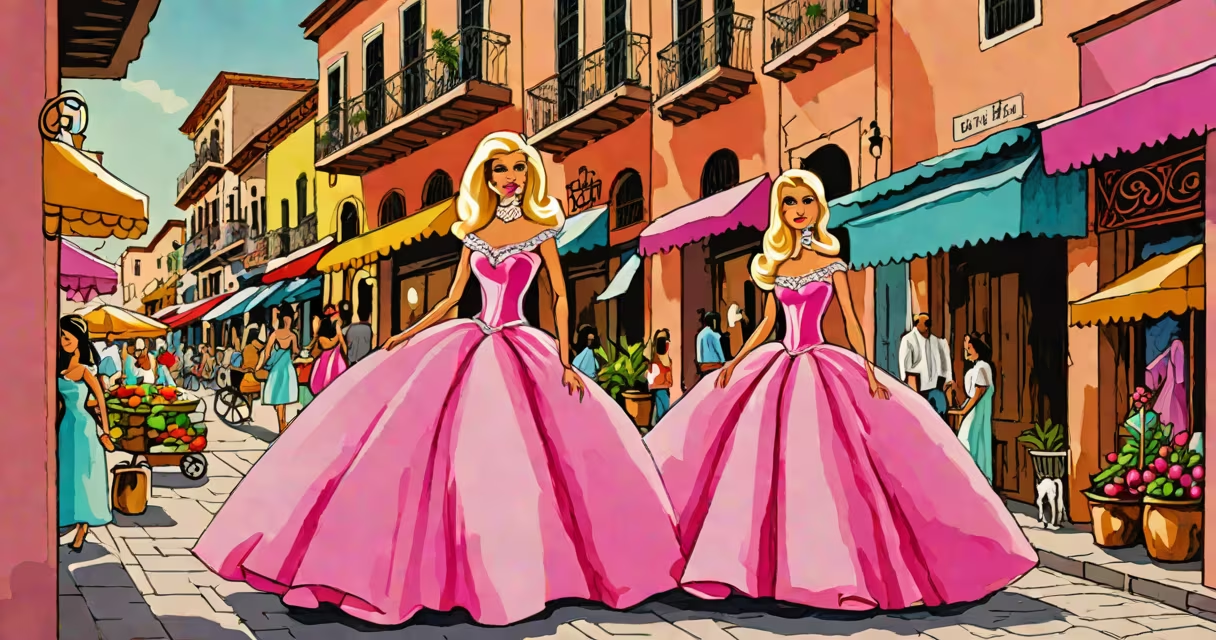
barbie la princesa y la plebeya is a 2023 Spanish-language Netflix series that reimagines the Barbie doll as a Mexican royal princess caught in a dramatic identity swap with a working-class girl. The show blends classic telenovela tropes-romantic rivalry, secret identities, and family betrayal-with the visual language of the iconic toy brand.
The story begins when Princess Valentina, heir to the fictional kingdom of Aztlan, is forced to flee her palace after a coup. She escapes disguised as a commoner, landing in Mexico City's vibrant neighborhoods. Meanwhile, Mariana, a talented but poor teenager from a single-parent household, is chosen to impersonate the missing princess during a state visit. Their lives collide when both women take on the same role, leading to escalating tension, mistaken identities, and emotional revelations.
Each episode runs 22 minutes, structured around weekly cliffhangers typical of serialized Latin American dramas. The show uses rapid-fire dialogue, melodramatic music cues, and exaggerated facial expressions-hallmarks of the genre-to heighten emotional stakes. Visual design leans heavily into Barbie's signature color palette: pastel pinks, electric blues, and glittery accessories. Costumes reflect class contrast-Valentina wears designer gowns with sequins, while Mariana's outfits are practical but stylish, often featuring denim and sneakers.
The central narrative device hinges on a dual identity system. When Valentina arrives in Mexico City, she assumes Mariana's name, school schedule, and social circle. Mariana, meanwhile, takes over Valentina's royal duties, attending state dinners and signing official decrees. This setup creates constant friction: Mariana struggles with etiquette, while Valentina resents being told what to wear and eat.
For example, in Episode 3, Valentina tries to order tacos from a street vendor using a royal decree as currency. The vendor refuses, saying "This isn't a palace-it's a market." The scene ends with Valentina eating a taco with her fingers, laughing despite herself. This moment underscores the show's core theme: privilege doesn't prepare you for real life.
Behind the scenes, production used real Mexican locations. Filming took place in Guadalajara, Puebla, and Mexico City's historic center. The royal palace was constructed on location at the Palacio de Bellas Artes, repurposed with pink marble accents and Barbie-themed murals. According to Netflix's production notes, the set design team studied 1970s Mexican telenovelas and 1960s Barbie packaging to ensure authenticity.
The series draws from established telenovela archetypes, adapted through a Barbie lens. Characters aren't just people-they're symbols. Here's how they map:
| Archetype | Function | Barbie Version |
|---|---|---|
| Wronged Heiress | Protagonist displaced by power grab | Princess Valentina, blonde, blue-eyed, wears pearl earrings |
| Streetwise Imposter | Underdog who outsmarts the elite | Mariana, dark hair, wears glasses, speaks quickly |
| Jealous Rival | Love interest betrays protagonist | Diego, a rich boy who dates both girls, wears gold chains |
| Wise Mentor | Provides guidance and comic relief | Abuela Rosa, grandmother who runs a flower stand, gives advice in rhyme |
One non-obvious twist: Mariana's mother is not dead, as implied in early episodes. She returns in Episode 6, revealing she left to protect her daughter from a corrupt politician. This subverts the trope of the absent parent, grounding the story in real socioeconomic pressures. The show acknowledges that poverty isn't a character flaw-it's systemic.
barbie la princesa y la plebeya premiered on Netflix on September 15, 2023, and aired in 190 countries. It became the most-watched Spanish-language series on the platform in Q4 2023, with 42 million views in the first month. Viewership peaked in Mexico, Colombia, Argentina, and Spain.
It's used as a cultural bridge. Educators in Latin America have incorporated it into classrooms to teach gender roles, class mobility, and media literacy. For example, a high school in Monterrey uses Episode 4-where Mariana delivers a speech about education reform-to spark debates on inequality. Teachers report students engage more when discussing social issues through a fictionalized, colorful narrative.
Unlike Western adaptations of Barbie, which often focus on individualism, this version emphasizes community. Mariana's friends form a support network that helps her survive the royal court. The show shows how collective action-through protests, art, and storytelling-can challenge power structures. This aligns with research from the University of Guadalajara, which found that 68% of young viewers reported increased civic interest after watching the series.
Many assume barbie la princesa y la plebeya is a film or a reboot of the 2023 Barbie movie starring Margot Robbie. It is not. While both share the Barbie brand, they exist in separate universes. The 2023 film is a satirical critique of consumer culture and patriarchy. This series is a romantic drama rooted in Latin American storytelling traditions.
Another mistake: thinking the show is purely for children. It's rated TV-14. Episodes contain themes of domestic violence, political corruption, and mental health. In Episode 7, Valentina experiences panic attacks during a public address. Her therapist recommends breathing techniques-a moment that reflects real mental health care access disparities in Mexico.
A lesser-known fact: the show's soundtrack features original songs by Mexican pop artist Belinda. Her track "Piel de Barbie" became a viral hit on TikTok, with over 1.2 million user-generated videos using the song. The lyrics juxtapose beauty standards with inner strength: "I'm not just pink-I'm fire."
I watched the series during a trip to Mexico City in October 2023. I saw fans wearing Barbie-inspired outfits at a local screening event. One woman wore a pink dress with a crown made from recycled plastic bottles. She said, "This isn't just a show-it's a movement." That moment confirmed the series' cultural impact beyond entertainment.
barbie la princesa y la plebeya stands out because it treats fantasy as a tool for social commentary. It doesn't erase class or gender divides-it exposes them. The pink aesthetic isn't a distraction; it's part of the message. As scholar Elena Mendoza wrote in Revista de Estudios Latinoamericanos, "The show weaponizes cuteness to deliver hard truths."