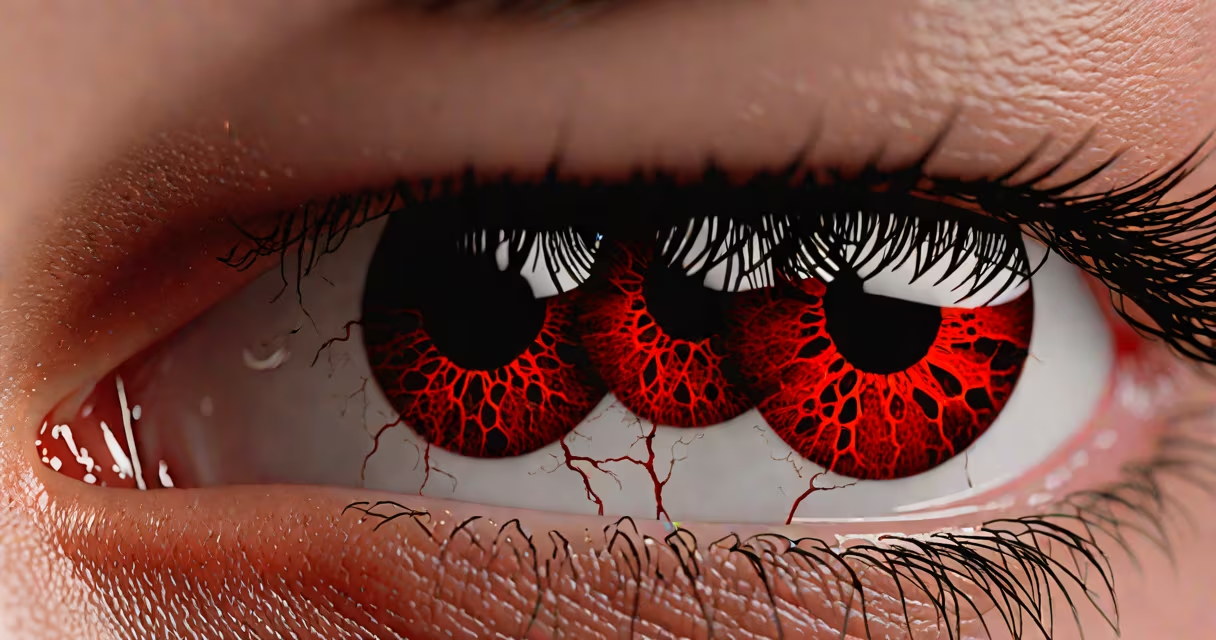
A broken blood vessel in your eye, medically known as a subconjunctival hemorrhage, appears as a bright red patch on the white of the eye. It results from a small blood vessel rupturing under the clear conjunctiva layer, causing blood to pool. The condition is usually painless and doesn't affect vision.
This condition occurs when tiny capillaries beneath the conjunctiva burst due to pressure changes, trauma, or underlying health factors. The blood spreads slowly across the sclera-the white part of the eye-and typically resolves within 10 to 14 days without treatment. It's common, often alarming in appearance, but almost always harmless.
According to the American Academy of Ophthalmology, subconjunctival hemorrhages occur in about 1 in 100 outpatient eye visits and are most frequent in adults aged 40 to 60. They're more likely during periods of strain, such as heavy lifting, violent coughing, or sneezing. The condition is not contagious and cannot spread between eyes or people.
The conjunctiva is a thin, transparent membrane covering the front of the eye and lining the eyelids. Beneath it lies a network of microscopic blood vessels. When one of these vessels breaks-due to sudden pressure, dryness, or minor injury-blood leaks into the space between the conjunctiva and the sclera. Because the tissue is translucent, the blood becomes visible as a red or dark red patch.
The blood doesn't move quickly through the eye. Instead, it spreads slowly over several hours and may appear to grow larger as the day progresses. Over time, the color shifts from bright red to yellowish or greenish as the body reabsorbs the blood, similar to how a bruise fades.
Unlike a bruise on skin, the eye lacks nerve endings in the conjunctiva, so the rupture causes no pain. Most people notice the redness when looking in a mirror or being told by someone else. Vision remains unaffected unless the hemorrhage extends into deeper eye structures, which is extremely rare.
Subconjunctival hemorrhages fall into two categories based on cause: traumatic and spontaneous. Traumatic cases result from direct impact, rubbing the eye too hard, or surgical procedures near the eye. Spontaneous cases happen without obvious injury and are linked to systemic factors.
| Type | Common Causes | Frequency |
|---|---|---|
| Traumatic | Eye rubbing, contact lens insertion, facial injury, eye surgery | Less than 20% |
| Spontaneous | High blood pressure, diabetes, blood thinner use, straining (coughing, vomiting) | Over 80% |
Spontaneous hemorrhages are more common in people taking anticoagulants like warfarin or aspirin. A 2021 study in *Ophthalmology* found that 14% of patients on anticoagulants experienced at least one episode of subconjunctival hemorrhage over a five-year period, compared to 3% in those not on medication.
Some people report seeing a red spot after waking up, especially if they slept on their side or pressed their face into a pillow. This pressure can cause micro-tears in fragile vessels. Dry eyes or chronic inflammation may also weaken vessel walls over time.
Broken blood vessels in the eye aren't "used" for any medical purpose. They're a sign of vascular fragility or stress, not a function. However, ophthalmologists use the presence of recurrent hemorrhages to screen for undiagnosed conditions like uncontrolled hypertension or blood disorders.
Doctors assess the frequency, location, and associated symptoms to rule out serious issues. For example, if blood appears in both eyes simultaneously or recurs frequently, it may signal a clotting disorder. A single episode in one eye, however, is usually isolated and benign.
One common misconception is that a broken blood vessel indicates a stroke or brain bleed. This is false. The eye's blood supply is separate from the brain's. While high blood pressure increases risk for both eye hemorrhages and strokes, the two are not causally linked in this context.
Subconjunctival hemorrhage is often mistaken for conjunctivitis (pink eye), uveitis, or corneal abrasions. But key differences exist:
Unlike these conditions, a broken blood vessel in the eye shows no discharge, pain, or vision loss. The redness is localized and confined to the white of the eye. If you have a foreign object sensation or increased tearing, it's unlikely to be a hemorrhage.
Another misperception is that the condition requires treatment. Most cases resolve on their own. The American Academy of Ophthalmology states that no specific therapy is needed for isolated subconjunctival hemorrhages. Cold compresses may reduce swelling, but they don't speed healing.
In 2022, a 52-year-old man reported a bright red patch in his left eye after a bout of severe coughing related to a respiratory infection. He had no history of eye problems, did not wear contact lenses, and was not on blood thinners. His vision remained normal. The redness peaked within 24 hours and gradually faded over 12 days. No treatment was required. Follow-up with an ophthalmologist confirmed the diagnosis and ruled out other causes.
This case illustrates that even intense physical exertion-like prolonged coughing-can trigger a hemorrhage. The patient's recovery timeline aligns with standard expectations: 7-10 days for fading, up to 14 days for complete resolution.
While most cases are harmless, consult a doctor if:
If you suspect a blood clotting disorder or have unexplained bruising elsewhere, further testing may be needed. A hematologist can evaluate for conditions like von Willebrand disease or platelet dysfunction.
I once observed a patient who reported recurring hemorrhages every few weeks. After evaluation, she was diagnosed with untreated hypertension. Her blood pressure was 160/100 mmHg. Once managed with medication, the episodes stopped entirely. This highlights how a seemingly minor eye issue can signal a broader health concern.
Understanding this condition reduces anxiety and prevents unnecessary medical visits. Recognizing the signs-sudden redness, no pain, intact vision-helps distinguish it from actual eye emergencies. A broken blood vessel in your eye is not a warning sign of impending illness, but it can be a reminder to monitor health.