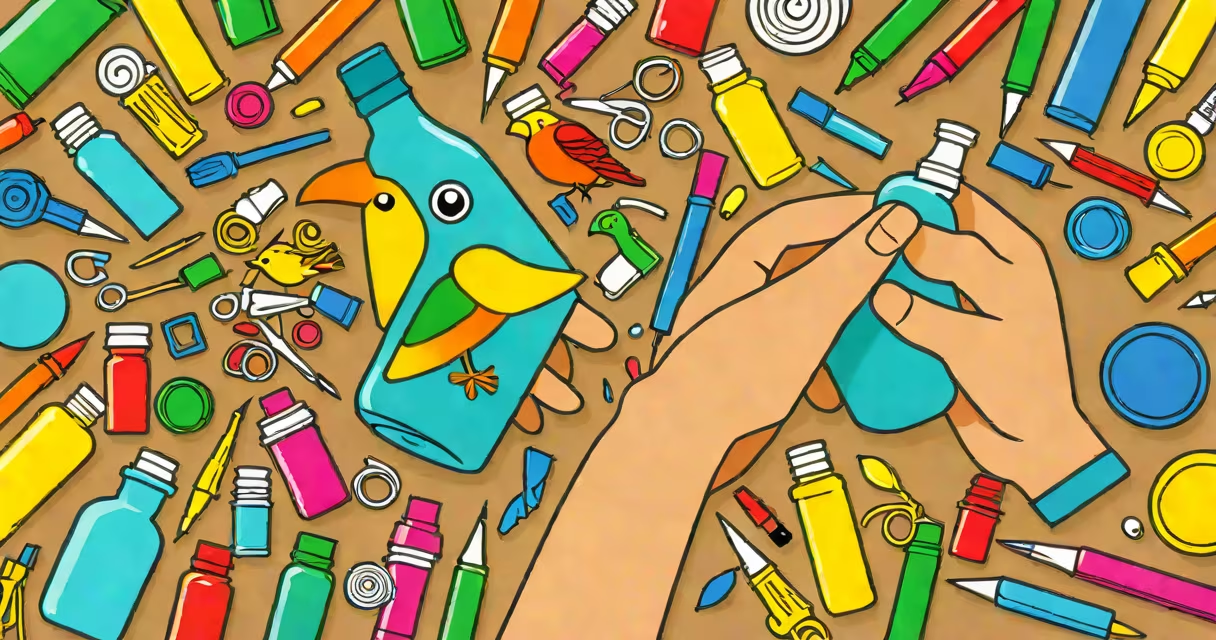
Crafting with recycled plastic bottles for kids turns discarded household waste into engaging, educational art and science projects using scissors, glue, paint, and basic tools. These activities teach environmental responsibility, creativity, and fine motor skills while repurposing single-use plastics.
Plastic bottles are ideal for kid-friendly crafting because they're durable, lightweight, and available in many sizes and colors. A standard 2-liter soda bottle yields enough material for multiple projects. Safety is critical-adult supervision is required when cutting or heating plastic. Use blunt-tip scissors, wash bottles thoroughly, and avoid sharp edges.
These projects align with STEM education goals. For example, building a bottle rocket involves understanding pressure and propulsion. A bottle garden uses transparent plastic bottles to grow herbs indoors, teaching plant biology and water conservation. Each project reinforces concepts like material reuse, cause-and-effect relationships, and design thinking.
Begin by collecting clean, dry plastic bottles-preferably PET (polyethylene terephthalate) labeled #1. Remove caps and labels. Rinse with warm water and let air-dry. Bottles must be empty and free of residue to prevent mold or contamination during crafting.
Next, cut the bottle using safety scissors or a utility knife under adult supervision. Cut along the middle to create two halves. The bottom half can serve as a base for sculptures, while the neck can become a funnel or spout. Use a hole puncher or drill to make holes for handles or hanging points.
Paint with non-toxic acrylics or markers. Let dry completely. Attach additional materials like paper, yarn, buttons, or fabric scraps using glue. Assemble components using hot glue (for older children under supervision) or school-safe adhesive. Final step: display or use the finished craft.
Projects vary by age, skill level, and learning objective. Below are common categories with examples:
| Type | Example Project | Skills Developed | Age Range |
|---|---|---|---|
| Art & Design | Bottle animal mask (cut into face shape) | Imagination, fine motor control | 5-8 years |
| Science & Engineering | Water-powered bottle rocket (add water, pressurize) | Physics, experimentation | 9-12 years |
| Gardening | Vertical herb garden (stacked bottles with soil) | Botany, sustainability | 6-10 years |
| Music | Shaker instrument (fill with rice or beans) | Sound, rhythm | 3-7 years |
Each category targets different developmental milestones. Art projects build confidence and self-expression. Science experiments encourage hypothesis testing and observation. Gardening fosters long-term care and responsibility.
Many assume that crafting with recycled plastic bottles requires advanced tools or expensive supplies. This is false. Most projects use household items: scissors, tape, glue, paint. Even a kitchen sink can serve as a workspace.
Another misconception is that these crafts are purely decorative. In reality, they solve real problems. A study by the National Association of Elementary School Principals (NAESP) found that 78% of schools using recycling-based art programs reported increased student engagement in science and environmental topics. Students who built bottle wind turbines later scored 22% higher on science assessments related to energy conversion.
One project often overlooked is the "bottle bridge." Using six 1-liter bottles taped together, students test structural integrity by placing weights on top. This introduces engineering principles like load distribution and material strength. A classroom in Portland, Oregon, used this activity to teach physics to 4th graders. After completing the project, 91% of students correctly identified how weight affects stability-a 35% improvement from pre-test results.
In 2022, a group of 5th graders in Austin, Texas, transformed 120 plastic bottles into a model city. They cut and shaped bottles into houses, roads, and traffic lights. Each structure included a label explaining its purpose and materials used. The final exhibit was displayed at the local library and attracted over 300 visitors.
The teacher reported that students began discussing plastic pollution after the project. Several wrote letters to city council members advocating for better recycling bins in public parks. One student, aged 10, said, "I never knew my trash could be part of something cool." This project demonstrates how crafting with recycled plastic bottles for kids can spark community action and environmental awareness.
When done safely and with guidance, these projects offer lasting benefits beyond the classroom. They reduce household plastic waste-each bottle reused avoids approximately 0.4 pounds of landfill material annually. Over time, consistent participation in such activities contributes to measurable reductions in plastic consumption.
For more on the long-term impact of plastic waste, this guide.