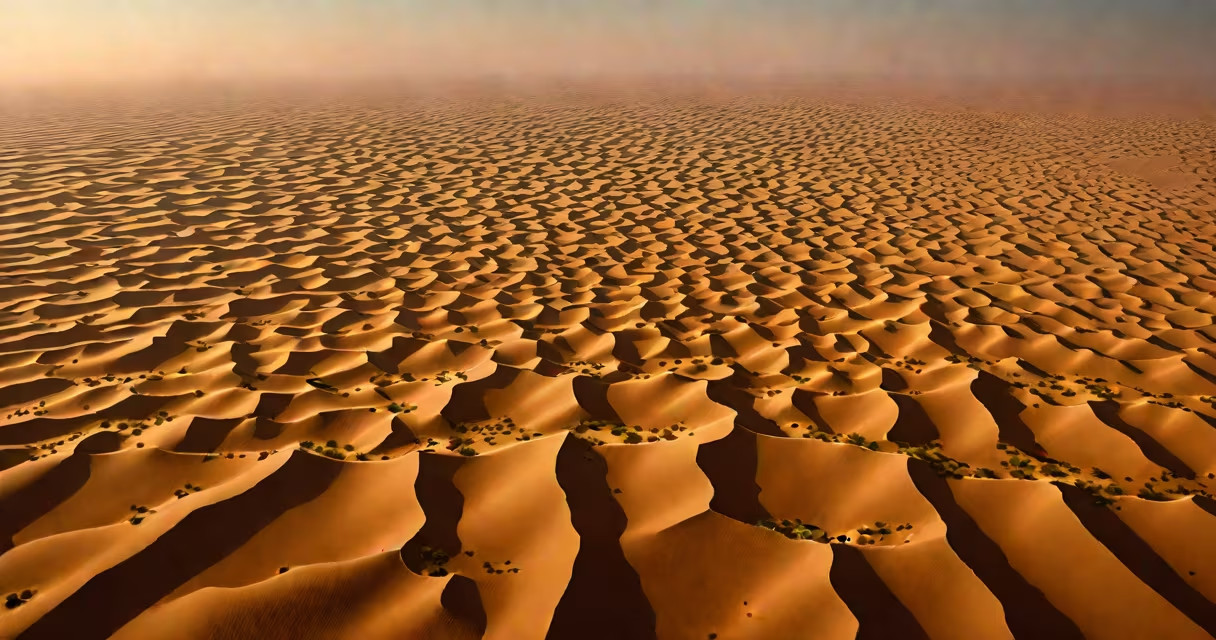
The definition of vast describes something of such great size, extent, or magnitude that it exceeds common perception or measurement. It applies to physical spaces, abstract concepts, or quantities that feel overwhelming due to their scale.
Vast is not merely large-it implies a sense of boundlessness or incomprehensible scale. While "large" suggests size relative to a known standard, "vast" signals that the scale defies easy mental mapping. For example, the Sahara Desert is large, but calling it vast emphasizes its immensity and the difficulty of traversing it in a lifetime.
According to Merriam-Webster, vast means "extremely large in size, extent, or degree." The Oxford English Dictionary notes that the term entered English in the 16th century, originally describing spiritual or emotional expansiveness before being applied to physical space. This evolution shows how vast evolved from metaphorical to literal use.
When used in sentences, vast functions as an adjective modifying nouns that denote space, time, quantity, or abstraction. It often appears in descriptive, narrative, or poetic contexts where scale is central to meaning.
Consider: "The vastness of the Pacific Ocean left her speechless." Here, vastness doesn't just describe area-it evokes emotional response. The word triggers a cognitive effort to imagine scale beyond human experience. This effect is stronger than using "huge" or "big," which lack the connotation of overwhelming scale.
Scientific and technical writing uses vast sparingly. In astronomy, for instance, "vast" may describe interstellar distances. NASA's public materials refer to "vast regions of space" when discussing galactic structures. But in precise measurements, "vast" gives way to numbers: "The galaxy spans 100,000 light-years."
While "vast" is a single adjective, its application varies by domain. The following table outlines common categories and examples:
| Type | Example | Context |
|---|---|---|
| Physical space | "The vast Amazon rainforest covers over 5 million square kilometers." | Geography, environmental science |
| Abstract concept | "She felt a vast emptiness after the loss." | Literature, psychology |
| Quantity | "The company faces a vast backlog of orders." | Business, logistics |
| Time | "The vast expanse of geological time reshapes continents." | Earth sciences, history |
Each use relies on the reader's ability to mentally extrapolate. The term fails when applied to small-scale objects-saying "a vast paperclip" creates confusion because the object's actual size contradicts the implied scale.
People often mistake "vast" for "very large" or "enormous," but the difference lies in implication. Enormous suggests size that is noticeable or shocking. Vast implies scale so great it becomes difficult to process.
For example: "The enormous mountain was visible from miles away." This focuses on visual impact. "The vast mountain range stretched endlessly under the storm clouds." This evokes endurance, distance, and psychological weight.
A common error is using "vast" to describe collections of small items. Saying "a vast amount of sand grains" is incorrect. Sand grains are numerous, but the individual units remain tiny. The correct phrasing is "an immense number of sand grains" or "a vast quantity of sand." The noun determines whether "vast" fits.
Another misconception is equating "vast" with "complex." A system can be complex without being vast. A microprocessor contains billions of transistors, but calling it "vast" misrepresents its physical dimensions. The complexity is high, but the size is microscopic.
Take the Great Barrier Reef. It stretches over 2,300 kilometers along Australia's northeastern coast. Its surface area exceeds 344,000 square kilometers. These numbers are large-but they become vast when contextualized.
Imagine a diver entering the reef at dawn. They swim through coral formations teeming with life. The reef extends beyond sight in all directions. Even with modern navigation tools, reaching the far edge takes days. The sheer spatial continuity makes the reef feel endless.
Describing it as "vast" captures not just the area, but the sensation of being overwhelmed by scale. This is why marine biologists and conservationists use "vast" in reports: it communicates urgency. A vast system demands vast protection efforts.
In 2019, I stood at the edge of the Namib Desert in Namibia. The dunes rose like frozen waves under a pale blue sky. I walked for two hours and saw no other person. The silence was absolute. When I looked back, my footprints vanished within minutes. That moment confirmed the definition of vast-not just in size, but in isolation and permanence.
I later read that the Namib is the oldest desert on Earth, spanning 2,000 kilometers. The combination of age, dryness, and uninterrupted terrain makes it a living example of vastness. It's not just big-it feels timeless.
Using "vast" correctly strengthens clarity and emotional resonance. Misuse dilutes precision. In journalism, legal documents, or academic writing, accuracy matters. Saying "vast changes" when referring to minor policy adjustments misleads readers.
Academic sources reinforce this. The Chicago Manual of Style advises against using "vast" in quantitative reporting unless supported by data. Similarly, the American Psychological Association's publication guidelines caution against using "vast" to describe emotional states without evidence of scale.
When describing climate change impacts, scientists avoid "vast" in favor of measurable terms. Instead of "vast melting of glaciers," they write "glaciers lost 267 gigatons of ice annually between 2000 and 2019." Numbers replace impressionistic language.
The definition of vast is not about size alone-it's about the relationship between scale and human understanding. Something is vast when it exceeds our ability to grasp it fully. It's not just big. It's too big to hold in mind.
Use "vast" only when the subject truly overwhelms perception. Avoid it in casual comparisons. Reserve it for landscapes, histories, systems, or emotions that genuinely stretch beyond normal reference points.
Understanding the definition of vast improves both writing and thinking. It prevents exaggeration and sharpens communication. Whether describing a forest, a database, or a feeling, precision matters.