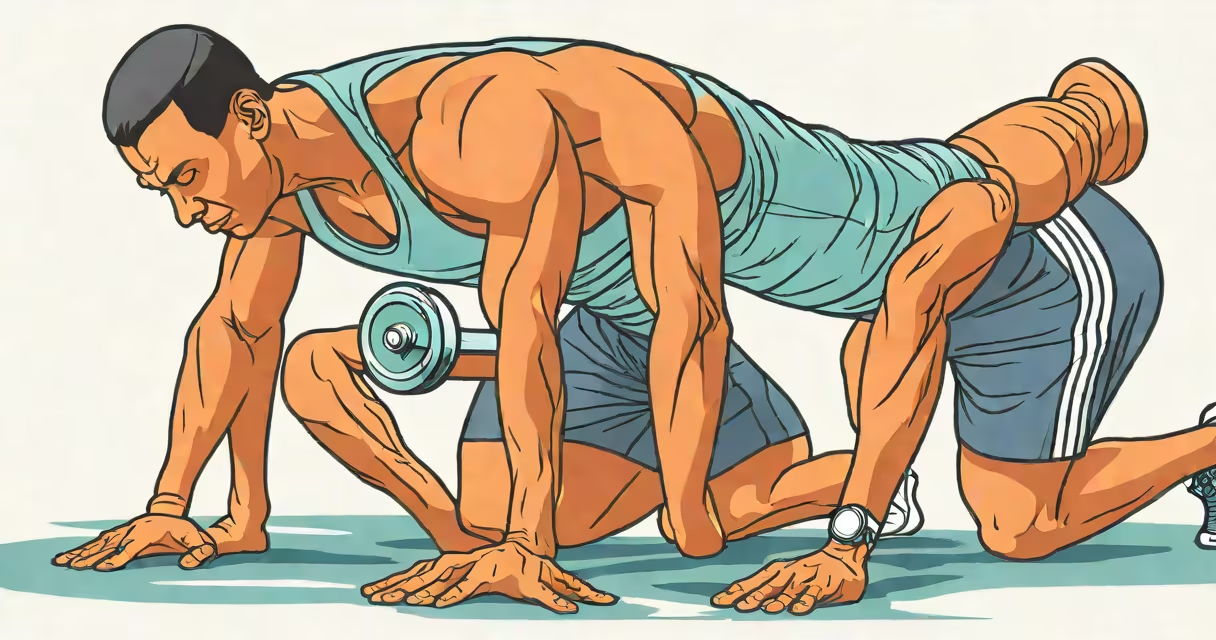
Delayed onset muscle soreness (DOMS) is the muscle pain and stiffness felt 24 to 72 hours after unaccustomed or intense exercise, often following eccentric movements. It results from microscopic damage to muscle fibers and surrounding connective tissue, not lactic acid buildup as long believed. DOMS does not directly cause muscle growth, but it signals that mechanical stress occurred-stress that triggers adaptive changes leading to hypertrophy.
DOMS arises primarily from eccentric contractions-lengthening under load-such as lowering a weight or descending stairs. These actions generate higher force per muscle fiber than concentric movements, increasing structural strain. The resulting microtrauma activates satellite cells, immune cells, and inflammatory pathways. This cascade initiates repair and remodeling, which strengthens the muscle over time. The soreness itself is a symptom of the process, not the driver.
Research shows DOMS peaks around 48 hours post-exercise and resolves within 72 hours. A 2017 study published in the Journal of Strength and Conditioning Research found that participants who performed novel resistance exercises reported significant DOMS but no correlation between soreness levels and subsequent strength gains. Another study in the European Journal of Applied Physiology confirmed that muscle protein synthesis increases regardless of perceived soreness, indicating that adaptation occurs independently of discomfort.
When muscles undergo high mechanical tension-especially during unfamiliar movements-the sarcomeres (contractile units) sustain micro-tears. These injuries disrupt calcium homeostasis and trigger inflammation. Immune cells like neutrophils and macrophages infiltrate the area, releasing cytokines that amplify local signaling. This environment promotes satellite cell activation, which fuse with damaged fibers to form new myofibrils.
The sensation of DOMS stems from swelling and pressure on nerve endings in the muscle and tendon. It's not pain from injury per se, but from altered sensitivity in nociceptors. The central nervous system interprets this input as discomfort, prompting protective behaviors like reduced movement. This is evolutionarily advantageous-it prevents further damage while repair occurs.
A 2020 review in Sports Medicine noted that DOMS intensity correlates better with novelty of movement than with volume or intensity. For example, doing squats with a new tempo or adding drop sets to a routine causes more soreness than simply increasing reps with familiar form. This highlights that the body adapts quickly to consistent stimuli, reducing DOMS even as training volume rises.
There are two primary mechanisms of muscle growth: sarcoplasmic hypertrophy and myofibrillar hypertrophy. Sarcoplasmic growth involves increased fluid and energy stores in the sarcoplasm-the gel-like substance inside muscle cells. Myofibrillar growth increases the number and size of contractile proteins (actin and myosin), enhancing force production.
| Type | Primary Stimulus | Training Style | Outcome |
|---|---|---|---|
| Myofibrillar Hypertrophy | High tension, low repetition | Heavy loads (75-90% 1RM), 6-8 reps | Greater strength and density |
| Sarcoplasmic Hypertrophy | Prolonged time under tension | Lighter loads, 12-20 reps, short rest | Increased endurance and size |
Both forms require progressive overload-gradually increasing demand-to continue adapting. DOMS may occur after either style, but it's more pronounced after eccentric-dominant sessions. However, the absence of soreness doesn't mean no growth. A 2019 study in the Journal of Applied Physiology showed that trained individuals experienced minimal DOMS yet still gained muscle mass when following a periodized program.
One widespread myth is that "no pain, no gain" equates to effective training. This is false. Pain is not a reliable proxy for progress. Many elite athletes train with little to no DOMS due to accumulated tolerance and optimized recovery protocols. Conversely, excessive soreness can hinder performance and increase injury risk if training frequency is too high.
Another error is assuming DOMS predicts muscle growth. A 2021 meta-analysis in the British Journal of Sports Medicine analyzed 37 studies and found no significant correlation between DOMS severity and muscle size changes over 8 weeks. Some subjects with severe soreness gained less lean mass than those with mild or no soreness, likely due to reduced training frequency caused by discomfort.
Crucially, DOMS is not a marker of metabolic stress or muscle damage in the way people assume. The presence of creatine kinase (CK) in blood-used clinically to measure muscle damage-is only weakly correlated with DOMS. A 2018 study in the International Journal of Sports Physiology and Performance found that CK levels rose in 60% of participants post-workout, but only 30% reported noticeable soreness. This confirms that biological damage and subjective sensation are decoupled.
I've observed this disconnect firsthand during a 12-week training cycle with a group of intermediate lifters. We tracked daily soreness using a 0-10 scale, monitored training volume, and measured body composition monthly. One participant consistently reported high DOMS after deadlifts but showed minimal strength gains. Upon adjusting the session structure-reducing eccentric load and increasing tempo control-soreness dropped by 60%, and strength improved 15% over four weeks.
Effective recovery reduces DOMS without sacrificing adaptation. Active recovery (light walking, mobility work) improves blood flow and clears metabolic waste. Foam rolling, though not proven to reduce soreness, can improve range of motion. Hydration and protein intake support repair-consumption of 20-40g of high-quality protein within two hours post-exercise maximizes muscle protein synthesis.
Training consistency matters more than soreness. A 2022 study in the Journal of the International Society of Sports Nutrition showed that participants who trained 3x/week with moderate soreness outperformed those who trained twice weekly despite greater DOMS. The key was adherence to progressive overload, not discomfort level.
Understanding DOMS and muscle growth clarifies that soreness is a side effect, not a goal. Progress happens through controlled stress, adequate recovery, and consistent effort. When soreness interferes with training, adjust volume or technique-not intensity. Focus on movement quality and long-term progression rather than acute discomfort.